
Photographers of reflective pendants
You can see the shape of a window or lamp reflected in glossy resin, and want to soften the light and control the reflection first. Adobe and Nikon describe diffusion as a way to soften light.


Start by diffusing and repositioning the light, pendant or camera. Adobe and Nikon explain how diffusion softens harsh light, while an LED panel won’t remove distracting reflections on its own. An adjustable white-light panel is most useful when you want to brighten the shadowed side or take photos in changing daylight. Choose a size, power supply and mounting option that suit your workspace.
You can see the shape of a window or lamp reflected in glossy resin, and want to soften the light and control the reflection first. Adobe and Nikon describe diffusion as a way to soften light.
You photograph pendants at different times and want to adjust the brightness and colour for each shot.
You’re looking for a panel that’s easy to position and power, without needing a permanent studio setup.
Choose this when: the window already provides enough light and you mainly want to manage harsh highlights or shadows. First, try a sheer curtain or change the position of the pendant and camera.
Trade-off: you won’t need an extra light or power supply, but the available daylight changes with the conditions.
Choose this when: you have a fixed tabletop setup and want to add controlled fill light. The NEEWER NL660 is one example of a panel with a diffuser and adjustable white light.
Trade-off: a larger panel needs room to position it. Also check whether the package variant you choose includes a stand.
Choose this when: you want to position a panel close to a small setup. SmallRig lists side-emitting light and USB-C or NP-F power for the P200 Universal.
Trade-off: the box contents include a USB-C cable but no adapter. Check how you plan to power and mount the panel before you buy.
Choose this when: portability or creative background colour matters more to you than a large fill-light surface. For accurate product colours, start with the adjustable white-light setting.
Trade-off: a small light source may still show up as a reflection. Also check that the listed version matches the exact model.
Compare diffusion and positioning to manage reflections, white-light settings for colour, and dimming for fill light. For a compact workspace, power and mounting options matter too.
| What to consider | What should you check? | Who is this important for? |
|---|---|---|
| Reflections and harsh highlights | Check whether you can diffuse the light and tilt the panel to change the angle of the light. | When I photograph reflective pendants, I want to soften harsh window-shaped reflections in the resin and be able to move them. Around 33% of consumers prioritise reflection control. |
| Colour reproduction of the resin | Compare the specified white-light range and colour rendering for that exact model, and adjust the white balance too. | When the resin is clear or coloured, I want its shade to look true to life in the photo, even when the daylight changes. Around 27% of consumers prioritise colour rendering. |
| Adjustable fill light | Check whether the light is dimmable and note the measurement distance for any lux ratings. Also consider how much room the panel needs. | For a fixed tabletop setup, I want to brighten the shadowed side with precision and adjust the panel as the window light changes. Around 27% of consumers say adjustable fill light is their main buying concern. |
| Space, power and mounting | Check the power supply, cable or battery, and whether an adapter or mounting hardware is included with the exact version. | On a small table, I want to position and power the panel easily, without letting cables dictate my setup. Around 13% of consumers prioritise a compact setup that’s easy to power. |
With glossy pendants, the shape and position of the light source are visible. More light won’t automatically remove a distracting reflection.
Try diffusion and a different lighting angle first. Then decide whether you need extra fill light.
SmallRig gives a measurement distance of 0.3 m for the P200 Universal, while NEEWER lists 1 m for the NL660. These figures weren’t measured on the same basis.
Check the measurement distance and only compare figures directly when they’re based on the same conditions.
The NL660 comes in different package variants, and NEEWER says NP-F batteries aren’t included. SmallRig lists a USB-C cable with the P200 Universal, but no adapter.
Compare the contents of the exact version with your planned tabletop setup and power source.
Ulanzi lists a colour temperature range of up to 9000 K for the VL49 RGB, while a Joybuy listing gives up to 9500 K. The versions may not be identical.
Check the full model name and key specifications before matching retailer information with manufacturer details.
The NL660 is a larger bi-colour panel worth comparing for a fixed fill-light setup.
The P200 Beauty Panel Universal is a slim panel with different power options.
The P260C Pro is worth comparing if you’re looking for more lighting adjustment options.
The VL49 RGB is a compact panel worth comparing for a portable small setup or creative colour effects.
This selection is aimed at a compact, portable setup for product photography.
 No image available
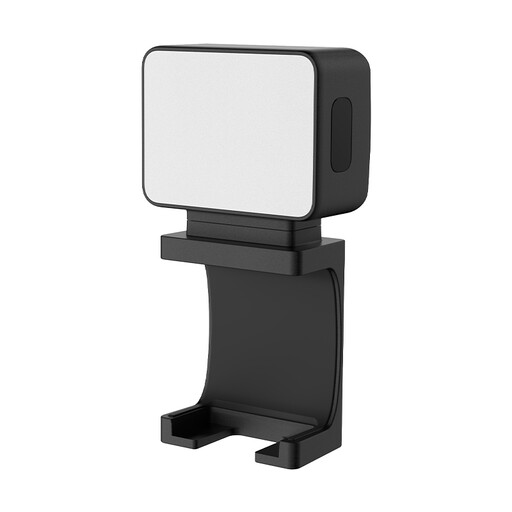
This portable mini light is designed for a compact, flexible workspace.
The product description says it provides soft, even light for product photography.
Built-in battery: 500 mAh.
The description lists a magnetic base and a 1/4-inch thread for mounting.
Yes. You can use a panel as fill light while the window remains your other light source. Adjust the brightness and position, check the reflections on the pendant and set the white balance. A panel alone can’t guarantee a neutral resin colour.
Soften direct light and move the lamp or pendant until unwanted reflections are reduced. Before taking the photo, check the surface for dust. When buying, also check whether your version includes a stand, diffuser and suitable power supply.
It depends on the version: NEEWER says NP-F batteries aren’t included with the NL660, while SmallRig lists a USB-C cable but no adapter for the P200 Universal. Business.gov.nl explains that statutory conformity rights still apply and aren’t replaced by a commercial warranty.
For a typical online purchase by a consumer, a 14-day cooling-off period generally applies, starting the day after delivery, according to Business.gov.nl. There are exceptions; according to the government guidance, this period doesn’t apply when a business buys something for its business.
No. Business.gov.nl describes CE marking as a manufacturer’s declaration that applicable EU requirements have been met, not as a quality mark for photography. The rules that apply to a particular light and any accessories depend on that version.