What should you look for when choosing?
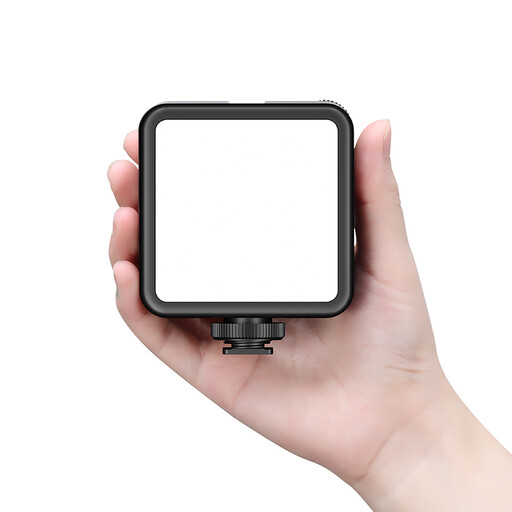
Compact battery-powered panel
A good fit if: you’re filming a small product close to the camera and want to put the light away afterwards.
Consider: whether the panel will provide enough light at your working distance for the role you expect it to play.
Larger bi-colour panel
A good fit if: you want to position the panel as a key light and have room for a stable setup.
Consider: space requirements, mounting options and whether a battery is included vary by model.
Panel with RGB colour control
A good fit if: coloured accent lighting is a deliberate part of your product demonstration.
Consider: whether the panel can also provide the white product light you need.
For a product demo in a shared bedroom, you’ll need to consider space, light control, power and what’s included in the set. The Netherlands Food and Consumer Product Safety Authority states that CE marking is mandatory for electrical products. The applicable rules also depend on the product and its supply voltage. Check the information for the exact model.
| What to consider |
What to look for |
Who should consider this? |
| Space and shared use |
Measure the available space and check the panel size, mounting options, included tripod and cooling method for the exact model. |
If I want to put the light away quickly after filming and keep the shared space clear, a compact setup may be a better fit; around 26% of consumers prioritise space and shared use. |
| Soft, directional lighting |
Check whether a diffuser is included and whether you can adjust the panel’s direction; assess shadows and reflections with your own product. |
If I want to control shadows and how the light falls around my product, I look at the diffuser and positioning; around 21% of consumers prioritise soft product lighting. |
| Accurate product colours |
Compare the stated colour temperature range and CRI for the exact model; take a test shot under the lighting in your room. |
If I want the product’s colour to look recognisable on camera, I consider adjustable white light and my camera settings; around 21% of consumers prioritise colour rendering. |
| Power during filming |
Check what power source is included and whether the stated run time suits your intended brightness and filming duration. |
If I want to finish a demonstration without the battery running flat, I check that the power source will last for my filming time; around 16% of consumers prioritise uninterrupted use. |
| What’s included and mounting options |
Check whether the model you’ve chosen includes an adapter, a compatible battery, a tripod or the mounting accessories you need. |
If I want to set up the light straight away, I want to know in advance what’s in the box; around 16% of consumers mainly look for a complete setup. |
Joybuy products for a product demo
This selection includes rechargeable LED video lights and compact fill lights for product filming. For the exact model, also check the CE marking and applicable product information. The Netherlands Food and Consumer Product Safety Authority states that the applicable rules also depend on the product and its supply voltage.
 No image available
Ulanzi VL81 Rechargeable LED Video Light Black
The product description mentions product photography, as well as adjustable brightness and colour temperature.
Rechargeable LED video light; the product warning recommends using it in a well-ventilated area to help prevent overheating.
View at Joybuy
 No image available
Ulanzi VL49 RGB Video Light with 2000 mAh Battery
According to the product title, this compact rechargeable panel is designed for uses including product photography and macro photography.
The title lists RGB, a 2000 mAh battery and a magnetic back. Listings give different figures for the maximum colour temperature; check the details for the version you’ve chosen.
The warning recommends using a standard adapter with a 5 V output and advises against looking directly into the light from close range.
View at Joybuy
 No image available
Ulanzi LM001 Portable Mini Fill Light
According to the product title, this portable mini fill light is designed for photography.
The title lists a 500 mAh battery and a magnetic LED light.
View at Joybuy
Frequently asked questions
Do I need one panel or several lights for a product demo?
Start with one directional key light and check the shadows on your product in a test shot. A second small panel can work as fill or accent lighting, but the available product specifications don’t show that every demo needs multiple lights.
How can I stop a panel from being awkward to use in a shared bedroom?
Check the dimensions, mounting options and what’s included, position the light securely and keep the cable route clear. Follow the instructions for the exact model when using batteries or mains power; the Godox manual, for example, warns against use in damp conditions.
Will I need to buy a battery, adapter or tripod separately?
It depends on the model. Neewer says the NP-F battery isn’t included with the NL660 and offers a version with a tripod; the Godox manual says batteries need to be bought separately. Check the box contents for the specific listing.
What safety information should I check for the Dutch market before buying?
Check the CE marking and product information for the exact model. The Netherlands Food and Consumer Product Safety Authority states that CE marking is mandatory for electrical products. The applicable rules also depend on the product and its supply voltage.
How can I match the white light to the colour of my product?
Check the stated colour temperature range for the exact model and take a test shot under the lighting you’ll be filming in. Manufacturer figures for colour temperature or CRI alone can’t predict how your camera will render the product.


