
Teacher filming from above
Films paper and moving hands on a fixed table and wants the folds to remain clearly visible.


For an overhead origami lesson, an adjustable white-light panel beside the camera is a sensible place to start. As you fold, check whether your hands cast shadows over the folds on camera. Diffusion or a second light source can help if one panel doesn’t light the work surface properly, but you’ll need extra space and a suitable way to mount it. Also check the colour setting, power supply and whether your camera settings cause visible banding.
Films paper and moving hands on a fixed table and wants the folds to remain clearly visible.
Works with different paper colours and wants to control the light colour and white balance between recordings; assess the results using your own test footage.
Fits a camera, lights and hands into a limited space, or regularly moves the setup; mounting and power are important considerations.
A good fit when: you’re filming a small work surface and can position the panel at an angle beside the overhead camera.
Trade-off: Positioning and diffusion affect shadows, but won’t eliminate them in every hand position.
A good fit when: a test recording shows that moving one panel doesn’t get rid of distracting hand shadows.
Trade-off: An extra light source requires more space, mounting and power.
A good fit when: you move your setup often or don’t want to run a mains cable around the table.
Trade-off: Check the battery, run time and how well the light covers your entire work surface in your setup.
Start by recording a test of the entire work surface as you fold. Then compare the colour settings, mounting options and power requirements of panels that suit your setup.
| What to consider | What to check before buying | Who is this important for? |
|---|---|---|
| Folding without hand shadows | Record a test of the whole work surface; check that there’s room for an angled panel, a diffuser and, if needed, fill light. | When I film folds from above, I don’t want my hands to obscure the instructions. Around 36% of consumers give clear folds without distracting hand shadows their top buying priority. |
| Seeing paper colours accurately | Check the adjustable colour temperature and the CRI or TLCI rating for the exact model; test it with your own paper and a fixed white balance. | If you work with several paper colours, you’ll want them to remain recognisable in your video. Around 29% of consumers prioritise consistent paper colour reproduction. |
| Video without visible banding | Test your intended frame rate, shutter speed and dimming setting; check that the whole work surface remains well lit. | When I need stable footage, I want to see how the light performs with my camera settings. Around 21% of consumers put stable video first. |
| Mounting and power | Check which bracket, diffuser, stand and adapter are included with the version you’ve chosen, and which battery or cable you’ll need. | If you have a small workspace or move the table, you’ll want the light, mount and power supply to fit your setup. Around 14% of consumers give mounting and power their top priority. |
A quoted light output may apply at a particular distance or setting. It doesn’t necessarily tell you how evenly the whole origami area will be lit.
Compare the measurement distance and light modifier, and test the whole sheet of paper in the frame, not just the centre.
The NEEWER NL660 comes in different versions: a stand isn’t included with every version, and the NP-F550 or NP-F970 battery mentioned isn’t supplied. amaran says that a separate D-Tap cable is available for the P60x.
Check what’s included with the exact version before choosing the rest of your setup.
The combination of LED lighting and camera settings can cause visible banding. Sony Support explains that changes in brightness can cause problems in recorded footage.
Review test footage using the dimming setting, frame rate and shutter speed you plan to use for your lesson.
The manufacturer says the LEDP260C is suitable for video and still-life photography, among other uses. Don’t compare this model using the specifications of the separate P260C Pro.
The European product page describes the NL660 as an adjustable panel for video, available in different versions.
The manufacturer describes the P60x as a bi-colour panel, with a softbox and grid listed in the box contents.
The manufacturer describes the Vibe P96L RGB as a compact, portable video light. Consider it as an additional light if you’re not yet sure whether it can light the whole tabletop.
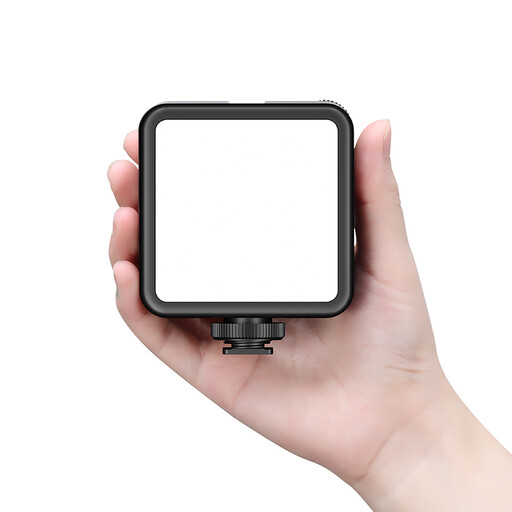
This selection focuses on a rechargeable video light for a setup you want to be able to move. Test whether the light reaches the whole origami area from your chosen position.
 No image available
The rechargeable version could suit a setup you move around; use a test recording to check whether it provides enough light for your entire work surface.
Colour: black.
Start by placing an adjustable panel at an angle beside the overhead camera and pointing it at the whole sheet of paper. Fold a test model in front of the camera, then move or diffuse the light if a hand shadow obscures the instructions. Add another light source only if the test recording shows you need one.
No. A high CRI rating alone doesn’t guarantee that paper colours will look accurate in your recording. CRI and TLCI are specifications for a particular light; the selected light colour and your camera also play a part. Compare your own paper colours in a test recording with a consistent white balance.
Test the light again using the frame rate, shutter speed and dimming setting you’ll use for your lesson. Sony Support explains that changes in LED brightness can cause picture problems; a product specification can’t rule this out in your setup.
For each version, check whether a stand, diffuser, mains adapter and any battery are actually included. Business.gov.nl states that Dutch consumers are entitled to a product that meets the statutory requirements for conformity. For an applicable online consumer purchase, you generally have 14 days to change your mind, starting the day after delivery; according to this government guidance, this cooling-off period doesn’t apply to business buyers.
For the specific model and power supply, check which EU rules apply and ask for the relevant documentation. Business.gov.nl explains that, following a conformity assessment, the manufacturer affixes the applicable CE marking. Dutch government guidance also stresses that the CE marking isn’t an independent quality mark.