
Painters filming brush texture
You want light coming from a particular direction to show the texture, without a bright reflection obscuring the detail. In this case, a movable panel you can shield may matter more than high brightness alone.


Choose a panel you can position, dim and shield if needed. Take test shots to see how glare, paint texture and the dark background work together in the image. One panel gives you the flexibility to try side lighting, while a second can soften shadows but may also reduce contrast. Manufacturer claims about colour rendering or brightness won’t tell you exactly how your painting and camera will respond to your chosen setup.
You want light coming from a particular direction to show the texture, without a bright reflection obscuring the detail. In this case, a movable panel you can shield may matter more than high brightness alone.
If you compare paint shades between recordings, adjustable white light and a fixed white balance are useful considerations. Manufacturer colour-rendering figures can help you compare products, but they’re no guarantee of the final image.
You need to fit the panel, camera and painting around a desk or into a temporary setup. The mount, power supply and package contents all affect how practical the light will be to position.
Choose this if: you’re filming a small detail and want to adjust the direction of the light to show the brush texture.
Bear in mind: side lighting can also cast a shadow over part of the detail. Check your recording and move the panel if needed.
Choose this if: a shadow makes the detail hard to see, or you want to light a larger area more evenly.
Bear in mind: a weaker second light can soften shadows, but may also reduce the contrast you want and require more space to set up.
| What to consider | What should you look for? | Who is this important for? |
|---|---|---|
| Reflections and texture | Check whether you can tilt the panel and whether a diffuser or barn doors will fit. Take test shots from different angles. | If I want to show the raised brush texture without a bright reflection covering the detail, I need to be able to change the direction of the light. Around 31% of consumers say controlling reflections is their top buying priority. |
| Dark background | Look for dimming controls and the ability to shield the light; start with a test shot using only the main light. | If I want to keep the background dark, I need to light the painting without spilling unnecessary light around it. Around 25% of consumers prioritise background contrast. |
| Colour and video | Compare the colour temperature and manufacturer specifications for the exact model. Lock the white balance and check a test video for visible banding with your camera and dimmer settings. | When I compare paint shades between recordings, I need to be able to repeat the lighting and white balance settings. Around 25% of consumers give consistent colour and video the highest priority. |
| Mounting and power | Measure your workspace and check the mount, adapter, cable and any battery included with each package. | If I’m filming at a desk or in a temporary setup, I need to know whether the panel will fit securely and at the angle I want. Around 19% of consumers focus mainly on setup and power. |
A manufacturer’s figures don’t automatically tell you what reflections, shadows and colours will look like in your recording.
Compare the specifications of the exact models and test the panel with your painting, camera and settings.
Fill light can make a dark area of paint easier to see, but it can also reduce the contrast in the scene.
Start with one main light and add fill light only if the detail is still too difficult to see.
A second panel and its stands will take up extra space in your filming area.
NEEWER distinguishes between the standalone NL660 and versions supplied with a stand; an NP-F battery is not included with the standalone NL660. Elgato states that a suitable power supply is required separately to achieve the maximum specified output.
Check the contents of the exact package and compare them with your mounting and power requirements.
Depending on the version, you may need an additional mount, battery or suitable USB-C power supply.
Conditions for loaned collection objects depend on the object and the loan agreement. They don’t automatically apply as a general limit to every painting at home.
For loaned or fragile artwork, check the relevant requirements and switch off the light when you’re not recording.
The NL660 is worth considering if you’re looking for a bi-colour panel you can position; available package options vary.
The P260C Pro is worth considering if you want to adjust settings on the panel or through an app.
The Key Light Air MK.2 is a desk-mounted panel with a clamp and USB-C power, designed for a permanent workspace.
The P60x is a bi-colour panel for anyone looking to mount a panel on a lighting stand.
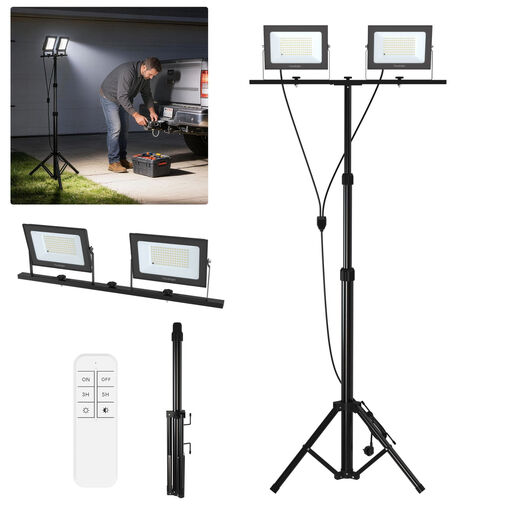
This pick is a set of LED work lights with stands for a temporary setup. Assess the wide beam and cool white colour carefully before deciding whether the set is suitable for a dark background and your recording settings.
 No image available
The adjustable stands and remote-controlled dimming suit a temporary setup. Take a test shot to check that the wide beam doesn’t spill unwanted light onto the dark background.
The product description lists a colour temperature of 6000–6500 K and a 120° beam angle.
Before buying, check the product information for the exact version and the applicable EU product rules. Where required by the rules, CE marking is not an independent test of light quality.
Start with the panel to one side rather than directly beside the lens, then check a test shot. Move or tilt the light if a reflection obscures the detail; you could also try a diffuser. The Smithsonian Institution Archives explains how reflections on shiny surfaces can create bright spots, but this isn’t a specific test involving oil paintings.
Try a second panel as a weaker fill light if part of the detail remains too dark to make out in your test video. Then check that the background is still dark enough, as extra fill light also reduces shadows and contrast.
Record a test video using the camera and dimmer settings you intend to use, then check the footage for banding. Canon Europe explains that some LED light sources can cause banding when used with an electronic shutter; this isn’t a test of a specific panel.
Check the information for the exact version and whether the applicable EU rules require CE marking. Your Europe states that CE marking is mandatory only for products specifically covered by harmonised EU rules; it isn’t an independent assessment of light quality.
No. ACM ConsuWijzer explains that your legal guarantee depends on what you could reasonably expect from the product under normal use. A commercial guarantee from the manufacturer or seller is separate. If a product is faulty, contact the seller.