
Maker of glossy mugs
You want to show off the shape and glaze without distracting bright spots. So look for ways to soften the light and change its angle. Adobe explains how direct light can create harsh highlights and shadows.


For glossy ceramic mugs, an LED panel that lets you soften the light and adjust its angle is generally more useful than choosing one based solely on the highest lux rating. Adobe explains how direct light can create harsh highlights and shadows. Also check that the panel, mount and power supply suit your table setup, and find out which EU product rules apply to the exact item.
You want to show off the shape and glaze without distracting bright spots. So look for ways to soften the light and change its angle. Adobe explains how direct light can create harsh highlights and shadows.
You want the mug’s colour to look consistent across similar product photos. Canon Europe explains that the colour temperature of the light affects the colour captured by the camera. Consistent lighting and white balance are therefore important considerations.
You have limited space around the mug and camera. Check that the panel and its stand fit in the space available, that you can adjust the angle, and what type of power supply the version you choose requires.
Start by considering reflections on the glaze, then check the colour settings, positioning and power supply for your table setup.
| What to consider | What should you check? | Who is this most important for? |
|---|---|---|
| Reflections and shadows | Check whether a diffuser or suitable softbox is available, and whether you can position the panel at a different angle. | If I want to reduce bright spots on the glaze, I focus on soft light and the position of the lamp. Around 33% of consumers say reflections and shadows are their main concern. |
| Mug and glaze colour | Check the adjustable light colour and whether you can set the white balance consistently for the same setup. | If I want the shade of my ceramics to look true to life, I need to match the light and white balance. Around 27% of consumers give colour reproduction their highest priority. |
| Positioning around the table | Check the dimensions of the panel and stand, whether it can be tilted, and whether the version you choose includes a table or floor stand. | If I want to keep the mug and camera on a small table, the lighting needs to fit without taking up unnecessary workspace. Around 27% of consumers focus on this kind of positioning. |
| Power supply and what’s included | Read the contents list for the exact version and check which power supply and any accessories are included. | If I want to use the lamp without having to look for a required power accessory afterwards, I check what’s included in the set beforehand. Around 13% of consumers say the power supply and included components are their main concern. |
A lux rating relates to a particular measuring distance and setup. Figures from different panels are therefore not directly comparable, and they don’t automatically tell you what reflections will look like on your mug.
Only compare figures when they’re based on the same measurement conditions. Also consider the diffuser, light position and panel size for the space where you’ll be taking photos.
The NEEWER NL-116AI and NL660 come in different set configurations. For battery power, NEEWER says the NL660 uses an NP-F battery, which is not included.
Compare the contents list for the exact version with your setup and preferred power source.
Depending on the version you choose, you may need to buy a separate stand or NP-F battery.
The colour of the light and the camera’s white balance affect how the product’s colour appears in the photo.
Start by taking a test shot with suitable white light and the white balance set correctly. Use coloured effects only if that’s the look you want.
NEEWER describes the NL-116AI as a compact bi-colour panel, with a version that includes a mini table stand. According to the manufacturer, the larger NL660 is available with or without a stand.
Godox describes the P260C Pro as a larger bi-colour panel with built-in diffusion. Consider this type if you have space beyond the tabletop.
According to amaran, the P60c is an RGBWW panel; the described set includes a softbox and grid. It’s worth considering if you want to use creative colours as well as neutral light.
Ulanzi describes the VL49 RGB as a small, battery-powered colour panel for accent lighting or a tight setup.
LED video lights available from Joybuy that you can consider as a light source for product photography.
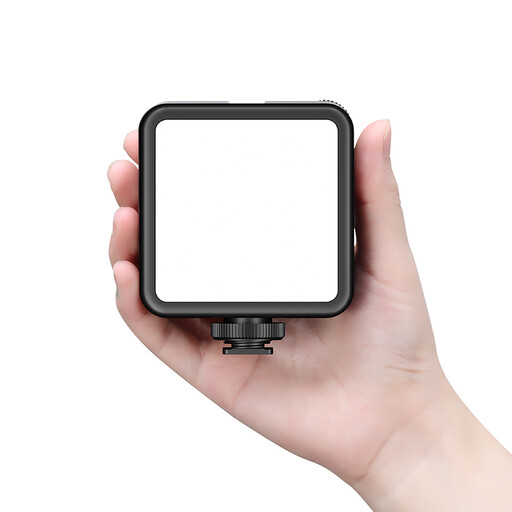 Image unavailable
The product name describes a rechargeable LED video light. Consider this option if you want to compare rechargeable light sources.
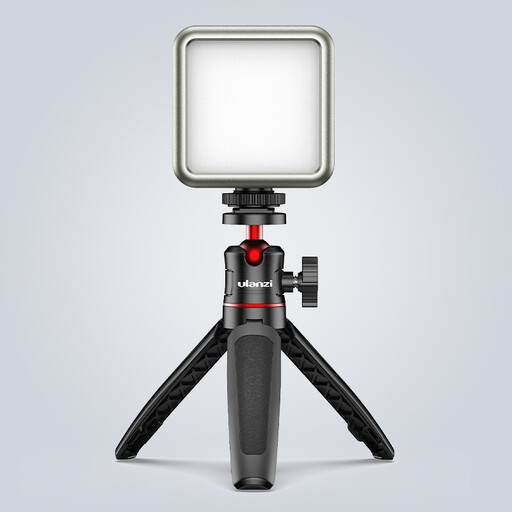 Image unavailable
The product description mentions product photography and a compact RGB video light. Consider it if you want to use adjustable colour.
The product name lists a 2000 mAh battery, dimming, an adjustable range of 2500K–9500K and a magnet on the back. The product information recommends a 5V adapter and advises against using it in damp conditions or looking directly into the light.
Not necessarily. If you can work near a window, try using window light with a white card or reflector first. Canon Europe describes window light as one possible approach to product photography. Then decide whether you need more control for the times you take photos.
Place a diffuser between the lamp and the mug, then change the angle of the panel while checking the reflection on the glaze. A diffuser softens direct light; the best position depends on the mug and camera.
Set the camera’s white balance to match the light you’re using, and keep the settings the same for similar product photos. Canon Europe explains that changing the colour of the light without adjusting the white balance affects the colour captured.
No, it depends on the version. The NEEWER NL-116AI and NL660 come in different set configurations. For battery power, NEEWER says the NL660 requires an NP-F battery, which must be bought separately. So check the contents list for the exact model.
No, a CE logo is not an independent quality mark. Business.gov.nl explains that the manufacturer must establish whether the product meets the relevant technical and administrative requirements and, where required, provide the CE marking and accompanying documentation. The requirements depend in part on the product and its features.
For an eligible online purchase from a professional seller in the EU, you generally have 14 days from delivery to withdraw from the contract, although exceptions may apply. In the EU, faulty goods are covered by a minimum of two years’ legal protection from the date you receive them. Your Europe explains these consumer rules. Check who the seller is and which rules apply to your purchase.