What should you look for when buying?
First decide what matters most to you: colour comparison, reflection control, adjustable fill light or a flexible set-up. Then take test photos using the same settings so you can assess changes in light and white balance more easily.
| What to consider |
What should you check? |
Who is this important for? |
| Colour in window light |
Check whether the colour temperature is adjustable and whether the panel is dimmable. Compare photos taken with the same set-up and a fixed white balance. |
I compare several glaze tests and want to avoid changing window light making colours look different. Around 33% of consumers prioritise consistent colours in changing window light. |
| Reflections on glaze |
Check whether a suitable diffuser or softbox is available and whether you can change the direction of the panel. |
For glossy test pieces, I want to reduce distracting hotspots without making the surface disappear. Around 27% of consumers put reflection control first. |
| Adjustable fill light |
Only compare lux values when the measuring distance, colour setting and light modifier are the same; check the dimming controls. |
I want to brighten the shadow side without letting the panel overpower the window light. Around 20% of consumers give adjustable fill light top priority. |
| A suitable set-up |
Check the power supply, mounting equipment and light modifiers included with the exact version. |
With limited workspace, I want to know whether the panel and required accessories will fit where I work. Around 20% of consumers put a suitable set-up first. |
Joybuy product selection
This selection features a compact RGB fill light for close-up shots of small test pieces and workspaces with limited room; it is not automatically a substitute for a larger panel with diffusion.
 No image available
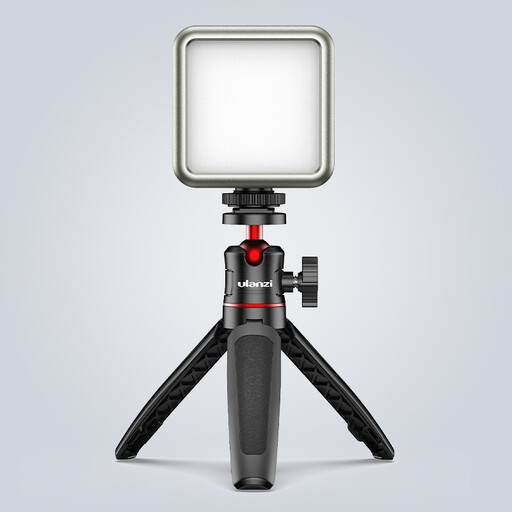
Ulanzi VL49 RGB
A compact fill light for close-up shots of small test pieces; on glossy glaze, a small light source can show up as a distinct reflection.
According to Ulanzi, the VL49 RGB has a 2000 mAh battery. For assessing colour, use the adjustable white-light mode rather than a creative RGB effect.
View at Joybuy
Frequently asked questions
How do I use an LED panel with window light to take comparable glaze photos?
Keep the background, camera and lighting set-up the same, set the white balance deliberately and take a test photo when the window light changes. Canon Europe explains that daylight varies in colour temperature; setting a single Kelvin value won’t automatically correct all mixed lighting.
What can I do if the panel appears as a white hotspot in the glaze?
First, change the angle of the test piece or the panel, and try a larger, diffused light source if needed. MagicBOX discusses distracting reflections on glass and ceramics; Nikon explains that diffusion increases the apparent size of a light source. Check that the light modifier fits your panel.
Do I need to buy a stand or battery for the NEEWER NL660?
It depends on the exact version. NEEWER lists a mains adapter, an NP-F battery that is not included, and separate versions with and without a stand. Check what’s in the box and the connection type before choosing accessories.
What cooling-off period and guarantee apply to an online purchase in the Netherlands?
For online consumer purchases, there is usually a statutory cooling-off period of up to 14 days after delivery, with some exceptions. ACM ConsuWijzer explains that the statutory guarantee is separate from any manufacturer’s guarantee; if a product is faulty, the seller is responsible for providing an appropriate solution. Check the terms that apply to your purchase, especially if you’re buying as a business.
Is a CE mark enough to prove that an LED panel is safe and suitable?
No. A CE mark on its own is not an independent quality assessment. Business.gov.nl and Your Europe explain that the relevant EU product rules depend on the product, so check the information for the specific version and power supply. The mark is the manufacturer’s declaration that applicable rules have been followed, not a guarantee that the panel is suitable for your photography.


