If the window is reflected in the glass, start by moving the print, camera or light source: adding more light won’t make the reflection disappear. If one side of the print is still dark, a dimmable, repositionable panel can help as a fill light, provided you can place it outside the angle of reflection. The Smithsonian Institution Archives describes diffused light as a way to reduce glare. Nikon notes that a polarising filter can reduce unwanted reflections, but it isn’t a guaranteed solution.
Who is this relevant to?
Photographing prints behind glass
If you mainly see a reflection of the window or a lamp, first try changing the position of the print, camera and light. The Smithsonian Institution Archives discusses reflections when photographing shiny surfaces, while Nikon explains how a polarising filter can reduce reflections.
Creating colour-accurate reproductions
If colour differences are noticeable in your prints, it’s worth checking the colour temperature of the light and setting the white balance deliberately. Aputure, Godox and NEEWER publish specifications for their bi-colour panels, but those figures alone can’t predict how your photo will look.
Photographing at home with limited setup space
If you want to fill in shadows beside a window, you’ll need room for the light, its mount and power supply, without creating a new reflection in the glass. NEEWER and Ulanzi product information shows why the model, mounting options and power supply can vary from one light to another.
What should you look for when choosing?
First, look at the glass from the camera’s position. Then decide whether you need extra light. When photographing framed prints beside a window, the main considerations are reflections, colour, even lighting and the space available for your setup.
Start by repositioning the window light
Choose this when: the print is already lit fairly evenly and the main issue is the window appearing in the glass.
Bear in mind: daylight can change. A polarising filter may reduce reflections, but it won’t remove them in every setup.
One dimmable bi-colour panel
Choose this when: one side remains dark and you can position the panel outside the angle of reflection.
Bear in mind: the panel itself may be reflected in the glass. Published CRI and light output figures don’t measure the result on your print.
Two light sources or a larger light source
Choose this when: you regularly photograph larger prints and one fill light doesn’t give you enough control.
Bear in mind: extra equipment needs more setup space and can create additional reflections. A diffuser doesn’t guarantee a reflection-free image.
| What to consider |
What should you check? |
Who is this important to? |
| Reflections in the glass |
Look at the glass from the camera’s position and check whether you can move the window, camera or light. |
If I can see the window in the glass, I want to adjust the positions before buying a light. This is the main priority for around 33% of consumers. |
| Colour under mixed lighting |
Check the colour temperature adjustment range and take a test shot with a deliberately chosen white balance. |
If I want to assess colour differences in a reproduction, I look at both the colour of the light and the white balance. Around 27% of consumers put colour at the top of their list of purchasing concerns. |
| Even lighting |
Compare the corners with the centre of the entire print. Assess stated light output only under the specified measurement conditions. |
If I want to light the whole print evenly, I want to see how the edges compare with the centre. This is the main priority for around 20% of consumers. |
| Positioning and power |
Check that the mount is suitable and see which adapter, stand or battery is included with the version you’ve chosen. |
If space for my setup is limited, I want to know where the light can go and how it’s powered. This is the main purchasing concern for around 20% of consumers. |
Common purchasing mistakes
-
Buying a brighter panel while the window is still reflected in the glass
A reflection can obscure parts of the print. More light won’t solve the problem by itself and may also appear in the glass.
Check the window, camera and frame from the shooting position. Only then position a panel as a fill light, and check the glass again.
-
Assuming a high CRI guarantees accurate print colours
CRI is a stated feature of the light; the colour of the light and the white balance also affect the photo. A specification isn’t a test of the finished reproduction.
Compare the specifications for the exact model and take a test shot using the intended combination of window and LED light.
-
Assuming a stand or battery is always included
The NEEWER NL660 is available in versions with and without a stand. For the version described, a compatible NP-F battery must be purchased separately.
Before buying, check the version, mounting options, power supply and package contents.
Depending on the version, a stand or compatible NP-F battery may still be needed.
Brands and models to consider
Godox
The P260C Pro is a bi-colour panel with a built-in diffuser, designed to provide repositionable fill light alongside window light.
- Godox specifies a colour temperature of 2800–6500 K, maximum input power of 45 W and average CRI/TLCI of at least 98 for the P260C Pro.
- Godox describes the light from the diffuser as softer; this isn’t an independent test using glass or framed prints.
amaran
The P60x is a bi-colour panel for anyone who wants to control light output and positioning, for example when photographing a larger print.
- Aputure specifies a colour temperature of 3200–6500 K and CRI of at least 95 for the P60x. Aputure lists an average of 5070 lux at 1 m at 5600 K.
- The stated illuminance applies at that measurement distance and under those conditions; it doesn’t predict the lighting on a frame at a different distance.
NEEWER
The NL660 is a bi-colour panel available in versions with and without a stand.
- NEEWER lists an adjustable colour temperature of 3200–5600 K, dimming, a diffuser and power via an included adapter.
- A compatible NP-F battery must be purchased separately, and package contents vary by version. These specifications don’t provide independent evidence of colour accuracy or reflection performance.
Ulanzi
The VL49 RGB is a small rechargeable video light for setups with limited space. It isn’t automatically a substitute for a larger fill panel.
- Ulanzi lists a 2000 mAh battery and a compact mount for the VL49 RGB.
- A compact video light isn’t the same as a larger panel or light source. Check whether its shape and positioning suit the dimensions of your print.
Joybuy products
The selection below features compact, portable photo and video lights for setups with limited space. Bear in mind that a compact light won’t provide the same large light source as an LED panel for a larger print.
 No image available
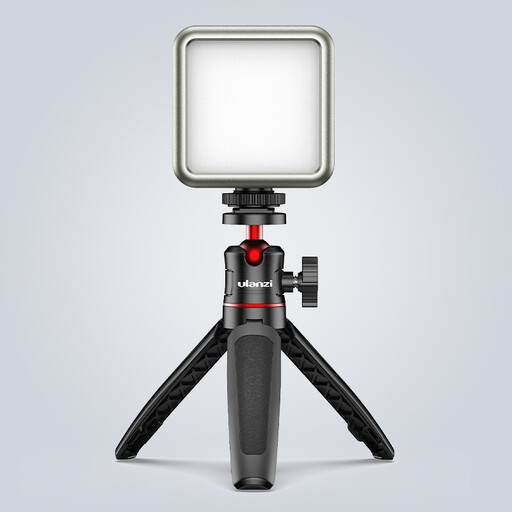
Ulanzi VL49 RGB video light
A compact fill light for product photography when you don’t need a larger panel.
The product title lists dimming, an adjustable range of 2500–9500 K, a 2000 mAh battery and a magnet on the back.
View at Joybuy
 No image available
Ulanzi LM001 portable mini fill light
A small fill light for product photography when you’re looking for a compact mount; it isn’t an LED panel for a larger light source.
The product description lists a magnetic base and a 1/4-inch thread for mounting. The product title states that it has a 500 mAh battery.
View at Joybuy
 No image available
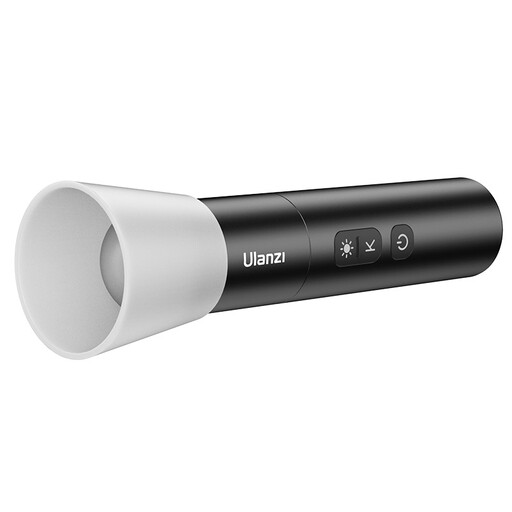
Ulanzi LM07 photography light
A portable photography light you can aim manually; it’s a torch-style video light, not an LED panel.
The product title lists 2000–5500 K, four brightness levels and a 2000 mAh battery. The product description mentions a zoom setting that switches from a wide beam to a spotlight.
View at Joybuy
Frequently asked questions
Will a polarising filter help if the window is reflected in the glass?
A polarising filter can reduce reflections. Nikon describes this as a possible effect; assess the result from your final camera position and check the position of the light too.
Should I adjust the white balance when using window light and an LED panel?
Check the white balance in a test shot, as different lighting conditions affect how colours appear. Adobe describes white balance as a way to correct a colour cast; an adjustable panel also lets you control the colour of its own light.
Does every LED panel come with a stand and battery?
No, this can vary by model and version. NEEWER lists the NL660 in versions with and without a stand, and says that a compatible NP-F battery must be purchased separately. So check the contents of the package you choose.
Does a diffuser eliminate reflections in glass?
No, a diffuser doesn’t guarantee reflection-free glass. The Smithsonian Institution Archives describes diffused light as a way to reduce glare; you should still check the positions of the panel, camera and frame.
What should I check for electrical safety when buying an LED photo panel?
According to the Netherlands Food and Consumer Product Safety Authority, an electrical LED photo panel sold as a consumer electrical product on the Dutch market must carry the applicable CE marking. Check the marking and documentation for the specific model; CE marking alone doesn’t tell you whether the light is suitable for photographing prints.


