
Clay maker with a small table
Films their hands and small shapes close to the camera, and wants a panel that can be put away quickly after use.


For filming clay at a table in a shared bedroom, a compact battery-powered panel is usually a better fit if you often move the light and put everything away afterwards. A larger panel makes more sense if you have room to position it further from your work and set it up in a fixed position. Check the mounting options, diffuser and included power supply too, and make a test recording with your own camera to check for shadows, colour and any banding.
Films their hands and small shapes close to the camera, and wants a panel that can be put away quickly after use.
Wants to capture different clay colours accurately, so looks for adjustable white light and a consistent filming setup. A stated CRI on its own does not guarantee accurate colour in the finished video.
Wants to keep working throughout a continuous recording session, and pays particular attention to the power supply, cables and any visible banding or flicker in their own footage.
When filming clay at a table in a shared bedroom, the space available, accurate colours and length of your recording sessions all play a different part in choosing a panel.
| What to consider | What to look for | Who should pay particular attention? |
|---|---|---|
| Shadows and detail | Check whether a diffuser is included and whether you can angle the panel so it sits outside the path of your hands. View the clay from the camera angle you plan to use. | When filming small shapes and movements, I want my hands to obscure my work as little as possible. Around 31% of consumers place the greatest emphasis on detail and shadows. |
| Space and storage | Measure the available table space and check the dimensions, mounting options, whether a stand is included and the power cable. | In a shared workspace, I want to be able to move or put away my setup quickly after filming. Around 25% of consumers give space and storage top priority. |
| Clay colours | Compare the colour temperature and CRI of the exact model. Then make a test recording with fixed camera settings under the lighting you intend to use. | When different clay colours need to remain recognisable, I want to assess the result in my own footage. Around 25% of consumers prioritise colour rendering. |
| Long recording sessions | Check whether the required adapter or battery is included, and test the light with your own camera at the dimming level you plan to use. | During a long recording session, I want to avoid interruptions caused by the power supply and visible banding in the frame. Around 19% of consumers are most concerned about being able to film continuously. |
The included accessories vary by model. NEEWER offers the NL660 with or without a stand; the listed contents of the SmallRig P96 box do not include a table stand.
Check the parts list for the exact model and consider how you will mount the light on or beside your table.
The Ulanzi VIJIM VL120 Bi-Color and the VL120 RGB product listing have different colour features and colour temperature ranges.
Compare the full model name and specifications of the version you are considering, not just the name VL120.
Light output figures are tied to a measurement distance. For example, SmallRig lists different figures for the P96 at 0.3 m, 0.5 m and 1 m; they are not directly comparable.
Only compare figures measured at the same distance, and assess the light where you will be filming the clay.
The P96 Video LED Light 3286 is an example of a small, rechargeable panel for filming close to a small work surface.
The NL660 is a larger bi-colour panel for a setup where you can direct the light using a bracket.
The LEDP260C is a panel for a larger, directed table setup, with the option of using an adapter or separate batteries.
The VIJIM VL120 Bi-Color Video Light 2029 is a compact alternative for white fill light.
These Joybuy product picks are compact LED lights for a portable table setup, with different mounting options and ways to adjust the light.
 No image available
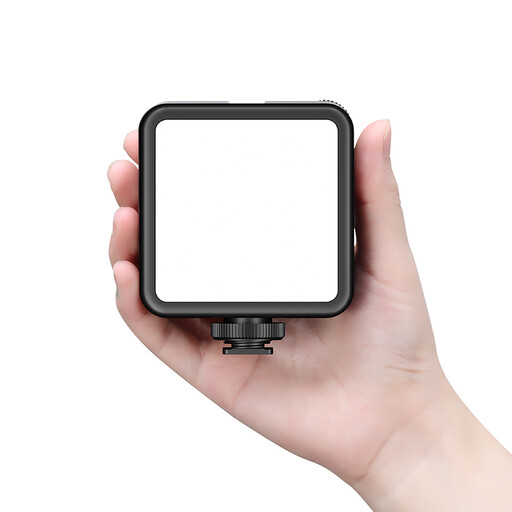
This compact light with a built-in battery is an option if you need portable lighting for a small workspace.
The product information lists 81 LEDs, USB-C, a cold-shoe mount and stepless adjustment of brightness and colour temperature from 3200–5600 K.
Avoid prolonged direct exposure to the light, ensure ventilation at maximum power and keep the connections dry.
 No image available
This compact RGB light is an option if you want to adjust the colour temperature and brightness for a small filming setup.
The product name lists a built-in 2000 mAh battery; the product information mentions dimming and an adjustable range of 2500–9500 K.
Use a standard adapter with a 5V output, avoid damp conditions and do not look directly into the LEDs from close range.
 No image available
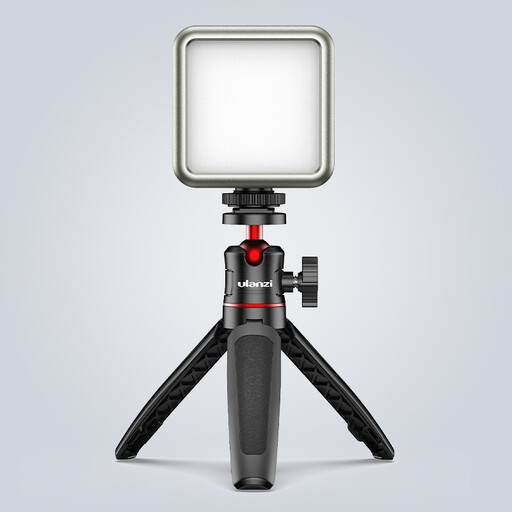
This portable light is an option if you want to mount the light flexibly around a table setup.
The product name lists a 500 mAh battery. The product information mentions a magnetic base and a 1/4-inch thread; the description says it provides soft, even light for product filming.
Make a test recording to see how the light and shadows look on your work surface.
Angle the panel towards your work area and check where the shadows fall from the camera angle you plan to use. A diffuser can soften the transition between light and shadow; make a test recording before settling on your setup.
It depends on the model, brightness and recording time. For the P96 3286, SmallRig lists 105 minutes at maximum brightness, depending on the conditions of use. If you plan to rely on charging while the light is in use, check with the manufacturer that this is possible.
Make a test recording at your preferred dimming level and, if your camera allows it, try a different shutter speed. Canon Europe explains that adjusting the shutter speed can help with flicker from artificial lighting; this does not confirm that a particular panel will produce band-free footage with your camera.
For online consumer purchases, you generally have a statutory 14-day cooling-off period from delivery, subject to exceptions that may apply to the purchase. Separately, a product must meet reasonable expectations when used normally. ACM ConsuWijzer says the seller must offer an appropriate solution for a faulty product.
CE marking is required when the applicable harmonised EU rules specify that it is required for the product. The European Commission explains that the same CE requirements do not apply to every product. CE marking is also not an independent assessment of light output or colour rendering.