If you mainly photograph a single cupcake at a fixed table, start with a dimmable panel that you can position at an angle beside the cupcake, using a diffuser. For a wider composition, panel size, mounting and power matter more. If your decorations are colourful, also compare colour temperature and the manufacturer’s colour-rendering specifications, but don’t treat them as a real-world test. Before buying, check the exact package variant and electrical configuration.
Who is this buying guide for?
Baker with a fixed photography table
If you regularly photograph cupcakes or several items at once, a repeatable set-up will help you adjust the direction of the light, diffusion and power. Canon Europe discusses adapting light for food photography, while the package details from Neewer and amaran show why accessories and power options matter too.
Maker of colourful decorations
If you want to capture icing, cream and decorations faithfully under artificial light, pay attention to colour temperature and white balance. Canon Europe explains how white balance affects colour reproduction. Manufacturer-stated CRI figures are useful specifications to compare, but they aren’t a test of your cupcake photographs.
Photographer with limited set-up space
If you usually photograph one cupcake and often move the light, size, mounting and power supply are important factors to consider. Ulanzi describes the VL49 as a compact model with a built-in battery, while Canon Europe discusses adapting light for food photography.
What should you look for when buying?
First decide how you want to shape and position the light, then match the colour settings to the other light sources in the room. Finally, check that the chosen version includes the power supply and mounting options you need.
| What to consider |
What should you check? |
Who should pay particular attention? |
| Soft, directional light |
Check whether a diffuser or compatible softbox is included, and whether you can position the panel at an angle beside the cupcake. |
If you want to control reflections on icing and harsh shadows around decorations, shaping the light should come first; around 36% of consumers prioritise soft, directional light. |
| Consistent colour |
Compare the colour temperature range and the manufacturer’s stated CRI for the exact model. Take a test shot using a suitable white balance. |
If you want to capture the colours of cream and decorations consistently under artificial light, colour settings matter; around 29% of consumers prioritise colour consistency. |
| Complete set-up |
Check whether the tripod, diffuser or softbox, power adapter and required mounting equipment are included with the specific package variant. |
For a repeatable table set-up, it helps to know in advance what you can use straight away and which accessories you’ll need; around 21% of consumers prioritise ease of set-up. |
| Portability |
Check the size, mounting, power options and stated illuminance, including the measurement distance used. |
If you need to move the light or work in a small space, a compact set-up matters more; around 14% of consumers prioritise portability. |
Common buying mistakes
-
Assuming all Ulanzi VL49 versions are the same model
Ulanzi describes a VL49 with a fixed colour temperature of 5500 K and a separate VL49 RGB with adjustable colour temperature. These versions therefore have different specifications.
Compare the full model name and the features of the version on offer before making your choice.
-
Assuming a tripod and batteries are included as standard
Neewer lists a tripod only with the NL660 with Stand variant; according to Neewer, the NP-F batteries are not included. The package may therefore be less suitable for your set-up than you expect.
Compare what you need for your photography table with the package contents for the exact variant.
-
Treating a CRI figure as a guarantee of accurate cupcake colours
CRI figures are stated by the manufacturer. White balance and other light sources also affect the colours in the finished photograph.
Use the stated figures to compare models, then take a test shot under the lighting you’ll actually use.
Brands to consider
Neewer
The NL660 is a bi-colour panel worth considering if you’re planning a larger, fixed table set-up.
- For the NL660, Neewer lists 3200–5600 K, dimming, CRI ≥96 and a white diffuser.
- According to Neewer, a tripod is included only with the NL660 with Stand variant; NP-F batteries are not included. Check the package variant.
Godox
The P260C Pro is a panel to compare if you’re looking for a built-in diffuser and a wide range of adjustable colour temperatures.
- Godox lists 2800–6500 K and average CRI/TLCI ≥98. The brand attributes the softer light to its side-emitting design with diffuser.
- This manufacturer’s description doesn’t, on its own, show how the panel will perform in a particular cupcake photography set-up.
amaran
The P60x is worth considering if you’re looking at a kit with light-shaping accessories.
- For the P60x, amaran lists 3200–6500 K and CRI ≥95, and includes a compatible softbox, grid and mains power supply in the package contents.
- Check that the package variant on offer includes the accessories you need.
Ulanzi
The compact VL49 models are worth considering for a small, portable photography set-up; the model name alone doesn’t tell you which version you’re looking at.
- For the non-RGB VL49, Ulanzi lists a fixed colour temperature of 5500 K, an integrated diffuser and a built-in battery. For the VL49 RGB, the brand lists adjustable colour temperature and a battery.
- Don’t assume the RGB and non-RGB versions have interchangeable specifications; check the full model name.
Joybuy product selection
This Joybuy selection is suited to a compact, portable set-up for photographing a single cupcake.
 No image available
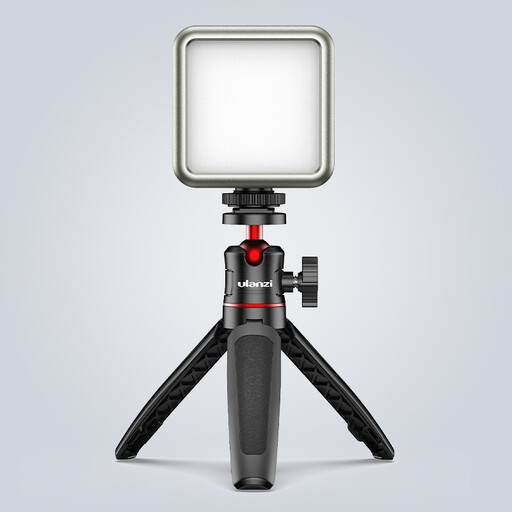
Ulanzi VL49 RGB LED video light
This compact RGB version is suited to a small or changing photography space.
The product listing gives an adjustable colour temperature of 2500 K to 9500 K, dimming, a built-in 2000 mAh battery and a magnet on the back.
Use a 5 V adapter to charge it; the product description warns against using adapters with a higher voltage. Check that the version on offer and its included electrical components carry the CE mark.
Joybuy
Frequently asked questions
How should I position the light to avoid harsh shadows on the cupcake?
Start with a diffused panel positioned at an angle beside the cupcake, then move it around while checking reflections on the icing and the shape of the shadow. For a wider set-up, make sure the panel’s position and mounting work for you too.
Can I leave the kitchen lights on while using the panel?
You can, but different light colours can make it harder to correct your photographs consistently. Where possible, match the colour of the light sources and check the white balance with a test shot.
Does an LED panel come with a tripod and battery?
It depends on the model and package. Neewer lists a tripod only with the NL660 with Stand variant and says the NP-F batteries aren’t included; amaran lists a softbox and mains power supply with the P60x. Check the package contents for the exact version.
Is a two-year manufacturer’s warranty the same as my full warranty rights in the Netherlands?
No. According to ACM ConsuWijzer, the statutory guarantee doesn’t have a fixed two-year term; what you can expect from a product depends on the circumstances. If a product breaks too soon during normal use, contact the seller.
What Dutch safety requirement applies when buying an electric LED panel?
CE marking is mandatory for electrical products placed on the Dutch market, according to the Netherlands Food and Consumer Product Safety Authority. Check the version on offer and the included electrical components; a CE marking on its own says nothing about the light quality for cupcake photography.


