A panel is suitable for craft videos if you can light your work surface from a useful angle and match the brightness and colour temperature to your camera. Make a test recording to see how your hands and work appear on camera, and check for flicker and what’s included in the package. RGB is mainly useful if you also want coloured effects.
Who is this relevant to?
Maker filming over a workbench
You want your hands and work to remain visible as you move components around. The position of the main light and any fill light matters, as well as the stated light output. Canon Europe describes fill light as a way to reduce shadows cast by the main light.
Maker who needs to show colours accurately
You might be showing the colours of materials, thread or paint, and want to match the white light to your camera’s white balance. The colour rendering value is a model specification, not a guarantee of how the result will look on camera. Canon Europe explains that the colour temperature of the light affects how the camera records colours.
Maker with a small home studio
You may need to mount your lighting in a limited space or move it regularly. Check the mount, power supply and included accessories for each version. Ulanzi describes compact mounting options for the VL81.
What should you look for when buying?
| What to consider |
What should you check? |
Who is this important for? |
| Lighting your hands and work clearly |
Check the mounting angle, any diffuser and the distance at which the light output is specified. Film the whole work surface while moving your hands. |
I want my hands to avoid casting shadows over my work. Around 28% of consumers mainly prioritise a clearly visible work surface. |
| Keeping material and paint colours recognisable |
Compare the adjustable white-light range and any colour-rendering specifications for the exact version. Make a test recording using the white balance you intend to use. |
If I’m showing materials or paint, I want to be able to judge the colours on camera. Around 22% of consumers prioritise colour rendering. |
| Stable video footage |
Test at the brightness and camera settings you’ll use for filming, including after dimming the light. Check your camera manual for anti-flicker options. |
I don’t want visible bands or flicker in my tutorial video. Around 22% of consumers consider stable video footage their main buying concern. |
| A suitable mount |
Check the mount, dimensions and contents of the version you’ve chosen. A stand may depend on the version. |
With limited space around my table, the light needs to be practical to position. Around 17% of consumers mainly look for a mount that suits the space available. |
| Power and a complete setup |
Check whether an adapter, battery, diffuser and stand are included. NEEWER states that NP-F batteries are not included with the NL660; the stand option varies by version. |
I want to know in advance what else I’ll need for my setup. Around 11% of consumers mainly consider power and the components needed for their setup. |
Common pitfalls
-
Comparing lux ratings without considering distance or light modifiers
A stated light output applies under specific measuring conditions. On its own, it doesn’t show how the light will fall across your work surface or what shadows your hands will cast.
Check the measuring distance and included light modifier, then make a test recording of the whole table.
-
Assuming a bi-colour or RGB range guarantees accurate material colours
The colour temperature of the light and your camera’s white balance affect how colours appear on camera. Extra RGB modes are no substitute for a useful white-light setting.
Adjust the white light and white balance, then review a recording of the material you’ll actually be showing. Choose RGB only if you’ll use the coloured effects too.
-
Assuming a battery-powered light comes with a battery
NEEWER states that NP-F batteries are not included with the NEEWER NL660, and the stand depends on the package version you choose.
Check what’s included with the exact version before choosing the light and the mount you need.
If a battery or support is missing, you may need to source those parts separately.
Brands to consider
amaran
The P60x is an option for adjustable white panel light, while the P60c adds RGBWW colour control.
- Aputure lists 60 W and 3200–6500 K for the P60x. For the P60c, the brand gives a range of 2500–7500 K and RGBWW.
- These figures and the flicker claim are manufacturer specifications, not independent measurements of your home studio setup.
NEEWER
The NL660 Bi-Color is designed for adjustable white light, either as a main or fill light.
- NEEWER lists 3200–5600 K, CRI 96+ and a tilting bracket. According to the manufacturer, the light can be powered by an adapter or an optional NP-F battery.
- The NP-F battery is not included, and the stand depends on the package version. The product specifications don’t tell you how evenly your workbench will be lit.
Godox
The Litemons LP range includes Bi versions for adjustable white light and R versions with additional colour modes.
- Godox lists 36 W for the LP400Bi and a range of 2800–6500 K for Bi versions.
- Power options vary by model: Godox lists NP-F for LP400 and LP600 versions, and V-mount for the LP1200. Check the specifications for the version you’ve chosen.
Ulanzi
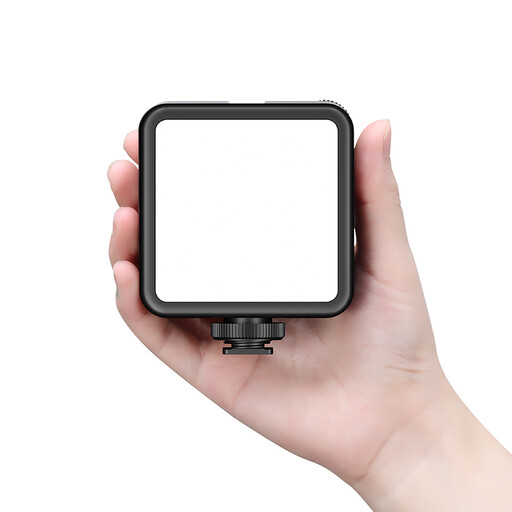
The VL81 is a compact, rechargeable option for a small work area or as additional lighting.
- Ulanzi lists 3200–5500 K, dimming control, a built-in 3000 mAh battery, and cold shoe and threaded mounting options.
- The stated features don’t prove that a single VL81 will light an entire work surface sufficiently. Check the coverage in your own setup.
Joybuy products
This Joybuy pick is suited to compact, rechargeable lighting for small details or limited table space.
 No image available
Ulanzi VL81 rechargeable LED video light, black
Suitable for small details or a tight setup if you can position the light close to your work. Make a test recording to check whether it lights the whole work surface.
Ulanzi lists an adjustable colour temperature of 3200–5500 K, dimming control, a built-in 3000 mAh battery, and cold shoe and 1/4-inch threaded mounting options.
Joybuy
Frequently asked questions
Is one panel enough to light my hands and the whole workbench?
It depends on the size of the table, the distance and the angle of the light. Start with a main light and make a recording while moving your hands. If shadows obscure the steps, try a different angle or a softer fill light. A lux rating at a specified distance doesn’t guarantee coverage of the whole table.
How can I keep the colours of my materials looking true to life?
Match the white light and your camera’s white balance to your setup, then review a test recording of the material itself. Changing ambient light can alter how colours look, and a CRI specification doesn’t guarantee the colours in your footage.
What can I do if my video has bands or flickers?
First, test using the brightness and camera settings you intend to use. Then check your camera’s anti-flicker and shutter speed options. For a specific camera model in a 50 Hz environment, Nikon recommends settings including 1/50 s and 1/100 s. These settings aren’t automatically suitable for every camera or LED light.
What should I check is included before buying a panel?
Check whether the package version includes a stand, adapter, diffuser and battery. NEEWER states that an NP-F battery isn’t included with the NL660 and that a stand is included with some versions but not others.
Which legal markings are relevant for an LED panel in the Netherlands?
According to Your Europe, a CE mark is required when a product is covered by EU harmonisation legislation that requires it. A CE logo on its own isn’t proof of independent testing. Your Europe also states that most electrical and electronic equipment on the EU market must carry a WEEE marking for separate collection. The technical EU requirements that apply depend on the exact light, adapter and any wireless features.


