
Woven basket seller
You take repeatable product photos that need to show the shape, weave and colour clearly. Canon Europe and Adobe both highlight shape and colour as important product details.


For photographing a whole woven basket or creating a consistent series, an adjustable, directional bi-colour panel is a sensible choice; soften or fill in the shadows if they become too harsh. A compact battery-powered light is better suited to close-ups and adding extra light, but it may not be suitable as the only light source for an entire basket. Compare lux figures only when they use the same measurement distance, and check the colour temperature, power supply, diffuser and stand for the exact variant.
You take repeatable product photos that need to show the shape, weave and colour clearly. Canon Europe and Adobe both highlight shape and colour as important product details.
You take photos at home and need to fit the panel, diffuser and background into a small setup. Canon Europe recommends using a reflector or white card to fill in shadows in product photos.
You want to light edges, handles or weaving patterns close up, possibly in different locations. Ulanzi positions the VL49 RGB as a compact light for adding extra illumination.
When photographing baskets, the key considerations are making the weave visible, keeping colours true to life, getting enough light for the whole basket and choosing a setup that fits your workspace.
| What to consider | What to check before buying | Who might prioritise this? |
|---|---|---|
| Making the weave visible | Check whether you can direct the panel and which diffuser is included. If one side is too dark, Canon Europe recommends using a reflector or white card. | If I want to show the texture without shadows hiding parts of the basket, I put texture first; around 36% of consumers say visible texture is their top buying priority. |
| Keeping colours true to life | Check the adjustable colour temperature range and the stated colour rendering for the exact model. Set the white balance to match the light during the shoot. | If I want to avoid the material’s colour shifting under artificial light, accurate colour reproduction is my main concern; around 29% of consumers give colour top priority. |
| Lighting the whole basket | Compare lux figures taken at the same measurement distance, and check the panel dimensions and the space needed for mounting and a diffuser. | When I want to photograph the entire basket in one fixed setup, I focus on coverage; around 21% of consumers prioritise lighting the whole basket. |
| Creating a compact setup | Check what’s included with the variant you choose, the power supply, the tripod mount and whether batteries need to be bought separately. | If space is limited or I want to shoot without a mains socket, I need to know which parts I’ll actually need; around 14% of consumers give a compact setup top priority. |
Aputure states that the amaran P60x delivers an average of 5070 lux at 1 m and 5600 K; Ulanzi states that the VL49 RGB delivers up to 800 lux at 0.5 m. As the measurement distances differ, these figures are not directly comparable.
Compare stated figures taken at the same distance, then assess how the light falls across your basket.
Without the right white balance, artificial light can create a colour cast. Canon Europe, for example, explains that a white wall can look yellow under tungsten light if it isn’t corrected.
Take a test shot with your final lighting setup and check the white balance before photographing a whole series.
The box contents for the NEEWER NL660 vary by variant. The manufacturer lists a stand with the NL660 with Stand variant; compatible NP-F batteries are not included.
Check the parts list for the exact variant you want to order.
If you want to use the light with batteries, you may need to buy suitable NP-F batteries separately. Also check whether the variant you’ve chosen includes the stand you need.
The P60x is a bi-colour panel for anyone who wants to compare stated light output and settings in advance.
The P260C Pro is an adjustable bi-colour panel, and Godox lists a diffuser as part of the lighting setup.
The NL660 is available as a light on its own or as a variant with a stand.
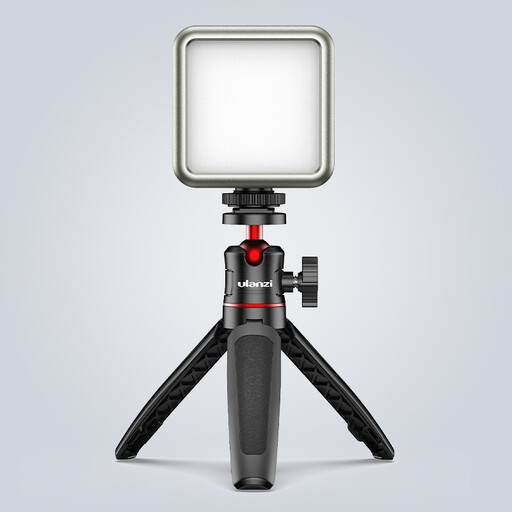
The VL49 RGB is a compact, rechargeable panel for close-up fill lighting and detail shots.
This Joybuy pick is best suited to compact fill lighting and close-ups; check that your setup provides enough light for the entire basket.
 No image available
Best suited to close-ups of weaving or handles, or as a compact additional light source; one small panel may not provide even lighting across an entire basket.
The product name lists dimming, a colour temperature range of 2500–9500 K and a 2000 mAh battery.
According to the product information, use only a standard 5V adapter and don’t use it in damp conditions. Don’t look directly into the LED from close range.
Position the main light so the texture is visible. If one side is too dark, try using a reflector or white card to bounce light back; a diffuser can soften harsh shadows.
Yes, if the basket’s colour matters. Your camera can capture a colour cast under artificial light, so set the white balance to match the light falling on the basket during the shoot; a CRI rating doesn’t replace this camera setting.
It depends on the model and variant. The NEEWER NL660 with Stand includes a stand in the box; the NL660 Only does not. Compatible NP-F batteries are not included. Check what comes with the variant you’ve chosen.
CE marking is only required for product groups covered by the relevant EU rules. Where those rules apply, the manufacturer uses the mark to declare that the product meets the applicable requirements; CE is not an independent award for photographic quality. Your Europe and the Dutch government’s Ondernemersplein explain these requirements. For a specific product, check the relevant product information and safety documentation.
For online purchases from a business, you usually have a 14-day cooling-off period. The Dutch government explains this consumer right; check whether it applies to your specific transaction.