
Vandaag of morgen in huis

Kwaliteit gegarandeerd

Welkomstaanbiedingen ontgrendelen: GRATIS bezorging | Tot 80% korting | Gratis 30 dagen JoyPlus-proefperiode
Download de app
LED outdoor lighting can make an entrance safer, keep a patio usable after sunset and add extra atmosphere to a garden. Yet the choice is often based on a high lumen figure or an appealing product photo. That does not always tell you whether the light is suitable for outdoor use in the Netherlands.
Pay particular attention to moisture protection, how the light is powered and where it will be installed. This helps you avoid situations where a solar outdoor light barely recharges in the shade, or a wireless outdoor light cannot withstand direct rain.
A light with a high lumen output is not automatically comfortable next to a front door or on a balcony. A powerful floodlight can cause glare or disturbance when aimed directly at windows or the street. For ambient garden lighting, a lower light output is often sufficient. For a driveway or large grounds, a wider beam may be more important than the maximum lumen figure alone.
IP44 outdoor lighting is protected against splashing water, but is not designed to be submerged or exposed to powerful water jets. A light installed under a canopy is therefore subject to different conditions from one mounted on a completely exposed façade.
IP65 outdoor lights offer a higher level of protection against dust and water jets according to their classification. However, always check the full product description and installation instructions. The mounting location, seals and cable connections also affect the product’s lifespan.
Solar garden lighting works most reliably when the panel receives enough direct sunlight during the day. Installing it under a tree, balcony or north-facing canopy can limit charging time. In winter and on cloudy days, the operating time may also be shorter.
For a light powered via USB or batteries, it is worth checking whether the battery is included, which type is required and how the light is charged.
Light output is measured in lumens (lm). Use this figure to compare products intended for the same application:
Colour temperature is measured in Kelvin (K). Around 2700–3000 K usually produces warm white light for a patio or garden. Higher values appear cooler and may be suitable for functional lighting. Also check whether the light is dimmable. A dimmable LED light gives you greater control, but dimming levels and controls vary between models.
An outdoor light with a motion sensor is useful by an entrance, shed or driveway. Check the detection range, detection angle and adjustable operating time. A sensor set to be too sensitive may repeatedly activate because of pets, moving branches or passing traffic.
The UME light below states a detection range of 60 feet, an angle of 180 degrees and three light modes. These details come from the product description; actual detection also depends on the installation height and surroundings.
A fixed outdoor LED wall light usually requires a suitable power connection and secure installation. A solar outdoor light or wireless outdoor light offers greater flexibility, but has limitations relating to sunlight, battery capacity or charging.
Before buying, check:
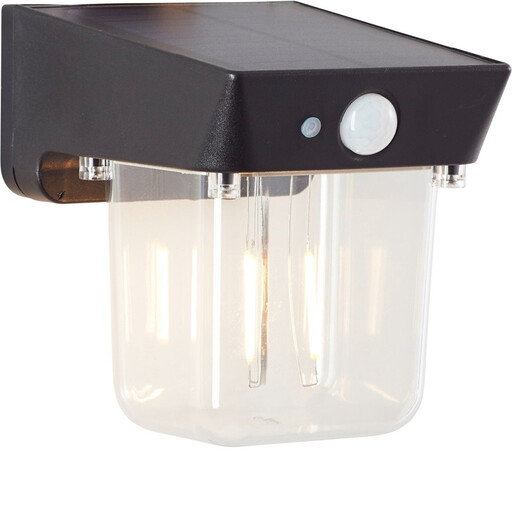
Why it suits this profile: This outdoor LED wall light combines an integrated solar panel with a motion sensor. That makes it suitable for an entrance, patio or small garden where no power socket is available.
The product details specify IP44, making it clear that the light is protected against splashing water rather than being completely waterproof. With 180 lumens, it is not intended to function as a wide-beam floodlight.
Solar power, motion sensor, dimmability and a compact height of 11.5 cm. The stated light colour is 2700 K.
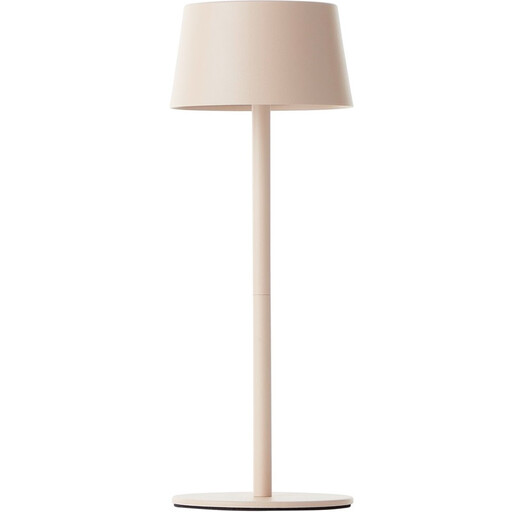
Why it suits this profile: Ideal if you value a cosy atmosphere on a patio, balcony or garden table and want to be able to adjust the brightness yourself.
The specifications state 170 lumens and three dimming levels. This makes its intended use clear: ambient lighting and table use, not illuminating an entire driveway.
Three dimming levels, solar and USB charging, an integrated battery and IP44 splash protection.

Why it suits this profile: The three adjustable heads and stated wide coverage make it suitable for a garage, driveway, garden or larger grounds where functional lighting is needed.
The product description specifies IP65, three light modes and a sensor angle of 180 degrees. This means the protection rating and control options can be checked in advance.
302 LEDs, a stated light output of 3000 lumens, three adjustable light heads and solar power with an 1800mAh battery.
We have put together a complete, up-to-date list of products that fully meet these strict selection criteria and the applicable European safety regulations.
For a soft, atmospheric look, you can choose an LED string light, solar garden lighting or outdoor Christmas lights. When choosing decorative models, pay attention to the IP rating, the length of the cable and the power supply. A model with a battery compartment is flexible, but requires regular battery replacements. A mains adaptor allows continuous use, but requires a suitable socket.
According to the product details, the M.TK Meteor Shower Lights have 192 coloured LEDs, eight hanging points and IP44 protection. The DDHS wreath has 200 lights, eleven light modes, a remote control and timers. Use this type of decoration only in accordance with the manufacturer’s instructions and check that the chosen location is adequately protected from rain.
According to the product information, a 5-metre Philips Hue Essential LED strip is intended for indoor use. It is therefore not the same as outdoor lighting, even though an LED strip can create a cosy atmosphere behind furniture or in a covered area.
For a small entrance or patio, around 100 to 300 lumens may be sufficient. A driveway or large area will often need more light or multiple fittings. Also consider the beam angle and positioning, rather than looking only at the lumen figure.
IP44 is suitable for locations where the light is protected from splashing water, such as under a canopy. It is not a rating for submersion or direct water jets. For a completely exposed location, a higher level of protection, such as IP65, may be more suitable.
LED lighting generally uses little electricity compared with many older light sources. Actual consumption depends on the wattage, operating time and sensor settings. Solar and battery-powered models do not use a fixed mains connection, but the battery still needs to be charged sufficiently.
