
Vandaag of morgen in huis

Kwaliteit gegarandeerd

Welkomstaanbiedingen ontgrendelen: GRATIS bezorging | Tot 80% korting | Gratis 30 dagen JoyPlus-proefperiode
Download de app
LED outdoor lighting can make an entrance, balcony, garden or patio both more functional and atmospheric. However, not all lights are suitable for the same spot. A product that looks great online may, in practice, give out too little light, run out of power quickly, or offer insufficient protection against rain.
The most common buying mistakes stem from three incorrect assumptions:
With the right specifications, you can make a more informed choice between solar outdoor lighting, battery-powered lights, an LED wall light for outdoors, or outdoor string lights.
An outdoor light often displays an IP code. The second digit indicates how well the product is protected against water. An IP44 outdoor light is protected against splashing water from any direction. This makes IP44 suitable for, for example, a covered patio, balcony, garden wall or entrance.
Do not place an IP44 light in a puddle, under a gutter where water constantly runs, or in a spot exposed to direct high-pressure jets. Also check that charging ports, connections and battery compartments are properly sealed.
Colour temperature is expressed in Kelvin:
Lumens indicate how much light a lamp produces. A solar table lamp with 170 lumens is primarily intended as an accent or table lamp. A wall light with 300 lumens can be more practical by a door or walkway. So don't just look at the number of LEDs.
Wireless outdoor lighting is handy for rental properties, balconies and places without a power point. Pay attention to the difference between:
Measure the wall, table or railing beforehand. For magnetic mounting, the surface must be flat, clean and sufficiently magnetic. Also check that the light cannot fall or come into contact with flammable materials.
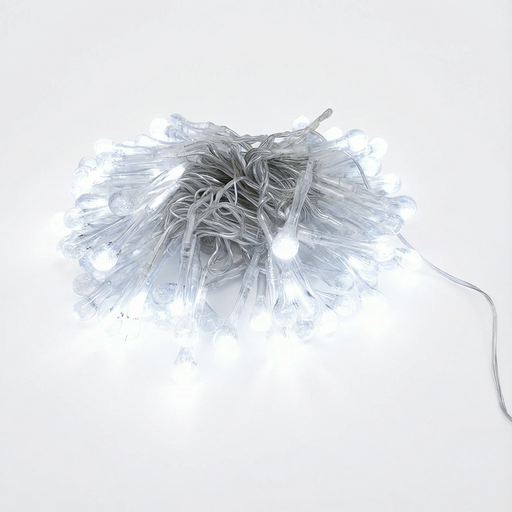
Why this fits the profile: This battery-powered string light is easy to place around a balcony, garden fence or party table without needing a plug socket.
The specifications state 8.3 metres, 100 LEDs, 8 functions and IP44. The 3 AA batteries are not included, so factor in that extra purchase.
100 LEDs, 8 light functions, memory function and a length of 8.3 metres. The colour is cool white at 6500K.
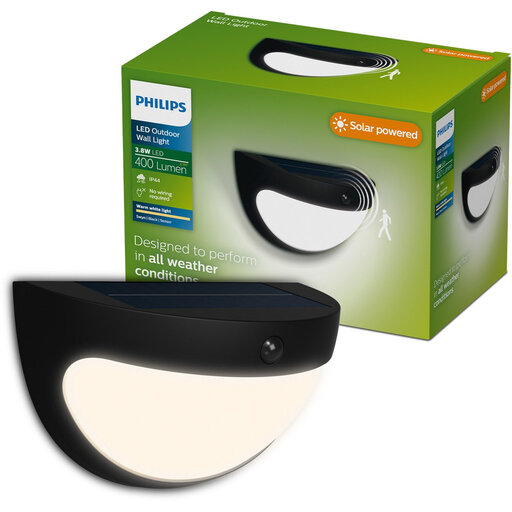
Why this fits the profile: A fixed solar wall light with a sensor suits an entrance, fence or facade where you don't want to run a cable.
The light has IP44 and must be mounted in a spot with direct sunlight. According to the product description, it features a daylight and motion sensor and two modes.
Solar power, motion sensor, two light modes, warm light colour and a stated light output of 400 lumens per light point.

Why this fits the profile: This wireless outdoor light is useful by a door, patio, balcony or garden shed where automatic lighting is desired.
The motion sensor and USB-C charging function reduce reliance on a plug socket. IP44 does mean splash protection only; do not place the light in direct running water.
300 lumens, 3000K, integrated LED, magnetic mounting, 18650 batteries and a built-in motion sensor.
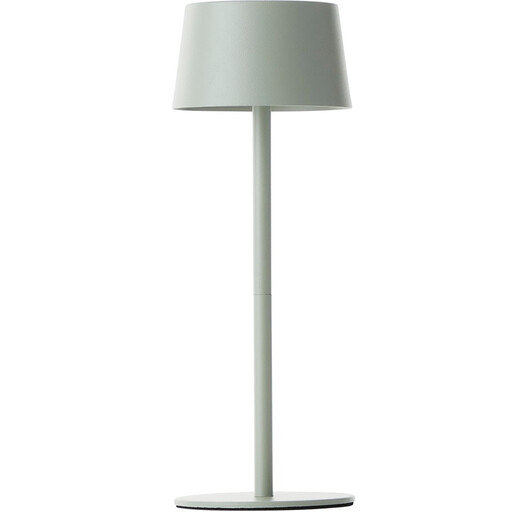
Why this fits the profile: For those who want to flexibly light a table on the patio, balcony or in the living room without a fixed connection.
In addition to solar charging, USB charging is possible. This makes you less dependent on sunlight. The lamp must stand stable and level, and with IP44 it is not intended for submersion.
170 lumens, 3000K, three dimming levels, solar and USB charging, integrated battery and IP44 protection.
We've put together a full, up-to-date list of products that fully meet these strict selection criteria and comply with current European safety regulations.
LED typically uses less electricity than older lighting technologies, but the actual consumption depends on the wattage and burn time. Solar outdoor lighting uses no mains electricity while in use. With battery-powered lights, the cost of replacement batteries is part of the total running costs.
The lifespan varies by model, usage duration, battery and environment. An integrated LED is often not replaceable. So check the warranty, charging method and product information before you buy. With solar products, it helps to keep the panel free of leaves and dirt.
Aim an outdoor light with a motion sensor at an entrance, garden path or garage where movement is expected. Mount the light securely and avoid branches or passing traffic constantly triggering the sensor. With a magnetic light, the mounting plate must be suitable for the weight and the surface.
