
Vandaag of morgen in huis

Kwaliteit gegarandeerd

Welkomstaanbiedingen ontgrendelen: GRATIS bezorging | Tot 80% korting | Gratis 30 dagen JoyPlus-proefperiode
Download de app
LED outdoor lighting can make a garden, driveway or vehicle more practical, but the product description doesn’t always tell the whole story. For example, a high wattage doesn’t automatically mean a lamp produces lots of light. Solar garden lights may also be advertised as lasting a long time, while their actual run time depends heavily on sunlight, positioning and battery capacity.
When comparing products, watch out for these three common pitfalls:
Lumens indicate how much visible light a lamp produces according to its product specifications. A modest light output may be enough for decorative solar ground lights. A driveway, work area or unlit route will generally need a different beam pattern.
Pay attention to the colour temperature, too:
A wide beam spreads light over a larger area. A combined near- and far-beam pattern is more likely to be intended for use on vehicles. So, consider whether you need a lamp for orientation, ambience, visibility or long-range illumination.
The IP code consists of two digits. The first indicates protection against solid particles and dust; the second indicates protection against water.
An IP rating won’t protect against incorrect wiring, prolonged immersion or a damaged housing. Check cable entries, fixings and maintenance requirements, too.
For solar garden lights, solar garden lighting and solar path lights, the position of the panel is key. Place it somewhere as free from shade as possible. A charging time of four to six hours doesn’t automatically mean the light will stay on for the same length of time every night. Cloud cover, the season, dirt and the age of the battery all have an impact.
Also check:
For smart outdoor lighting, Bluetooth Mesh is worth considering if you want several lights to work together. Check which app, phone connections and features are supported in advance. “Control more than 200 devices” is a claim from Aigostar’s product information; how well it works in practice also depends on the layout of the space and the connection between devices.

Why it suits this profile: These solar path lights are easy to push into the ground and don’t need fixed wiring. This makes the set suitable for a garden path, border or entrance where you mainly need light to help you find your way.
The product specifications give clear details: IP44, a NiMH battery, a charging time of four to six hours and a battery life of eight to twelve hours. This makes it easier to match the product to the limited light output of 0.012 W.
Stainless steel housing, a height of 550 mm and a stated lifespan of 15,000 hours.
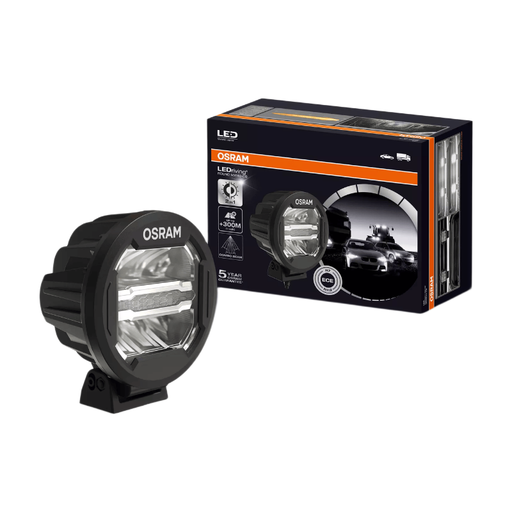
Why it suits this profile: For motorists, transport operators and off-road drivers looking for a powerful LED driving light with specifications designed for vehicles.
The product information lists 12/24 V, IP69K and ECE R7, R112 and R10. Even so, check the UK regulations and the correct connection for your vehicle before fitting.
3000 lumens, 6000K, a combo beam and a range of up to 300 metres stated by OSRAM. The light has a polycarbonate lens and an operating temperature of -40 °C to 85 °C.
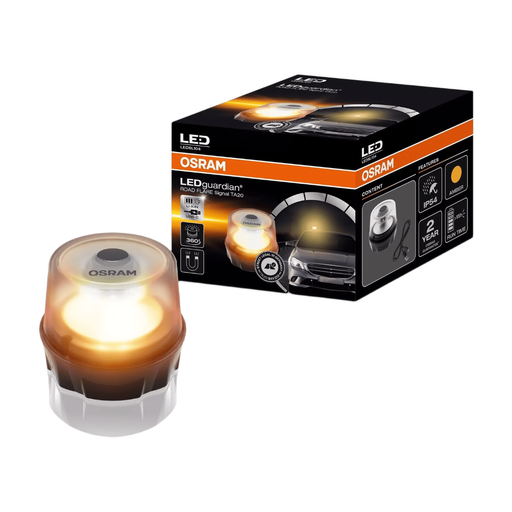
Why it suits this profile: This magnetic emergency light is designed for breakdowns, marking road hazards and providing a temporary warning on vehicles with a magnetic metal surface.
The light recharges via USB-C, so it doesn’t rely on disposable batteries. The manufacturer also notes that regulations for additional warning lights can vary by country; check the rules before using it on public roads.
Orange light, 360° visibility according to the product description, a stated brightness of 140 lumens and a battery life of up to 15 hours.
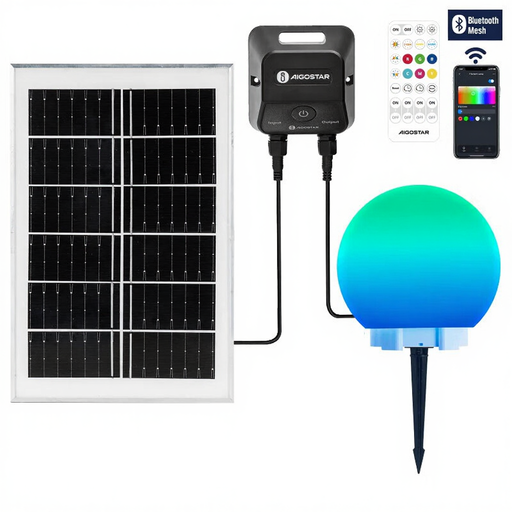
Why it suits this profile: This recessed solar ground light is a good fit if you want to combine RGB outdoor lighting, warm-to-cool white light and Bluetooth Mesh controls with a wireless installation.
The stated specifications include 200 lumens, IP65, a charging time of four to six hours and up to 24 hours of battery use. This makes it clear that it’s designed for ground and ambient lighting, not as a powerful work light.
RGB plus 2700K–6500K, a three-metre cable to the light and a stated lifespan of 30,000 hours.
We’ve put together a complete, up-to-date list of products that meet these strict selection criteria and the applicable European safety regulations.
It depends on what you need it for. A few dozen to a few hundred lumens is often enough for decorative solar garden lighting or a flower border. For a driveway, work area or vehicle lighting, the beam pattern is particularly important. Compare lumens, beam angle and mounting height together, rather than looking at wattage alone.
The stated lifespan of an LED might be 15,000 or 30,000 hours, for example, but the battery is a separate component. Actual run time depends on sunlight, temperature, battery capacity and charging cycles. Position the panel somewhere free from shade and clean it regularly.
According to the classification, IP65 is intended for dust-tight equipment protected against water jets. This can make it suitable for many uses around the garden, patio and exterior walls. However, check the fitting instructions, cable connections and any local conditions. Vehicle lighting is also subject to specific requirements for fitting, use and road use.
