
Vandaag of morgen in huis

Kwaliteit gegarandeerd

Welkomstaanbiedingen ontgrendelen: GRATIS bezorging | Tot 80% korting | Gratis 30 dagen JoyPlus-proefperiode
Download de app
LED outdoor lighting can make a garden, patio, façade or balcony more functional and atmospheric. However, not every light is suitable for British weather conditions. An attractive design or a large number of lighting modes says little about real-world performance. So first check the protection against moisture, how the light is charged and how much light it produces.
A light with IP44 is protected against splashing water, but not against immersion or direct jets of water. This makes it suitable for a sheltered patio, balcony or covered area, but less suitable for a spot where rainwater is constantly landing on the light.
For more exposed locations, IP65 may be a more practical choice. Always check the manufacturer’s instructions as well. A solar string light with IP65 is not automatically suitable for placing the solar panel or connection in a puddle.
Wattage indicates how much energy a light uses, not how much light it produces. For the latter, look at lumens. A decorative patio light producing between 140 and 170 lumens is designed to create ambience. A path, entrance or workspace will often require more light.
Colour temperature also affects the overall experience. 2700 to 3000 kelvin produces warm white light. A range of 3000 to 6500 kelvin offers greater flexibility, for example for LED garden lighting that needs to be both atmospheric and practical.
Outdoor solar lights only work well if the panel receives enough direct light during the day. Shade from a fence, tree or balcony can increase charging time and reduce the operating time. In winter and during overcast periods, the available solar energy is also limited.
That is why a USB charging option can be useful. The Brilliant Viani table lamp combines a solar panel with USB-A charging. This means you are not entirely dependent on the weather.
First decide what you will use the light for:
A dimmable outdoor light gives you greater control. However, check how the dimming works: via a touch button, remote control, app or voice assistant. This determines how much installation and configuration will be required.
Solar lighting does not require a permanent cable to a socket, but it does need a suitable location for the panel. USB lights can be moved around easily, but need regular charging. Plug-in lights generally provide a predictable power supply, but cables must be routed safely alongside walkways.
For smart outdoor lighting, also check:
For outdoor use, the IP rating, installation location and material are more important than appearance alone. Plastic is lightweight and easy to clean; metal can create a different look, but requires attention to its finish and any damage.
Integrated LEDs cannot always be replaced by the user. So check the stated lifespan and keep your purchase information for the statutory guarantee. Clean outdoor lights with a soft, dry cloth and follow the manufacturer’s safety instructions.
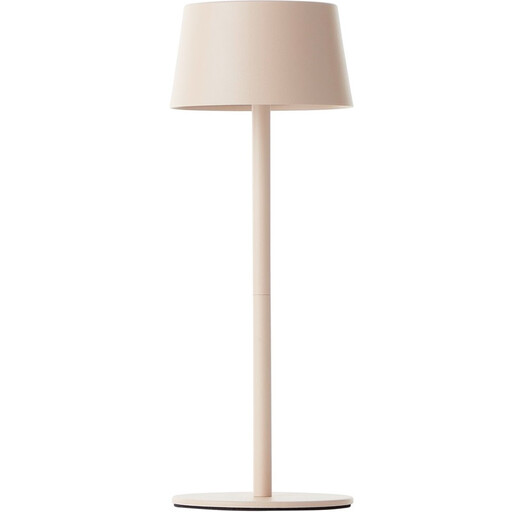
Why it suits this profile: A cordless table lamp is easy to place on a balcony, table or sheltered patio without permanent installation.
The combination of solar and USB charging reduces reliance on sunny days. IP44 clearly defines its splash-water protection: do not place the light in driving rain without shelter.
170 lumens, warm white light at 3000 K and three dimming settings. The integrated battery can be charged via solar power or USB-A.
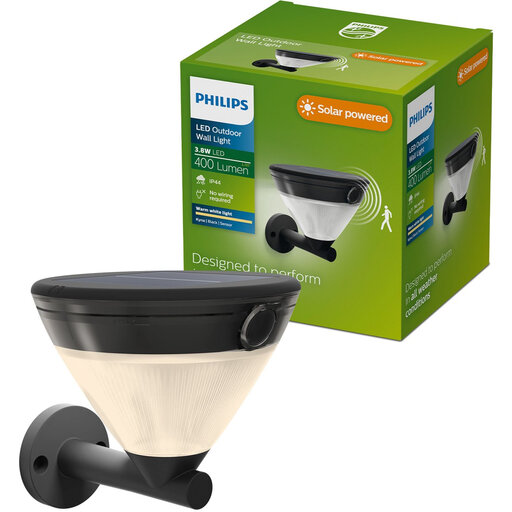
Why it suits this profile: This solar wall light is designed for permanent installation by an entrance, on a façade, balcony or beside a garden path.
The specifications state 400 lumens, two lighting modes and IP44. This makes it clearer what the light is designed for and where it should be installed.
Automatic activation via a sensor, warm white light at 2700 K and no permanent power cable required.
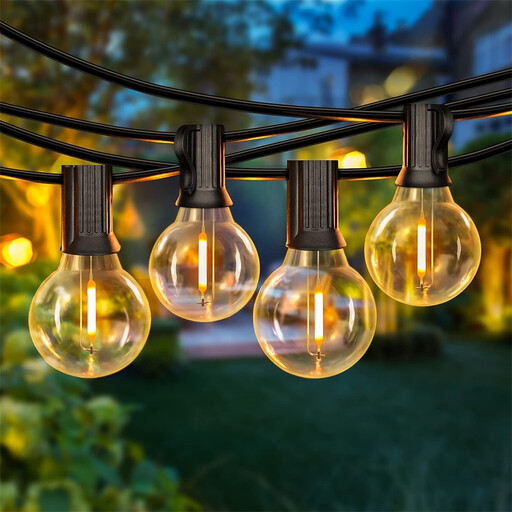
Why it suits this profile: Ideal for long patios, balconies, party venues and gardens where a continuous line of light is wanted.
The cable runs on mains power, so the lighting is not dependent on a small solar battery. The bulbs are replaceable, but connections must remain dry and secure.
30-metre length, dimming function, timer, multiple lighting modes and replaceable G40 LED bulbs.

Why it suits this profile: A suitable choice for anyone who wants to combine LED garden spikes, RGB colours and app control.
The product information specifies IP44 and installation with ground spikes, as well as a cable. Do not leave the cable loose across a walkway and protect it from water.
Three lights, 660 lumens in total, adjustable CCT white colour, RGB, dimming function and control via Tuya Smart and Bluetooth.
We have put together a complete, up-to-date list of products that fully meet these strict selection criteria and the applicable European safety regulations.
For a sheltered location, IP44 is often a practical choice, as this rating indicates protection against splashing water. For a light exposed to more rain and dust, a higher rating may be more suitable. Always check the installation instructions and avoid immersion unless the manufacturer explicitly permits it.
Lifespan varies depending on the model, use and conditions. Some product descriptions, for example, state 25,000 or 30,000 hours for the LED light source. This is a product specification, not a guarantee that it will last for the same amount of time in every garden. For solar lighting, the battery is also an important component; cold temperatures, limited sunlight and charging cycles affect the user experience.
LEDs generally use little electricity, but consumption depends on wattage, operating time and the number of lights. Solar lighting does not use mains electricity while it is lit, but its performance depends on sunlight and battery capacity. A dimming function, timer or motion sensor can help ensure that a light only operates when needed.
