
Vandaag of morgen in huis

Kwaliteit gegarandeerd

Welkomstaanbiedingen ontgrendelen: GRATIS bezorging | Tot 80% korting | Gratis 30 dagen JoyPlus-proefperiode
Download de app
An LED outdoor light may seem simple to choose, but small differences can determine whether you enjoy good lighting for years or need to replace it after just a few months. A light may look modern in a product photo, yet give off less light than expected, have an awkward sensor or feature a housing that isn’t suitable for the place where you want to install it.
So, keep an eye out for these three common pitfalls:
An IP rating consists of two digits. The first indicates protection against solid particles, while the second indicates protection against moisture.
An IP44 outdoor light is protected against splashing water from different directions. This makes IP44 suitable for many sheltered walls, balconies and covered patios. However, don’t install one somewhere it will be exposed to heavy rain, jets of water or splashing dirt for long periods.
For a garden wall in a fully exposed spot, a higher IP rating may be worth considering. Also check the installation instructions and cable seal. The term waterproof outdoor lighting is sometimes used rather loosely in adverts, so always check the official IP rating.
Lumens (lm) indicate how much light a product gives off. A lower light output is often enough for atmospheric wall lighting. For an entrance, shed or path, you may want brighter, more practical lighting.
Colour temperature is measured in kelvins:
For example, a Philips Zyra or Fira wall light in the product information has 2700K, 800 lumens and an integrated LED light source. According to the product specifications, these models are designed for outdoor use and have an IP44 rating. When buying, check that the colour temperature you choose works with the rest of your garden lighting.
A mains-powered 230 V outdoor wall light generally provides consistent lighting, but requires a suitable power connection. A solar outdoor light works independently of the mains, but its run time and brightness depend on the amount of daylight and the position of the solar panel.
A light with a GU10 fitting gives you more flexibility: you can replace the light source later or choose a different colour temperature. Do check the maximum wattage, and bear in mind that the light may sometimes be supplied without an LED bulb.
A motion sensor outdoor light also needs a little consideration. Check the detection angle, adjustable on-time and installation height. A sensor pointing towards a busy pavement or moving branches may switch on unnecessarily often.
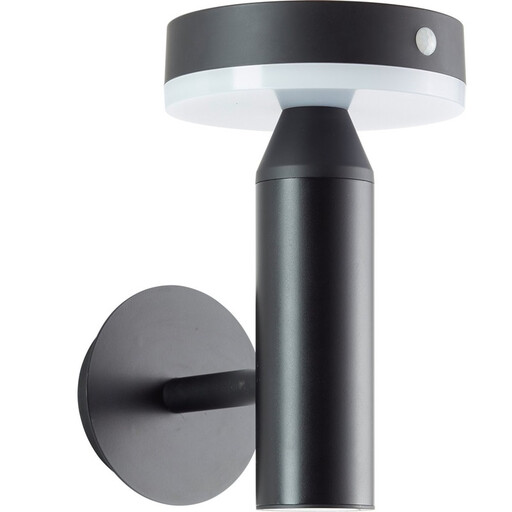
Why it suits this type of user: A practical choice for a balcony, patio or garden path without an existing power connection.
The product information clearly states that it is solar-powered, has a motion sensor and is rated IP44. Bear in mind that performance still depends on sunlight.
350 lumens, 4000K, an integrated battery and a 120° detection angle, according to the product specifications.
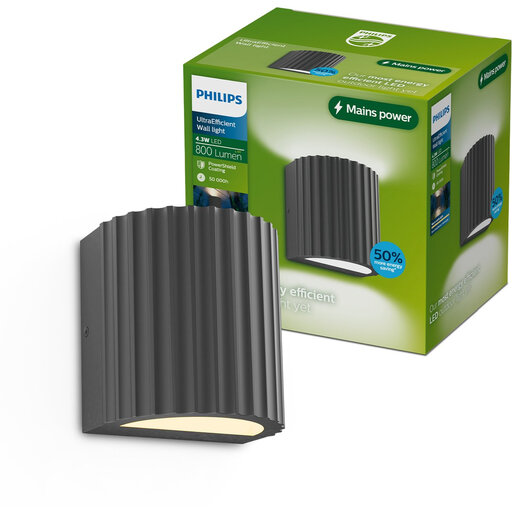
Why it suits this type of user: A good choice if you’re looking for a fixed, modern outdoor wall light for a wall, balcony or garden wall.
The product listing gives the lumen output, colour temperature, wattage and IP rating. This lets you compare the light using clear specifications rather than judging it on design alone.
Integrated LED, 800 lumens, 4.3 watts, 2700K and two-way light distribution, according to the product details.
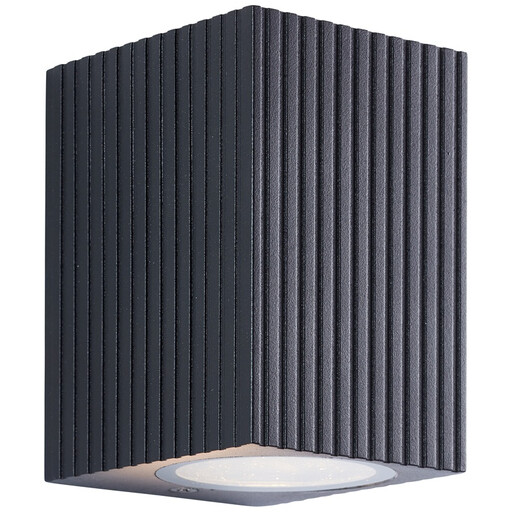
Why it suits this type of user: A handy option if you want to choose the light source yourself and replace it easily later on.
According to the product information, this fitting is supplied without a light source. That’s clearly stated, so you won’t accidentally buy a light without allowing for a separate GU10 LED bulb.
GU10 fitting, maximum 10 watts, aluminium/glass/plastic construction and IP44 rating, according to the stated specifications.
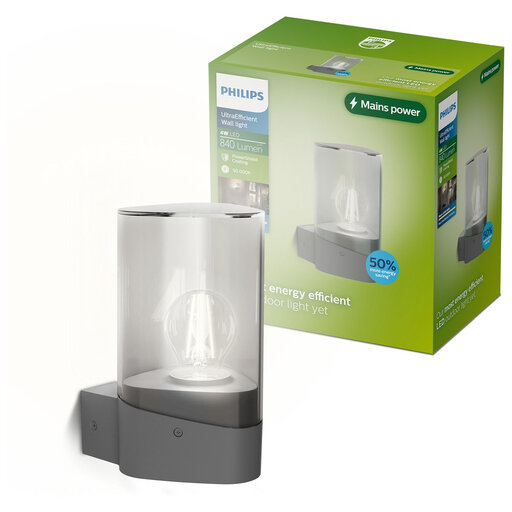
Why it suits this type of user: A good match for a modern exterior where warm light and a replaceable E27 LED bulb are important.
The E27 fitting and 2700K colour temperature are specified, so you can choose a light source to create the atmosphere you want.
E27 fitting, 840 lumens, 4 watts, 2700K and IP44 rating, according to the product information.
We’ve put together a full, up-to-date list of products that meet these strict selection criteria and comply with the applicable European safety regulations.
No. IP44 protects against splashing water, but not direct jets of water or prolonged exposure to severe weather. This rating may be suitable for a sheltered entrance or balcony. Check the installation location and follow the manufacturer’s instructions.
That depends on the wattage, the number of hours it’s on and the price of electricity. A 4-watt light uses around 4 kWh over 1,000 hours. A motion sensor can reduce the number of hours it’s on. With a solar outdoor light, you don’t pay for electricity to power the light, but its performance depends on daylight, battery capacity and the outdoor temperature.
Lifespan varies by model, operating conditions and heat dissipation. According to the product information provided by some Philips models, the light source can last up to 50,000 hours. This is a claim made by the brand, not a guarantee for every real-world situation. Clean the fitting carefully, keep moisture out of the connections and make sure fixed 230 V installations are connected safely.
The same selection principles apply to indoor lighting: look at lumens, colour temperature, fitting and controls. An LED ceiling light can be a practical choice for a hallway. A motion-sensor night light is suitable for a bedroom or child’s room where you don’t want to switch on bright main lighting. In a gaming room, RGB LED wall lighting and gaming lights are particularly appealing for their colour options, remote controls and app or music synchronisation. Always check the power supply, installation method and distance from moisture.
