
Vandaag of morgen in huis

Kwaliteit gegarandeerd

Welkomstaanbiedingen ontgrendelen: GRATIS bezorging | Tot 80% korting | Gratis 30 dagen JoyPlus-proefperiode
Download de app
An LED night light can quickly make a bedroom, children’s room, living room or gaming space more comfortable. But the difference between a useful light and a poor purchase can be greater than its appearance suggests. A light may offer a wide range of colours, yet still be impractical because of short battery life, limited controls or unsuitable brightness.
The Joybuy Product Recommendation Officer selects products based on verifiable features, such as dimensions, power supply, lighting modes and control options. This makes it easier to compare marketing claims with the actual product specifications.
An RGB night light with several colours sounds versatile. But check how you select those colours. Some models only offer a fixed colour cycle, while others work with a remote control or app. Check the dimming function too: RGB colours aren’t automatically dimmable.
For a bedroom, a soothing warm white setting is often more practical than bright colour changes. In a gaming space, scenes, music sync and app control may be more important.
A rechargeable night light saves you having a loose cable on your bedside table, but always check:
The reference model with 12 SMD LEDs has a built-in battery and charges via 5 V–1 A USB. That’s handy with a laptop or power bank, but only use a suitable charger. If the battery capacity isn’t stated, it’s difficult to estimate how long the light will last on a full charge.
Fairy lights, neon lights or a decorative LED light can add atmosphere, but they don’t always provide enough light for reading or evenly lighting a room. An LED strip behind a TV, bed or shelf is mainly used for indirect lighting. A table lamp or directed night light is often a better choice for a bedside table.
Also think about where you place it. Don’t cover an LED light string with fabric or paper, and keep it away from heat sources and open flames.
Warm white light around 2600–2800 K creates a softer feel than cool white light. It can be pleasant for ambient lighting in the evening. The rechargeable light mentioned above has a stated light output of 40 lumen and a CRI rating above 85. Lumens indicate the amount of light; CRI tells you how naturally colours appear under the light.
A light in a children’s room or bedroom doesn’t need to be at maximum brightness. A dimmable night light gives you more control, especially if you also use it as a guide light.
A light rated at 0.9 to 1 watt will generally use less electricity than a much more powerful light, but the exact consumption depends on how long you use it and which brightness setting you choose. A mains-powered light with an on/off switch is straightforward to use. With smart LED lighting, an app, remote control, timer or voice assistant can make things more convenient.
For smart products, check whether you need a bridge, hub or separate subscription. According to the product information, the Philips Hue Essential LED Strip can be controlled using the Hue app or your voice, supports Matter and has a dimming function. A Hue Bridge or Bridge Pro may be needed for some advanced features.
Measure the available space before you order. A compact light measuring 13 × 8 × 8 cm will fit on many bedside tables and shelves. A 5-metre LED strip is suitable for longer edges, but check where the power supply will go and whether you can cut the strip at the marked points.
For wall panels, it’s important to check whether mounting accessories, connectors and an adapter are included. Don’t use more panels than the product description allows. Products with a visible CE mark provide information about compliance with relevant European requirements, but also check the safety instructions, manufacturer details and the person responsible in the EU.
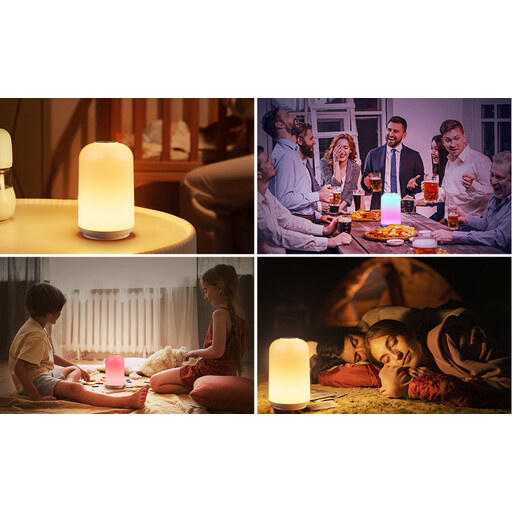
Why it suits this profile: A compact model for anyone looking to get started with warm white light and RGB colours in the bedroom or children’s room, without a permanent cable.
The product information lists three modes, stepless dimming for warm white, automatic colour changes and USB charging. This makes the control options clearer than those of a light with just an on/off switch.
12 2835 SMD LEDs, 40 lumen, CRI above 85, a built-in battery and an ambient light sensor with a threshold of up to 40 lux.

Why it suits this profile: For households looking to integrate ambient LED lighting with app and voice control, and an existing smart lighting system.
The strip is dimmable and, according to the product information, can be cut to size. Check in advance which Hue equipment you’ll need for advanced features.
5-metre length, colour changing, dimming function, app or voice control and Matter support.
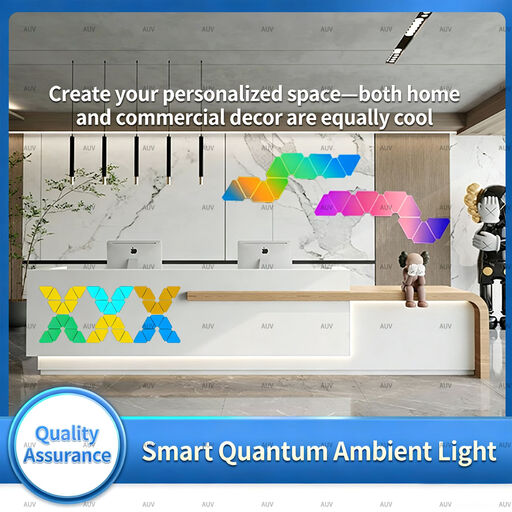
Why it suits this profile: Designed for gamers and anyone looking for a customisable wall display with app and remote control, plus a music mode.
The features are clearly set out: 16 million colour options, more than 210 scenes, a timer, music sync and two control methods. Check the adapter and the permitted number of panels before installation.
Modular triangular panels, app and remote control, timer function and music mode for gaming or entertainment spaces.
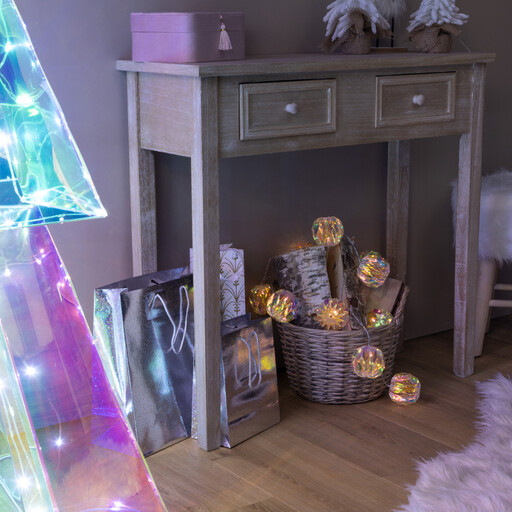
Why it suits this profile: A simple choice if you want to decorate shelves, windows or walls with light, without permanent wall mounting.
Its purpose is clearly defined as decorative indoor lighting. Don’t expect it to light an entire room, and don’t use the string outdoors or under covering material.
10 warm white LEDs, a length of 165 cm, a weight of 100 grams and flexible hanging with hooks, clips or nails.
A night light for children should stand securely or be safely fixed in place. Keep cables out of reach, and don’t let children use a rechargeable light unsupervised. If the light is mainly for finding your way around, choose a low, adjustable brightness.
A bedroom table lamp is more practical when you need directed light, for example when reading. The Mohheds lamp has a metal stand, fabric lampshade and three light settings, according to the product name. Check the product page for the type of controls and the light source included before ordering.
We’ve put together a complete, up-to-date list of products that meet these strict selection criteria and the applicable European safety requirements.
Consumption depends on the wattage and the number of hours the light is on. A 1-watt light used for four hours a day theoretically consumes around 1.46 kilowatt-hours a year. Consumption may vary with RGB modes, higher brightness or an LED strip. So check the stated wattage.
Use the light according to the safety instructions, and keep it away from moisture, loose cables and small parts. A product that’s suitable for a children’s room isn’t necessarily designed for children to operate. Supervision is sensible when using or charging rechargeable models.
Lifespan varies by model and conditions of use. Check the stated warranty, charging method, heat dissipation and connection quality. Don’t use a light if its cable, casing or light string is damaged. Products covered by EU consumer rules generally have a minimum two-year legal guarantee; additional terms may vary by product.
