
Vandaag of morgen in huis

Kwaliteit gegarandeerd

Welkomstaanbiedingen ontgrendelen: GRATIS bezorging | Tot 80% korting | Gratis 30 dagen JoyPlus-proefperiode
Download de app
An LED night light can help you find your way around at night, create a cosy atmosphere or provide a steady source of light beside your bed. However, models can vary considerably in how they’re operated, their brightness and their power supply. A light that works well on a bedside table isn’t necessarily suitable for a dark hallway or nursery.
Here are some common pitfalls to watch out for.
An RGB night light with multiple colours may look appealing, but the choice of colours isn’t the only thing that matters. Check whether it also offers warm white light, whether you can adjust the brightness and how it’s operated. Bright or cool light can be less practical in a bedroom than a soft, warm setting.
A night light with a motion sensor usually only works when it’s dark enough. So check the stated light threshold, detection range and operating mode. A sensor with a range of 3 to 5 metres is handy for a hallway, but it may be triggered unnecessarily if the light faces a busy walkway.
A wireless night light gives you more flexibility, but it needs to be recharged or supplied with batteries. Mains-powered models need a socket nearby. Also check whether the light is suitable for damp areas. A product with IP20 is designed for dry indoor spaces; IP44 offers protection against splashes, but doesn’t make a light suitable for immersion.
Brightness is often measured in lumens (lm). A lower light output is usually enough to help you find your way beside the bed. A light with 20 to 40 lumens provides a gentle glow without lighting up the whole room. For reading or working, a compact LED table lamp with around 200 lumens may be more suitable.
Colour temperature is measured in kelvin (K):
A warm white night light is often a practical choice for night-time use. If you use one light in several rooms, you may benefit from having a choice of colour temperatures.
A dimmable LED night light gives you more control than one with a single brightness setting. Check whether it dims continuously or has set levels. A touch button is handy beside the bed, while a motion sensor in a hallway can make manual controls unnecessary.
Also look for a memory function. Some models remember the last brightness setting you chose, while others return to a default setting when switched on.
A rechargeable night light usually has a built-in lithium battery and a USB connection. Check:
For battery-powered lights, replacement costs and waste are important considerations. A set of two can be handy for, say, a bedroom and landing, but be sure to compare the full specifications for each light.
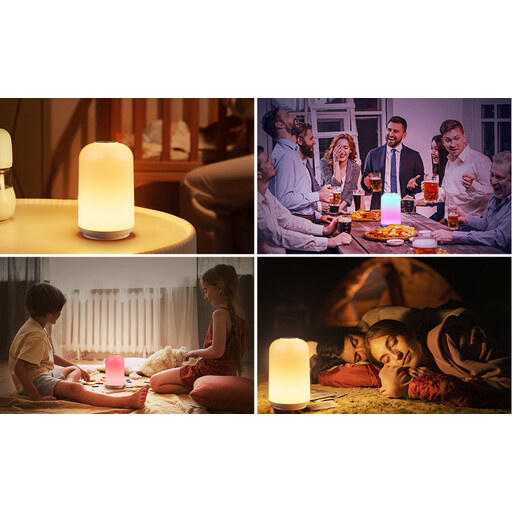
Why it’s a good match: This compact wireless night light combines warm white light with seven RGB colours and recharges via USB. You can use it on a bedside table, shelf or child’s furniture.
The product description specifies a built-in battery, USB charging, an ambient light sensor up to 40 lux and continuous dimming for warm white light. Before buying, check that the sensor will work as you want it to in your room.
12 SMD LEDs, 40 lumens, warm white light at 2600-2800 K, seven RGB colours and a stated power consumption of 1 W.
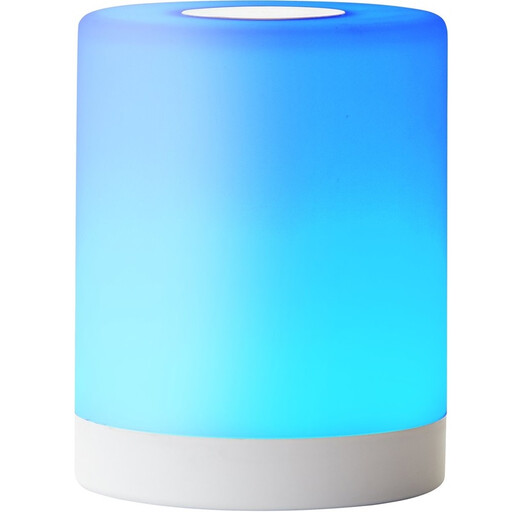
Why it’s a good match: This rechargeable lamp is ideal if you’re looking for a freestanding light with touch controls for use indoors or in a sheltered outdoor spot.
The specifications list dimming, USB charging and IP44 splash protection. According to the product information, the lamp must not be submerged or exposed to severe weather.
140 lumens, 3000 K, RGB function, touch dimmer, built-in battery and IP44 rating.

Why it’s a good match: A set of 2 night lights is handy for lighting more than one route, such as a bedroom and hallway. According to the product information, sensor mode switches on when there’s little ambient light.
The lights are rechargeable and also have a standard light mode as well as motion detection. That means you don’t have to rely solely on the sensor.
500mAh battery, USB charging, three colour temperatures, five brightness settings and a stated sensor range of 3-5 metres.
We’ve put together a complete, up-to-date list of products that meet these strict selection criteria and current European safety regulations.
Place the light on a stable, flat surface and keep it clear of curtains, bedding and other heat-sensitive materials. With a sensor light, detection usually works better when the sensor faces the walkway and isn’t covered.
When charging, use the specified 5V-1A USB power supply if this is listed in the product specifications. Keep rechargeable models dry and follow the manufacturer’s warnings. A night light for the bathroom must be specifically suitable for those conditions; a standard indoor model isn’t automatically splash-resistant.
LED lighting generally uses very little power. The actual cost depends on the wattage and how many hours the light is on. A 1 W light used for a few hours each day consumes less electricity than a much more powerful light left on all night. Battery-powered models also incur the cost of replacement batteries; with a rechargeable night light, you mainly pay for charging and the battery’s lifespan.
How long it lasts on a single charge depends on the brightness, colour mode and use of the sensor. Manufacturers sometimes give an estimate, such as up to 10 hours in sensor mode. This isn’t a guaranteed figure for every situation. Battery capacity also decreases over time. So check whether the battery is replaceable and exactly how charging works.
Place the light somewhere it can detect movement reliably, such as along a dark corridor or near the entrance to a bedroom. Avoid direct sunlight, anything blocking the sensor and areas where pets are constantly passing by. For a nursery or bedroom night light, a low brightness setting and warm white light are often more practical than a bright, cool setting.
