
Vandaag of morgen in huis

Kwaliteit gegarandeerd

Welkomstaanbiedingen ontgrendelen: GRATIS bezorging | Tot 80% korting | Gratis 30 dagen JoyPlus-proefperiode
Download de app
An LED night light may seem like a simple purchase, but small differences can determine how enjoyable it is to use every day. A light may be too bright for a nursery, switch on unexpectedly in the hallway or prove impractical after a few weeks because the battery runs out quickly. Terms such as “energy-efficient”, “safe” and “smart” are also not always supported by the same product specifications.
So pay particular attention to these three common pitfalls:
A sensor that is not suited to the room
A light sensor responds to darkness, whereas a motion sensor only switches on when someone walks past. In a bedroom, automatic light when it gets dark may sometimes be unnecessary. In a hallway or bathroom, a night light with motion sensor may be more practical.
An appealing design without clearly defined usage limits
A children’s night light made from soft material may be comfortable to hold, but always check the warnings. See whether the product is intended for indoor use only, how it is charged and whether supervision is recommended for young children.
Colour functions that come at the expense of practical lighting
An RGB night light is suitable for creating ambience and decoration, but coloured light does not always replace a soft orientation light. So check whether warm white light, dimming and a timer are available separately.
For a nursery, child’s bedroom or bedroom, the light colour is often more important than high light output. Warm white light of around 2700 to 3200 K creates a softer appearance than cool white light. Brighter, more neutral light may work better for reading, inside a cupboard or in the kitchen.
A dimmable night light gives you greater control. Pay attention to the type of dimming:
A product with 20 lumens is suitable as orientation lighting, while a 40-lumen light provides more visible illumination. However, lumens do not tell the whole story: the positioning, shape of the light and spread also affect how bright the light feels in the room.
A night light with light sensor switches on, according to the product description for the 2-pack, when ambient brightness falls to a maximum of 20 lux and switches off again in daylight. This is useful for a socket in the hallway or near a child’s bedroom, as you do not need to operate a button each time.
A timer works differently. According to the product description, the VIVREAL unicorn light switches off automatically after 30 minutes. This can be useful when a child falls asleep with a soft light on. A touch sensor is simpler than a remote control, but check that the light stands securely on a stable surface.
For a cupboard or wardrobe, sensor cupboard lighting is often more logical than a light that stays on continuously. PIR models respond to movement. Check the detection range, mounting method and battery capacity. An adhesive strip that requires no drilling is convenient, but the surface must be clean, dry and suitable for mounting.
A rechargeable night light means you do not have to keep replacing batteries. Check the charging time, stated usage range and connection. The VIVREAL models in this selection use a built-in 1200 mAh battery; according to the product description, charging takes approximately two to three hours and the operating time is around eight to ten hours. Actual usage time may vary depending on the brightness setting.
A plug-in model does not need a battery, but it does occupy a socket. So check the dimensions and plug position. A power rating of 0.3 W indicates low stated power consumption, although the total cost also depends on usage time and the electricity tariff.
For young children, rounded shapes and sturdy materials are practical considerations. For the unicorn light, the manufacturer states that it uses food-grade silicone, BPA-free material and has no sharp edges. This information comes from the manufacturer’s product description and is not a general guarantee for every use. Keep the light away from fire, high temperatures and water, and follow the safety instructions.
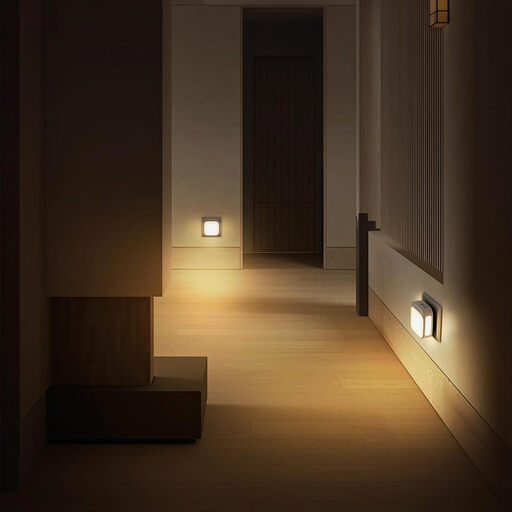
Why it suits this profile: This plug-in model is suitable for anyone looking for soft orientation lighting for a hallway, nursery or bedroom without batteries or complicated controls.
The light sensor prevents the light from staying on during the day. Brightness can be adjusted steplessly from 10% to 100%, according to the product specifications.
Two lights, warm white light of 2800-3000 K and a stated power rating of 0.3 W per light.
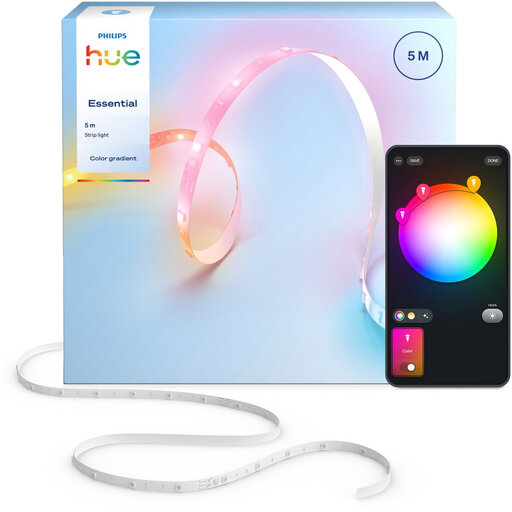
Why it suits this profile: For anyone looking for decorative bedroom lighting who values control via an app, voice assistant or remote control.
The strip is dimmable and can be cut to size, according to the product information. This means less improvisation is needed when placing it behind furniture or shelves.
5-metre length, colour-changing lighting, dimming function and Matter support according to the product data.

Why it suits this profile: This set is designed for kitchen cupboards, wardrobes and shelves where automatic lighting triggered by movement is useful.
According to the product description, the PIR sensor is designed to detect movement from 3 to 5 metres away. This means you do not have to search for a switch.
Two 40 cm lights, three colour temperatures and a built-in 1100 mAh battery with USB charging.
We have put together a complete, up-to-date list of products that fully meet these strict selection criteria and the applicable European safety regulations.
That depends on the design, heat generation, controls and safety instructions. Ideally, choose a light without loose small parts and place it out of a baby’s reach. According to the product description, some VIVREAL models feature soft silicone and rounded shapes. Always follow the manufacturer’s warnings and do not use a light near water or heat sources.
LED lighting generally uses little power, but compare the stated value for each product. The light-sensor 2-pack lists 0.3 W per light. A rechargeable model uses electricity while charging and can then operate wirelessly. A sensor or timer can limit unnecessary hours of operation.
Place the light along a route where movement is expected, such as near a cupboard, landing or hallway. Check the detection range beforehand and do not point the sensor towards an area where pets or passing light could activate the system. For a constant soft glow in the bedroom, a light sensor or dimmable night light is usually more suitable.
