
Vandaag of morgen in huis

Kwaliteit gegarandeerd

Welkomstaanbiedingen ontgrendelen: GRATIS bezorging | Tot 80% korting | Gratis 30 dagen JoyPlus-proefperiode
Download de app
An LED night light may seem like a simple purchase, but the differences between models can be significant. Some lights need to remain connected to a socket, while others need recharging after a short time. Terms such as “motion sensor”, “dimmable” and “energy efficient” are only useful when the relevant specifications are clear.
For a bedroom, nursery, hallway or bathroom, three potential pitfalls are particularly important:
Light output is measured in lumens (lm). A compact LED night light often needs fewer lumens than an LED desk lamp for reading or working. The products in this selection range, for example, from 30 lm and 40 lm for orientation lighting to 170 lm for a cordless outdoor table lamp.
Colour temperature is measured in kelvin (K):
An RGB night light adds coloured light. This is suitable for creating an atmosphere or for decoration, but check that white light is available separately if you also want to use the light as a practical night light.
A dimmable night light gives you more control than a model with only on and off settings. Pay attention to the type of control:
According to the manufacturer's own product description, the rechargeable model with motion sensor has a detection range of 3 to 5 metres and activates at a maximum of 20 lux. These are product specifications for the controls; actual suitability depends on the positioning and light conditions in your room.
A USB-rechargeable lamp can be charged via a laptop, power bank or suitable USB adapter. Always check whether the product requires, for example, 5 V and 1 A, and use a compatible power source.
A rechargeable LED night light is practical when you do not have a socket beside the bed. A battery-powered model may be suitable for temporary use, but the batteries will need replacing. An outdoor solar lamp also needs sufficient daylight. In cloudy weather or a shaded location, USB charging can be a useful additional option.
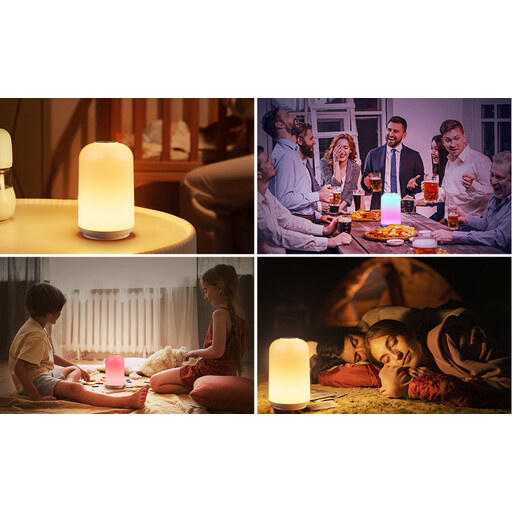
Why it suits this profile: A compact model for anyone who wants to use a single light in the bedroom, nursery or on a shelf without a permanent connection.
The product description states that it has a built-in rechargeable battery and USB charging, so you are not dependent on a socket while using it. The light output is specified as 40 lm.
Warm white light at 2600–2800 K, seven RGB colours, stepless dimming for warm white light and a compact size of 13 × 8 × 8 cm.
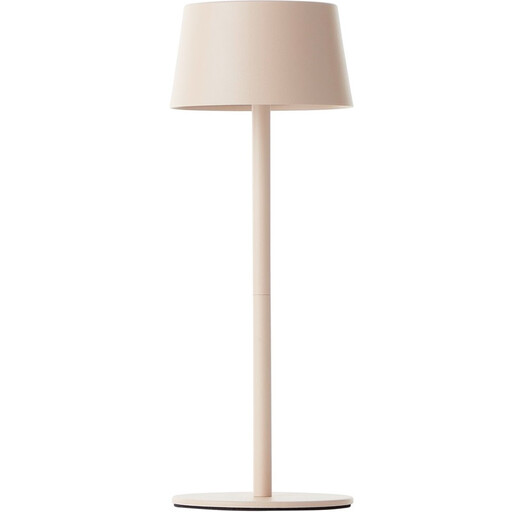
Why it suits this profile: For anyone looking for a cordless table lamp for a balcony, patio, garden or dry indoor space where more light is needed.
The IP44 rating clearly distinguishes it from an IP20 desk lamp. The lamp is splash-resistant, but is not intended for immersion. USB charging provides an alternative when solar energy is limited.
170 lm, warm white light at 3000 K, three dimming settings, an integrated rechargeable battery and two charging options: solar power and USB.
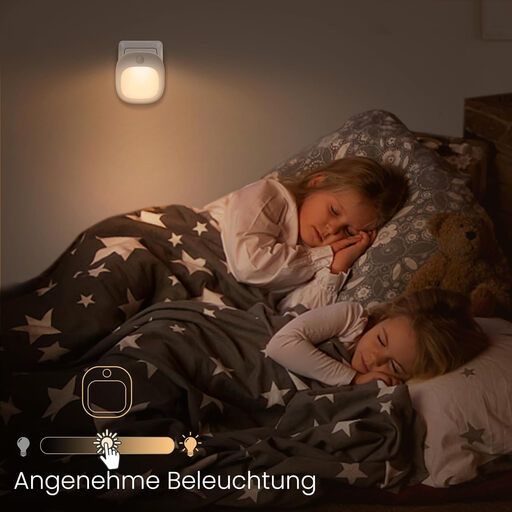
Why it suits this profile: Handy for routes between the bedroom, toilet, hallway or nursery where automatic lighting is preferred.
According to the product information, the sensor works in low ambient light and within a range of 3–5 metres. This means you do not have to search for a switch manually every time.
Two lights, a built-in 500 mAh rechargeable battery, three colour temperatures, five brightness levels and a stated operating time of up to 10 hours in sensor mode.
We have put together a complete, up-to-date list of products that fully meet these strict selection criteria and the applicable European safety regulations.
Place an LED night light on a stable, flat surface, not directly on the edge of a bedside table or shelf. When using one in a nursery, adult supervision is required and the cable must be kept out of reach. Do not use an IP20 lamp near splashing water.
With a sensor light, the mounting position is crucial. Point the sensor towards the route people take and avoid placing it somewhere where movement is detected constantly. This helps prevent unnecessary activation. A lamp with a rechargeable battery also needs regular charging; do not leave the product connected to the charger for long periods if the instructions do not permit this.
With an LED table lamp, also consider its intended use. A compact light producing 30–40 lm is mainly suitable for orientation or ambient lighting. A higher lumen output is more practical for a desk or reading area. One example is an indoor lamp with 210 lm and 3000 K, while an adjustable lamp with 650 lm provides more focused task lighting. For the latter category, check the IP rating: IP20 means it is intended for use only in dry indoor spaces.
That depends on how it will be used. For soft orientation lighting, around 30 to 40 lm is sufficient according to the product specifications of the compact models mentioned. For reading, working or a larger table, a lamp with more lumens is more suitable. Dimming helps you adjust the light output to suit the situation.
A 1 W LED lamp uses relatively little electricity while operating. The total cost depends on how often you switch the lamp on and how you charge it. With a model featuring a solar panel, sunlight can reduce the use of mains electricity, but USB charging still depends on a suitable power source.
Place the light where the sensor can detect the route people take, for example near the floor in a hallway or beside a bed. Check the stated range and light threshold. For a bathroom or other damp area, you should also check whether the IP rating is suitable for the conditions.
