
Vandaag of morgen in huis

Kwaliteit gegarandeerd

Welkomstaanbiedingen ontgrendelen: GRATIS bezorging | Tot 80% korting | Gratis 30 dagen JoyPlus-proefperiode
Download de app
An LED night light with a motion sensor can be a handy addition to your bedroom, nursery, stairs, hallway or toilet. The light comes on when you need it, without you having to fumble for a switch in the dark. However, models vary considerably in terms of operation, brightness and installation.
The following pitfalls are common:
Don't just look at the term "sensor". Check these practical details:
A light that only activates in the dark prevents it from switching on unnecessarily during the day. For a staircase or hallway, a short automatic activation is often practical. For a night light in the bedroom or nursery, a constant, softly dimmed setting can be more pleasant.
Brightness is usually expressed in lumens. A model of 20 to 40 lumens typically provides a modest orientation light, while 400 lumens delivers considerably more illumination. The right choice depends on the room:
A dimmable night light gives you more control. Check whether the brightness can be adjusted steplessly or in fixed levels. A memory function is handy if the lamp remembers the last setting you chose.
A USB night light or rechargeable model can be placed where no plug socket is available. Check the following:
Magnetic attachment or a hook avoids the need for drilling. A plug-in model is ready to use straight away, but takes up a wall socket. A 2-pack night light can be practical when you want to light up the bedroom and hallway at the same time.
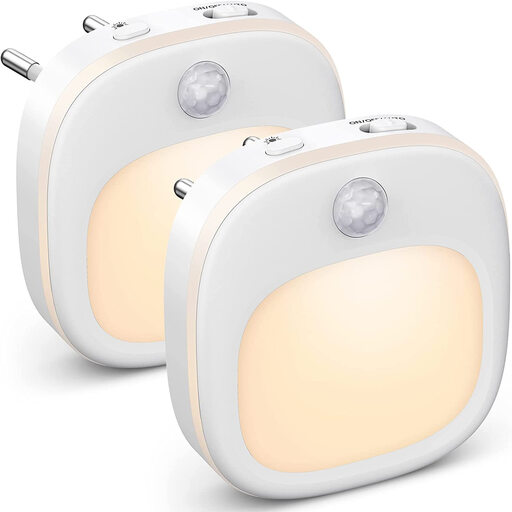
Why this fits the profile: Two lights offer a simple starting point for, say, the bedroom and hallway. The three colour temperatures and five dimming levels make the model usable in different rooms.
The product title mentions motion detection, five dimming levels and three colour temperatures. Do check the full sensor information and placement before purchase.
2-pack; three colour temperatures; five dimming levels; suitable for bedroom, nursery and hallway according to the product description.

Why this fits the profile: This rechargeable LED night light is ideal when you don't want to run a cable to a plug socket. Its compact shape fits on a shelf, bedside table or narrow ledge.
The product specifications mention a 500mAh battery, USB charging, a sensor range of 3-5 metres and activation at a maximum of 20 lux.
Up to 10 hours of use in sensor mode according to the product information; 30 lumens; five brightness levels; three colour temperatures.
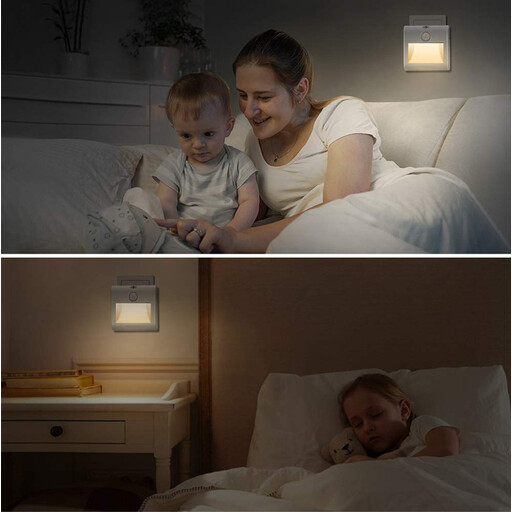
Why this fits the profile: For fixed spots around the house, this plug-in model offers a combination of automatic detection and constant light. Think of a toilet, bedroom, hallway or landing.
The sensor mode is linked to a maximum of 20 lux and a 3-5 metre range. The memory function can retain the last dim setting you chose.
2 units; 20 lumens; stepless touch dimming; 100-240V; warm white light of 4000-4500K according to the product specifications.
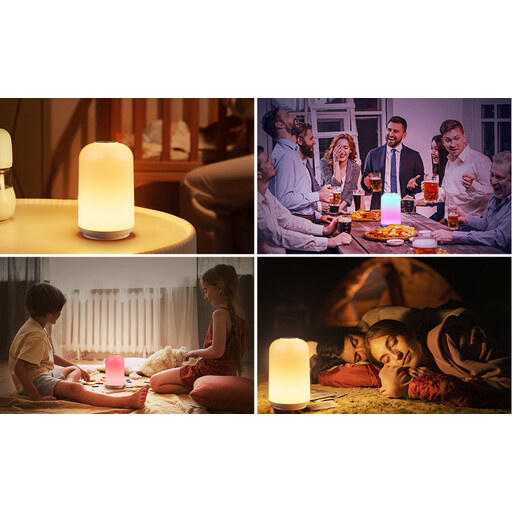
Why this fits the profile: This model is designed for anyone who wants a warm white night light plus RGB lighting. It can be used wirelessly on a bedside table, shelf or piece of furniture in the child's room.
The product information mentions a separate warm white mode with stepless dimming. This means you can choose a lower brightness for nighttime use than for ambient purposes.
12 SMD LEDs; 40 lumens; built-in battery; USB charging via 5V-1A; warm white plus seven RGB colours according to the product description.
We've put together a full, up-to-date list of products that fully meet these strict selection criteria and comply with current European safety regulations.
Place the light so that the sensor can "see" the walking route, for example opposite the entrance to a hallway or next to the stairs. Avoid curtains, furniture or decorations directly in front of the sensor. Test the light in the dark first and check that the chosen light threshold suits the room.
The battery life depends on the battery capacity, brightness and number of activations. A product may state a maximum battery life in sensor mode, but daily use, temperature and charging habits all affect the result. So pay attention to the stated battery capacity and charging method, not just the claim about usage hours.
LED lights with a low wattage, such as 0.5 or 1 watt, use relatively little electricity while they're on. What's more, in sensor mode the light isn't on continuously. The actual consumption depends on the wattage, the duration of use and the chosen brightness. With a rechargeable model, the energy use shifts to charging via USB.
