
Vandaag of morgen in huis

Kwaliteit gegarandeerd

Welkomstaanbiedingen ontgrendelen: GRATIS bezorging | Tot 80% korting | Gratis 30 dagen JoyPlus-proefperiode
Download de app
An LED night light may seem like a simple purchase, but the differences often lie in the details. A lamp may look soft and soothing in the product photo, yet be too bright in practice, switch on unexpectedly or not fit the socket. Parents also consider heat, controls and positioning in the baby’s room or child’s bedroom.
The three most common pitfalls:
Not enough information about brightness
“Soft light” alone tells you very little. It is better to check the lumens, dimming range and colour temperature. A 40-lumen lamp is very different from a decorative 550-lumen lamp.
A sensor that is not suitable for the room
A light sensor responds to day and night. A motion sensor responds to movement. These are different functions. A motion-sensor LED night light can be useful in a hallway, while a baby’s room may benefit more from constant warm light.
The wrong fitting or unclear controls
A night light with built-in LEDs works differently from a separate E14 LED bulb, E27 LED bulb or smart LED bulb. Always check the fitting, voltage, dimensions and controls before ordering.
For a night light for a baby’s room or bedroom, warm white light is usually a practical choice. A colour temperature of around 2700 to 3200 kelvin creates a yellowish, soothing glow. Cooler daylight, such as 6500K, has a brighter character and is better suited to a functional area where you need to see clearly.
When it comes to brightness, check the number of lumens:
A dimmable night light gives you greater control. A model with several brightness levels is easy to use, while stepless dimming allows for more precise adjustment. Also check whether “dimmable” means using a button, touch control, remote control or app.
According to the product description, a sensor night light with a light sensor switches on automatically when it gets dark and off in daylight. This means you do not have to operate the light manually each time. The Zhongshan Menghui 2-pack specifies a light threshold of up to 20 lux, with warm white light of 2800–3000K, 20 lumens and a dimming range of 10–100%.
A motion sensor works differently. The 2-pack with motion detection offers three colour temperatures and five brightness levels. This type of night light for a child’s bedroom can be practical in a hallway or on the way to the bathroom, but check how the sensor is activated and whether its range suits your room before buying.
Also consider the power supply:
When children are involved, safe positioning is more important than extra features. Keep a rechargeable light away from water and heat, and keep loose cables out of reach. Follow the manufacturer’s warnings and only use electrical products indoors in accordance with the product information.
If you want to replace a standard bulb, check the fitting first. E14 is the small fitting commonly found in table lamps and smaller light fittings. E27 is the larger screw fitting widely used in ceiling lights and decorative fittings.
According to the product description, a Philips E14 6-pack contains bulbs rated at 4.3 watts, producing 470 lumens at 2700K, with a lifespan of 15,000 hours. They are not dimmable. The Aigostar E14 C37 uses 4 watts and has a colour temperature of 3000K. This information helps you choose based on light colour and intended use, rather than simply on the brand.
For a decorative pendant light, an E27 LED bulb may be a better choice. According to the product information, the Atmosphera G95 E27 Amber Filament uses 2 watts, produces 175 lumens and has an extra-warm colour temperature of 2200K. This is primarily ambient lighting, not full task lighting.
Also check the energy label. LED lighting generally uses little power, but actual consumption depends on the wattage and how long the light is on. A 0.3-watt lamp that stays on every night uses less energy than a 7-watt lamp that remains on for several hours. Compare wattage, lumens and usage time together.
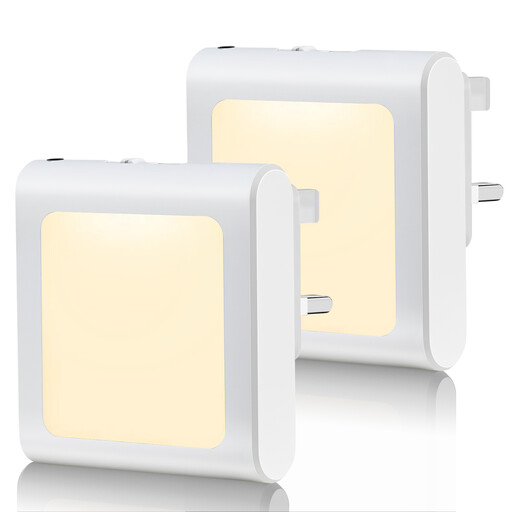
Why it suits this profile: A set of two compact night lights for the bedroom, baby’s room, hallway or kitchen. Useful when you want to use the same type of soft lighting in several places.
The product information clearly states that this is a 2-pack with a compact design for indoor use. There is no need to make assumptions about a built-in sensor or dimming function.
Two lights, ABS+PC housing, low consumption according to the product description and direct installation in a socket.
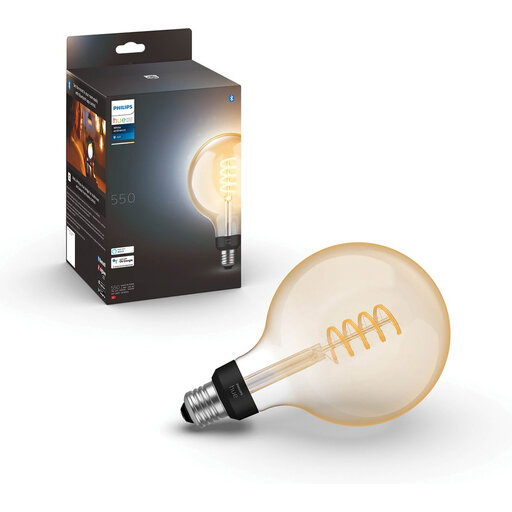
Why it suits this profile: For anyone who values smartphone control, voice assistants and adjustable white light tones in a bedroom or living room.
The controls and requirements are clearly explained: Bluetooth works straight away for up to ten bulbs; a Hue Bridge is required for timers and automation. A standard dimmer is not suitable.
E27 fitting, 550 lumens, dimmable, adjustable from warm to cool white and Matter support according to the product information.
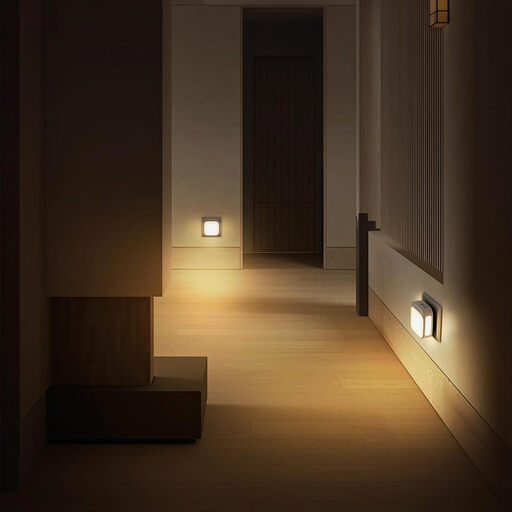
Why it suits this profile: For everyday use in a baby’s room, hallway or on the way to the bathroom, where automatic switching and low energy consumption are the priorities.
The product description mentions a light sensor, automatic switching on and off, 0.3 watts and a dimming range of 10–100%. This means the key usage conditions can be checked in advance.
2 lights, warm white 2800–3000K, 20 lumens, 110–240V and stepless dimming according to the product specifications.
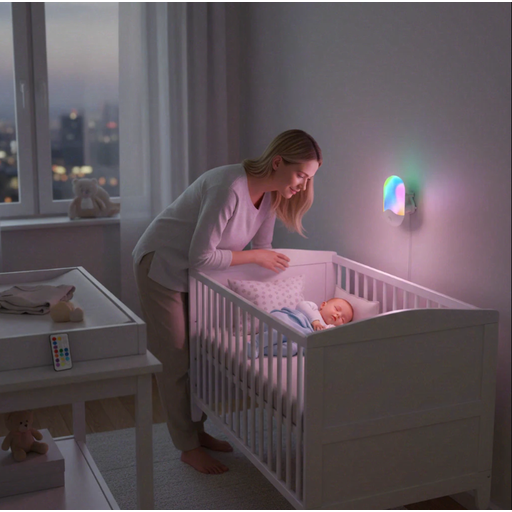
Why it suits this profile: For anyone looking for a decorative RGB night light with remote control, timer and multiple colours for a child’s bedroom or bedroom.
The product name states that it offers seven colours, a timer and remote control. However, check in advance that the desired colour and brightness are suitable for the intended space.
0.5 watts, 110–220V, ABS and metal construction, seven colour settings and timer function according to the product specifications.
We have compiled a complete, up-to-date list of products that fully meet these strict selection criteria and the applicable European safety regulations.
For orientation in a bedroom or hallway, around 10 to 40 lumens is often sufficient. If you also want to read or illuminate an entire room, choose a standard LED bulb with more lumens. Too much light can be impractical when you only need to find your way briefly.
A warm white night light of around 2700–3200K produces a yellowish light. Whether this is right for your situation depends on the desired brightness and positioning. Do not place the light directly beside a baby’s face and always follow the manufacturer’s safety instructions.
Energy consumption is determined by the wattage and the number of hours the light is on. A 0.3-watt lamp uses considerably less energy per hour than a 7-watt lamp. Multiply the power by the usage time to compare models fairly. Also check whether the packaging states consumption per 1,000 hours.
