
Vandaag of morgen in huis

Kwaliteit gegarandeerd

Welkomstaanbiedingen ontgrendelen: GRATIS bezorging | Tot 80% korting | Gratis 30 dagen JoyPlus-proefperiode
Download de app
An LED night light can help you find your way to the bathroom, the nursery or the kitchen during the night without having to turn on the main lights. However, not every compact lamp is suitable for every room. A bright RGB model can feel unsettling next to a bed, while a lamp without a sensor will stay on unnecessarily in the hallway.
So don’t just focus on colour or price. The key differences lie in how the light is activated, its power source, brightness and where you place it.
A night light with a motion sensor often only switches on when it’s dark enough. With some models, the threshold is set at around 20 lux, for example. During the day or when there’s enough ambient light, nothing happens. This is energy-efficient, but it can be confusing if you expect the lamp to detect every movement.
So check:
A rechargeable night light is handy on a bedside table, shelf or in a cupboard without a plug socket. However, how long it lasts depends on the battery capacity, brightness and the mode you choose. A model with a small battery may need to be charged regularly via USB.
Pay attention to the combination of:
For orientation lighting, a modest brightness is usually sufficient. A lamp of 20 to 40 lumens can be practical in a bedroom or nursery, while a brighter lamp is better suited to a hallway or workspace. Also consider the colour temperature:
A night light with a light sensor reacts to the amount of ambient light. A motion sensor reacts to movement, usually only when it’s dark. A night light with a timer switches off after a set period. These features can be present individually or combined.
For a hallway, automatic activation is often practical. On a bedside table, manual control or dimming may be more pleasant. Also check that the sensor isn’t blocked by a cupboard, curtain or the edge of the bed.
A dimmable night light gives you more control than a lamp with just one brightness setting. Five levels, for example, are handy when the same lamp is used in the nursery and the hallway. A model with stepless dimming offers even finer adjustment.
The stated CRI value indicates how naturally colours are rendered. A value above 80 is generally considered usable for general lighting. Think of this as technical information, not a guarantee of a particular user experience.
Measure the available space beforehand. A flat model measuring around 7 by 7 centimetres fits on a narrow shelf, while a table lamp measuring 18 by 13 by 24 centimetres takes up more room. ABS and metal are common materials for compact LED lamps. Check whether the product is intended for dry use and keep a USB port or plug socket easily accessible.
A 2-pack of night lights can be useful if you want to light up both the bedroom and the landing at the same time. Just make sure the packaging actually contains two complete lamps and not one lamp with accessories.
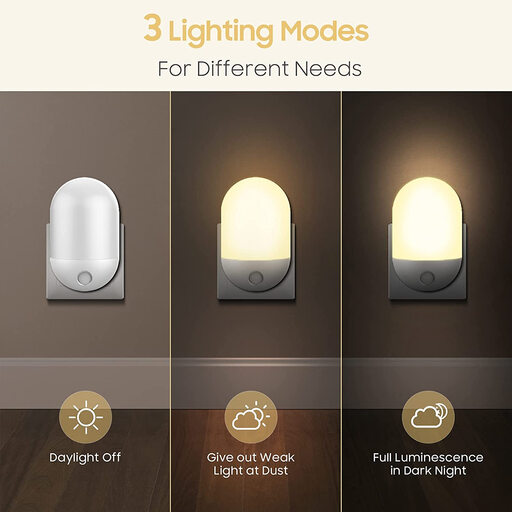
Why this fits the profile: A straightforward choice for anyone looking for automatic warm white light in a bedroom, nursery or hallway.
The product name and specifications mention a light sensor and a warm white colour temperature of 2800–3200 K, making the basic function clear.
20 lumens, SMD LED and a compact design according to the product information.

Why this fits the profile: Ideal for anyone who wants to equip multiple rooms with wireless lighting and adjustable brightness.
The combination of motion detection, a darkness threshold of up to 20 lux and a normal light mode means you’re not reliant solely on automatic activation.
500mAh battery, USB charging, three colour temperatures, five dimming levels and up to 10 hours of use in sensor mode according to the product description.
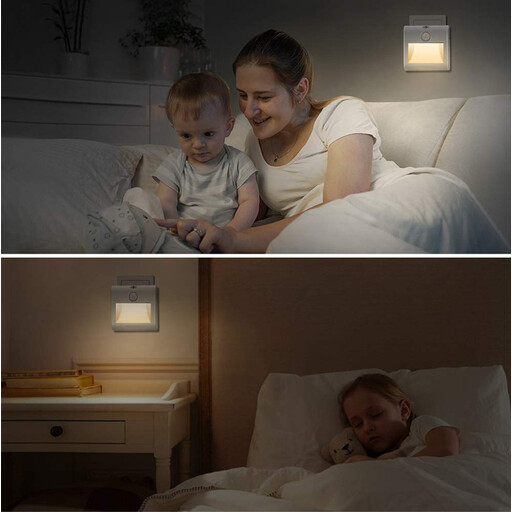
Why this fits the profile: A practical set for households that want to light up the bedroom, toilet and landing at the same time.
In addition to the sensor, there is a constant light mode. The touch control with memory function means you don’t have to reset the brightness every time.
Two lamps, 20 lumens, 1 W consumption, 4000–4500 K and a detection range of 3–5 metres according to the product data.
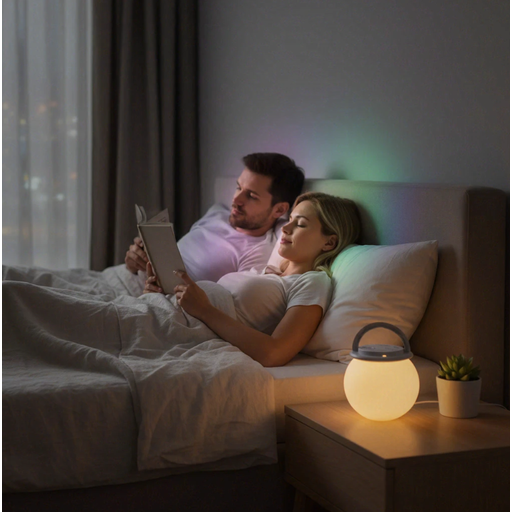
Why this fits the profile: Suits a child’s room or bedroom where warm white light, RGB colours and automatic switch-off are desired.
The timer prevents unnecessary burning. The dimming function allows you to adjust RGB or warm white to suit the moment.
Rechargeable, 0.9 W, warm white plus seven RGB colours and stepless dimming according to the product information.
We’ve put together a full, up-to-date list of products that fully meet these strict selection criteria and comply with current European safety regulations.
Place the lamp where the sensor has a clear view of the walking route. For example, aim it at the floor next to the bed or at the passageway in the hallway. Avoid direct light from a ceiling lamp, as this can affect the light sensor. Test the range during the day and again in the dark.
This varies depending on the battery, brightness setting and usage mode. A model with 500mAh can work for up to 10 hours in sensor mode, according to the product description. Always check whether the stated usage time refers to the lowest setting, sensor mode or constant lighting.
LED lamps generally use very little power. A 1 W lamp that burns for 10 hours a day would theoretically use 0.01 kWh per day. The actual cost depends on your electricity tariff and the number of hours it’s on. A sensor or timer can further reduce consumption by ensuring the lamp isn’t on continuously.
