
Vandaag of morgen in huis

Kwaliteit gegarandeerd

Welkomstaanbiedingen ontgrendelen: GRATIS bezorging | Tot 80% korting | Gratis 30 dagen JoyPlus-proefperiode
Download de app
An LED night light may seem like a simple purchase, but the differences often lie in the details. A light may look suitable for a nursery, hallway or wardrobe in the product photo, yet its controls, battery life or brightness may not suit the space in practice.
Three common pitfalls:
Don’t just look at the number of LEDs. Lumens (lm) indicate how much light a lamp produces. A 20–40 lm light is generally designed for orientation or ambience, rather than lighting an entire room.
Also consider the colour temperature:
A dimmable night light gives you more control when you use it at different times. Some models offer five fixed brightness settings, while others allow stepless adjustment. So check what type of control is listed.
For a motion-sensor night light, three details are relevant:
A sensor only works well if it isn’t blocked by a shelf, curtain or cupboard door. A plug-in model is practical for a hallway or toilet. For a cupboard or under a kitchen cabinet, a rechargeable light with a magnet or adhesive fitting is often more convenient.
A rechargeable night light can be placed wherever you need it, but check the battery capacity and stated run time. A 500mAh model is compact, while a 1100mAh version will generally have more capacity in reserve. Actual run time depends on brightness, sensor use and charge level.
Also check:
Take extra care when using a light in the bathroom. A general mention of ‘for bathroom use’ doesn’t automatically mean a light is suitable for splashes. Look for an explicit IP rating and follow the safety instructions on the product page.
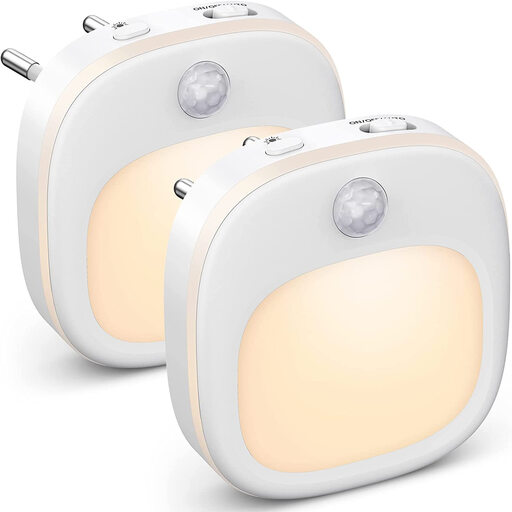
Why it suits this profile: This set includes two lights with motion detection, three colour temperatures and five dimming settings. It’s a good choice if you want to light several areas with a straightforward range of features.
The five brightness settings help prevent the light from being unnecessarily bright. Check beforehand, though, that the sensor position suits the route you want it to detect.
Two lights per set; 3 colour temperatures; 5 dimming settings; 1W LED output according to the product information.
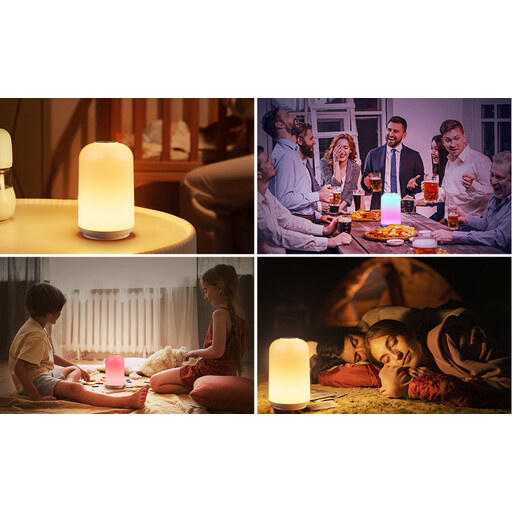
Why it suits this profile: This model combines warm white light with RGB lighting, a built-in rechargeable battery and stepless dimming. It’s a good fit for a bedroom or child’s room where ambience and adjustability matter.
The controls offer more choice than simply switching the light on or off. You can dim the warm white light or choose one of the seven RGB colours.
12 SMD LEDs; 40 lm; warm white at 2600K–2800K; RGB with 7 colours; USB rechargeable; light sensor up to 40 lux according to the product information.

Why it suits this profile: At 40 cm long, this slim design is made for kitchen cabinets, wardrobes and shelves. The two lights can be used in different places.
The design doesn’t rely on having a socket where you fit it. Make sure it’s securely attached, and keep it away from water and excessive moisture.
61 LEDs; PIR detection at around 3–5 metres; 3 colour temperatures; 1100mAh battery; USB charging; 400 × 38 × 10 mm according to the product information.
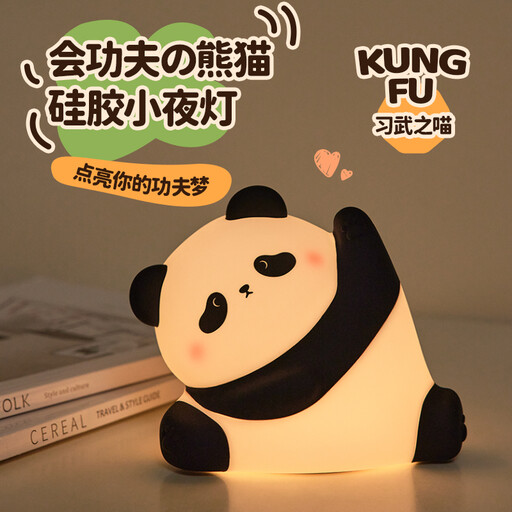
Why it suits this profile: According to the product description, this panda light has a soft silicone casing, touch controls, three lighting modes and a rechargeable battery. That makes it well suited to use on a bedside table.
The three lighting modes mean you aren’t limited to one fixed, bright setting. Use the light indoors and keep it away from heat, fire and immersion in water.
1200mAh rechargeable battery; three dimming settings; touch controls; ABS, PP and silicone according to the product information.
We’ve put together a complete, up-to-date list of products that meet these strict selection criteria and the applicable European safety requirements.
It can be, depending on the brightness, colour temperature and placement. Ideally, choose a model with a low setting or dimming function. Position the light so that its sensor doesn’t constantly detect movement outside the room. Always check the safety warnings and keep loose cables out of children’s reach.
Run time varies depending on the battery, brightness setting and operating mode. A model with a higher battery capacity won’t necessarily have a longer fixed run time. Check the stated run time in sensor mode and allow for the battery holding less charge over time. Regular charging with a suitable USB charger helps keep performance predictable.
A light with a stated power rating of 0.5W or 1W uses relatively little electricity while it’s on. Total consumption depends on how many hours it’s lit and its standby mode. A sensor light can limit the number of hours it’s on, while a light that stays on continuously will use more. So check both the wattage and the operating mode before comparing.
