
Vandaag of morgen in huis

Kwaliteit gegarandeerd

Welkomstaanbiedingen ontgrendelen: GRATIS bezorging | Tot 80% korting | Gratis 30 dagen JoyPlus-proefperiode
Download de app
An LED night light may seem like a simple purchase, but the differences between models can be significant. Some lights are too bright beside the bed, while others have a motion sensor that activates at the wrong moment. Rechargeable models can also disappoint when the battery capacity, charging method or installation options are not clearly stated.
So don’t just focus on appearance. Above all, check the brightness, controls, power supply and mounting method. That way, you can choose a light that suits a bedroom, nursery or children’s room, hallway, kitchen or wardrobe.
A lamp with a high lumen output can be useful as cupboard lighting or as functional lighting in a dark hallway. However, bright light can feel unsettling when used as a bedside light or children’s room night light. So look at:
A model with an adjustable colour temperature, such as 2800K to 6500K, can be used in several rooms. However, check whether the lamp is genuinely continuously dimmable or simply has a few preset levels.
A wireless lamp may run on standard batteries or on a built-in rechargeable battery. With a battery-powered wall light, you need to factor in recurring battery costs. A rechargeable night light with a USB connection is more practical if you use it regularly, for example on a bedside table.
Pay attention to the details:
A capacity of 1100 mAh or 1200 mAh tells you more than a general claim about long usage time. The actual runtime also depends on the brightness and the selected mode.
An LED lamp with a motion sensor is useful in a hallway, toilet, on stairs, in a cupboard or in the kitchen. In a bedroom, however, the sensor may switch on unnecessarily whenever someone moves. So check the type of sensor and its detection range.
PIR sensors respond to movement and changes in heat. For the cupboard lights mentioned, the stated range is approximately 3 to 5 metres. An ambient light sensor can prevent the lamp from switching on during the day, but check whether this function works automatically and what threshold value is specified.
For a bedside light or ambient lamp, warm white light is often the obvious choice. For a cupboard, workspace or storage area, neutral or cool white light may be more practical. RGB lighting offers additional colour options, but is primarily designed to create ambience. It does not automatically replace functional lighting.
Controls vary by product:
Measure the space beforehand. An ultra-thin lamp measuring 30 or 40 cm fits beneath a kitchen cupboard, inside a wardrobe or on a narrow shelf. Magnetic mounting makes the lamp easy to remove for charging, while adhesive tape means you don’t need to drill holes. However, check that the surface is clean, dry and flat.
An LED wall light for a children’s room or themed room requires extra attention to how it is secured. Use the supplied mounting materials according to the instructions, and position the lamp out of reach of young children if small parts or batteries could be accessible.
Check the stated IP rating. A lamp with IP20 is intended for dry indoor areas. A model with IP44 offers better protection against splashes, but must not be immersed or exposed to severe weather.
Only use a suitable USB power source and clean the lamp with a soft, dry or slightly damp cloth when permitted by the product information. Do not open integrated batteries or electronic components yourself.
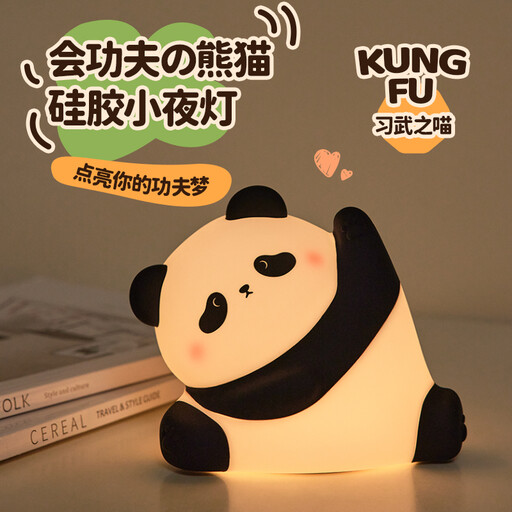
Why it suits this profile: This compact baby night light requires no installation and can be controlled by touch. The three light settings are easy to use every day on a bedside table.
The product description specifies a built-in 1200 mAh rechargeable battery and three dimming levels, so you don’t have to rely on standard batteries or just one brightness level.
1200mAh USB-rechargeable battery, touch controls and silicone housing according to the product information. For indoor use; supervise young children.
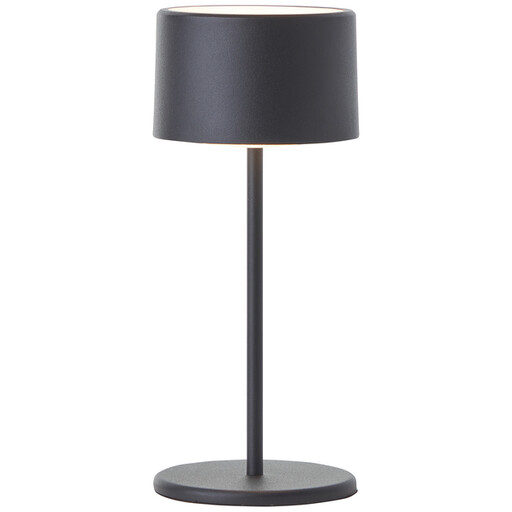
Why it suits this profile: This freestanding wireless lamp is designed for a desk, sideboard or bedside table, combining warm light with a metal and plastic housing.
The light specifications are clearly stated: 210 lumens, 3000K and three dimming levels. This means you don’t have to rely on a vague description of “atmospheric” light.
210 lumens, 3000K warm white light, integrated battery and a 3-stage touch dimmer. The stated IP20 rating means it is for dry indoor areas only.

Why it suits this profile: This set is designed for kitchen cupboards, wardrobes, shelves and dark passageways where automatic activation saves time.
The product information specifies PIR detection with a range of 3 to 5 metres, three colour temperatures and USB charging. You can therefore tailor the lamp precisely to cupboard or task lighting.
Two 40 cm lamps, 61 LEDs per lamp, 1100mAh rechargeable battery and adhesive mounting without drilling. Warm, neutral and cool white light options are available.
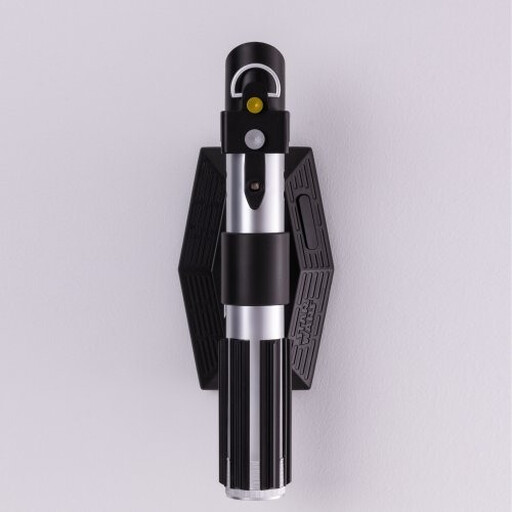
Why it suits this profile: This LED wall light is primarily a decorative choice for a bedroom, playroom or entertainment space with a Star Wars theme.
The product description makes it clear that this lamp uses batteries and is wall-mounted. You therefore know in advance that a mains socket and USB charging are not part of its stated operation.
Measures 28 x 9,1 cm, includes mounting materials and features a decorative lightsaber design. Remember that the batteries will need replacing.
We’ve put together a complete, up-to-date list of products that fully meet these strict selection criteria and the applicable European safety regulations.
LED lighting generally uses very little power, but the cost depends on the wattage and number of hours it is switched on. A 1W lamp uses approximately 1 kWh over 1000 hours of use. With a rechargeable night light, you also need to account for charging the battery. Check the stated power consumption and choose a timer, sensor or lower dimming level when the lamp does not need to stay on continuously.
Many models use magnets, hooks or adhesive tape. Clean the surface first and check that it is flat and dry. With a battery-powered wall light, you should also leave enough space to replace the batteries. Test the mounting before positioning the lamp above a bed, cupboard or passageway.
Warm white light around 2700K to 3200K is often chosen for a soft, atmospheric effect. A dimmable night light gives you more control than a lamp with a single fixed brightness level. RGB lighting can be decorative, but check that the lamp does not contain small loose parts and always follow the manufacturer’s safety warnings when using it around young children.
