
Vandaag of morgen in huis

Kwaliteit gegarandeerd

Welkomstaanbiedingen ontgrendelen: GRATIS bezorging | Tot 80% korting | Gratis 30 dagen JoyPlus-proefperiode
Download de app
An LED night light may seem like a simple purchase, but small differences can determine how comfortable it is to use every day. For example, a light might be too bright for a child’s room, run out of charge quickly or switch on unexpectedly when someone walks past. Features such as RGB lighting, a sensor and “long battery life” are not always described in the same way, either.
So pay particular attention to these three common pitfalls:
For a bedroom or nursery, a low, warm light setting is often more comfortable than cool white light. Check the stated colour temperature in Kelvin:
A dimmable night light gives you more control. Check whether it dims smoothly or has fixed settings. If you’re considering an RGB night light, it’s also worth checking whether warm white light is available. RGB colours are mainly decorative and aren’t always suitable for helping you find your way around.
A motion-sensor night light usually switches on only when it detects movement. Check the combination of:
A sensor light is useful in a dark hallway, bathroom or wardrobe. In a nursery, a constant low-light setting may be more practical if you don’t want the light to change every time there’s movement.
A plug-in light is ready to use straight away, while a rechargeable night light can sit on a bedside table or shelf without needing a socket. Check:
A light for the bathroom must be explicitly described as suitable for damp environments. If this isn’t clear in the product information, don’t use it close to water. Also check the warnings, age guidance, included accessories and information about the responsible person in the EU. A decorative children’s night light isn’t automatically a toy.
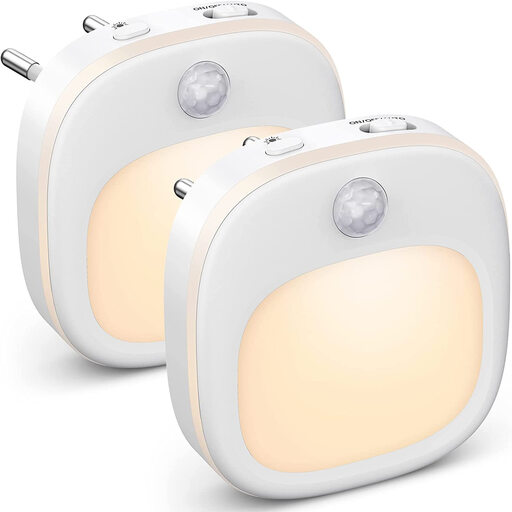
Why it suits this type of user: This two-pack combines motion detection with five dimming settings and three colour temperatures. You can use one light in the hallway and one in the bedroom.
The fixed dimming settings make it easier to avoid harsh light. Beforehand, check where you’ll place the lights, as they respond to movement.
Two lights, five brightness levels, three colour temperatures and a stated power rating of 1 W.
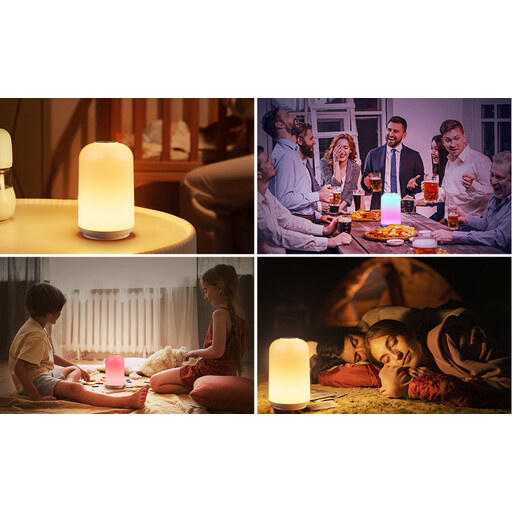
Why it suits this type of user: This model is a good choice if you want to combine mood lighting with practical controls in a bedroom or child’s room.
The product information lists both warm white and seven RGB colours, as well as stepless dimming. So you’re not limited to coloured settings.
40 lm, CRI >85, USB charging, stepless dimming for warm white light and an ambient light sensor that works at up to 40 lux.

Why it suits this type of user: For kitchen cupboards, wardrobes and dark shelves, a long, flat LED light is more practical than a small night light.
The stated dimensions of 400 × 38 × 10 mm make it easy to check whether the light will fit in your cupboard. The PIR sensor has a range of 3–5 metres.
Two lights, 61 LEDs per light, three colour temperatures and a built-in 1,100 mAh rechargeable battery.
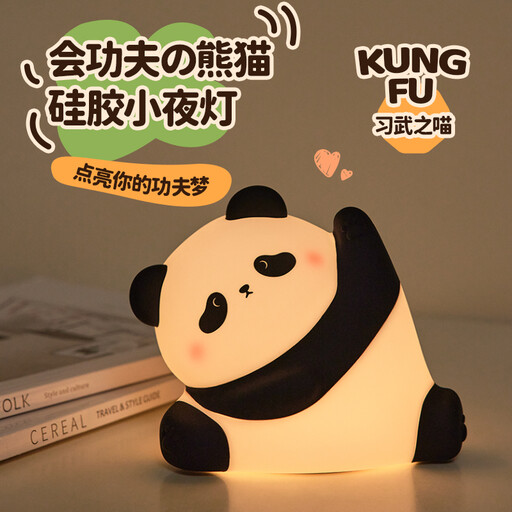
Why it suits this type of user: The soft silicone casing, touch controls and three light settings make it a good fit for a bedside table in the nursery.
The specifications list three dimming levels and a 1,200 mAh battery. The warning that babies must be supervised is still important; keep the light out of reach.
Food-grade silicone according to the product description, touch controls, three light settings and USB charging.
We’ve put together a complete, up-to-date list of products that meet these strict selection criteria and the applicable European safety regulations.
An LED light generally uses little power, but the difference in electricity costs depends on its wattage and how many hours it’s on. With a rechargeable model, you’ll also need to factor in the cost of charging it and the battery’s lifespan. A plug-in light is convenient if it’s going to stay in the same place.
Position the light so the sensor faces the route people take, but isn’t pointed directly at a window, mirror or busy walkway. Also check whether the light threshold can be adjusted. A detection range of 3–5 metres is often useful in a hallway, but may be too wide for a small nursery.
The LED itself can last a long time, but practical run time also depends on the battery, switch, sensor and charging cycle. If a product has a battery, check not only the LED specifications but also its capacity in mAh, stated run time and charging method. Rechargeable models should also be kept dry and used in accordance with the supplied safety instructions.
