
Vandaag of morgen in huis

Kwaliteit gegarandeerd

Welkomstaanbiedingen ontgrendelen: GRATIS bezorging | Tot 80% korting | Gratis 30 dagen JoyPlus-proefperiode
Download de app
An LED night light for children can be useful at bedtime, during night feeds, nappy changes or when walking down a dark hallway to the toilet. However, not every light is suitable for everyday use. An appealing shape, lots of colours or long battery life do not automatically indicate how easy the light is to operate, how bright it is or how safe it is in practice.
So pay particular attention to these common pitfalls:
A dimmable night light gives you more control than a lamp with only an on/off switch. For a nursery or nighttime care, a low, warm light setting is often practical. Pay attention to the difference between:
A lamp with an RGB function may offer seven or eight colours, but also check whether warm white is available separately. On the 12-LED lamp in this selection, warm white is specified at 2600–2800K, alongside seven RGB colours.
A rechargeable night light means you do not have to keep replacing disposable batteries. Check the following:
You should always read a stated operating time in context. For example, the VAVA lamp has a battery life of up to 100 hours at the lowest brightness. At maximum brightness, around seven hours is stated. These are therefore not equivalent usage conditions.
A night light with touch controls is convenient when you need light quickly at night. However, check that the controls are not too sensitive and that children cannot easily activate the lamp accidentally.
A night light with a timer switches off automatically. This can save power and prevents the lamp from staying on all night. Check how long the timer lasts: this selection includes options such as 30 minutes and one hour.
With a silicone night light, information about the material and care is important. According to VIVREAL’s product description, the panda and unicorn lamps are made from food-grade silicone. This is a statement from the brand’s product information, not a general guarantee that a lamp can be used as a toy without supervision. Keep the lamp away from fire, heat and prolonged exposure to water.
The following choices are based on verifiable features such as light settings, controls, battery, dimensions and charging type.
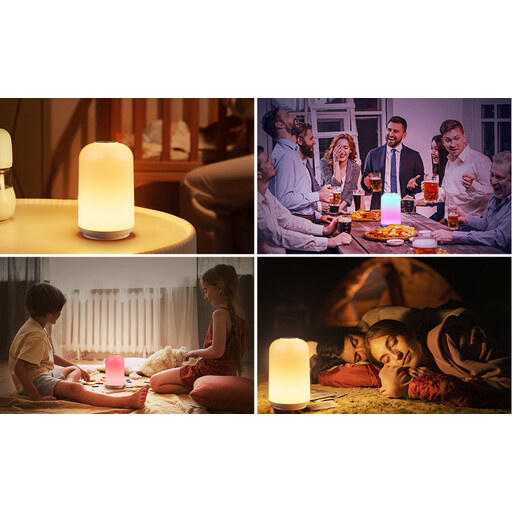
Why it suits this profile: A compact choice for anyone looking for a simple nursery light with both warm white and coloured light.
The specifications mention warm white light, stepless dimming and a built-in rechargeable battery. This means you do not have to rely solely on RGB lighting.
12 SMD LEDs, 40 lumens, warm white at 2600–2800K, seven RGB colours and USB charging via 5V/1A.
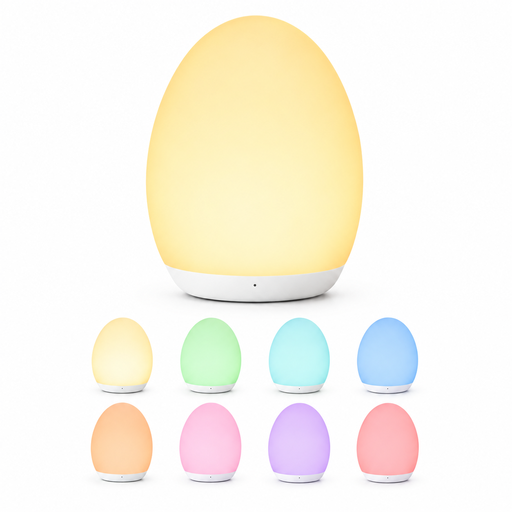
Why it suits this profile: Suitable for parents who want one lamp to use for night feeds, nappy changes, bedtime and travelling.
The product information distinguishes between maximum and minimum brightness. It also specifies a one-hour timer, so you do not have to rely solely on a long battery-life claim.
Dimmable warm white light, eight colour modes, touch controls, memory function, one-hour timer and a 2000 mAh battery.

Why it suits this profile: A portable night light for children, primarily intended for bedtime, sleepovers and use beside the bed.
The lamp has three fixed brightness levels and switches off automatically after 30 minutes. According to VIVREAL’s product description, the casing is made from BPA-free food-grade silicone; also check the warnings regarding use by young children.
Touch controls, 1200mAh battery, stated operating time of 8–10 hours and a 30-minute timer.
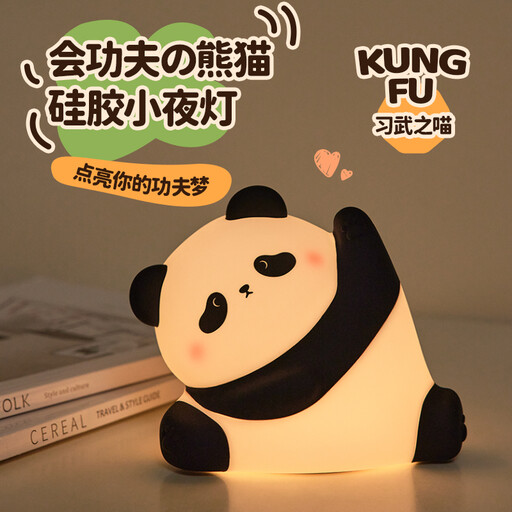
Why it suits this profile: A compact bedside light for children that is easy to operate and can also make a thoughtful gift.
The three brightness levels are clearer than a product with only a decorative colour function. The lamp is rechargeable, so disposable batteries are not required.
Touch controls, a rechargeable 1200 mAh battery and a soft silicone casing according to the product description.
We have put together a complete, up-to-date list of products that fully meet these strict selection criteria and the applicable European safety regulations.
Place a nursery light on a stable, flat surface, such as a bedside table or shelf. Do not put it directly under a blanket, next to a heat source or somewhere a child can pull on the charging cable.
Also bear the following points in mind:
A table lamp with a larger casing, such as the 28.5 cm wireless lamp, is more suitable as a general room light than as a lamp beside a baby’s cot. According to the product information, its colour temperature ranges from 3000 to 6500K and the battery life is up to six hours. This makes the model useful for a desk, bedroom or temporary lighting, but less compact than a typical baby night light.
That depends on the product specifications and the instructions for use. Ideally, choose a lamp with a low, warm light setting, stable positioning and clear charging and safety instructions. A light with a soft casing is not automatically suitable for a baby to hold or put in their mouth.
Operating time varies by model and brightness level. A manufacturer may state up to 8–10 hours or up to 100 hours, but always check which light setting this was measured at. The highest brightness will generally use more energy than a low night-time setting.
LED lighting generally uses little power. The 12-LED model in this selection has a stated power consumption of 1 watt. With rechargeable lamps, energy use also depends on how often you recharge the battery and which brightness level you use. A timer can help prevent the light from staying on unnecessarily long.
