
Vandaag of morgen in huis

Kwaliteit gegarandeerd

Welkomstaanbiedingen ontgrendelen: GRATIS bezorging | Tot 80% korting | Gratis 30 dagen JoyPlus-proefperiode
Download de app
An LED night light may seem like a simple purchase, until you use it every night. That is when you quickly notice whether the controls are easy to use, whether the battery lasts long enough and whether the light is too bright or too dim. For parents, the choice of materials, heat generation and positioning are also important considerations.
Pay particular attention to these common pitfalls:
A dimmable night light gives you more control than a lamp with only one brightness level. For a nursery or bedroom, a soft, warm setting is usually practical during night feeds or nappy changes. A colour temperature of around 3000K produces warm white light. Lamps with a temperature of 4000–4500K appear more neutral and may be more suitable for a hallway or bathroom.
As well as colour temperature, check the light output in lumens. A compact 20-lumen lamp is intended as an orientation light, while a 210-lumen table lamp can illuminate a larger part of a table. More lumens do not automatically mean greater ease of use.
A rechargeable night light is easy to move around and means you do not have to keep replacing batteries. Check:
For example, the VAVA VA-CL009 lists a 2000 mAh battery. According to the product information, it operates for around 7 hours at maximum brightness and up to 100 hours on the lowest setting. The same information states that this maximum duration does not apply to night-light mode. Understanding this distinction helps prevent unrealistic expectations.
A baby night light should stand securely and be kept out of reach of loose charging cables. The product description for the VIVREAL Panda lists food-grade silicone, ABS and PP. This tells you something about the materials used, but it is not a general guarantee that a child can use the product without supervision. According to the stated safety information, supervision is recommended when babies are present.
For a bathroom, balcony or patio, the IP rating is relevant. IP44 generally means protection against splashing water under certain conditions, but not against immersion. An IP20 lamp is intended for dry indoor spaces. Always place a lamp on a stable, level surface and follow the instructions for cleaning and charging.
The following selection is based on the stated product specifications, features and usage warnings. Suitability depends on the room and your personal preferences.
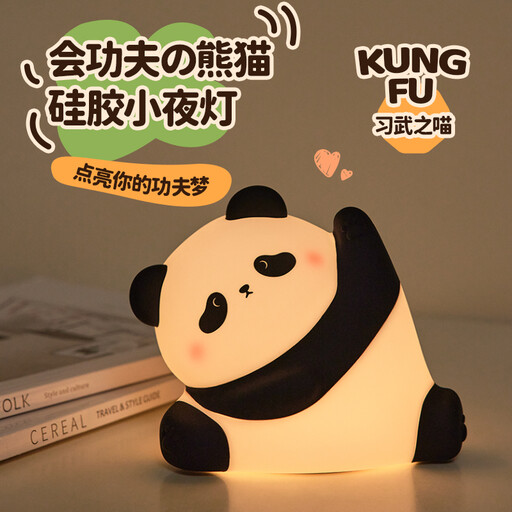
Why it suits this profile: This compact touch night light combines a recognisable panda design with three dimming levels and a rechargeable 1200 mAh battery. It is well suited to parents looking for a simple light for bedtime or the nursery.
The three light levels mean you are not limited to one fixed brightness. The product information also states that it charges via USB, so disposable batteries are not required.
Food-grade silicone according to the product description, touch controls and a soft, squeezable casing. Suitable for indoor use only; keep the product away from heat, fire and immersion.
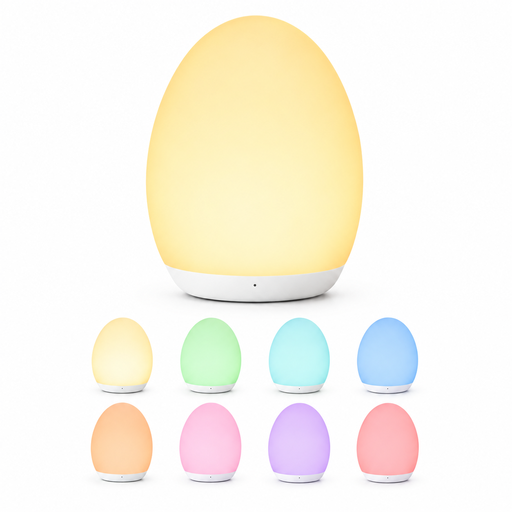
Why it suits this profile: The combination of warm white light, dimming, eight colour settings, a timer and a memory function is practical for maintaining a consistent routine in the nursery or when travelling.
The product information distinguishes between maximum and minimum brightness when stating battery life. The one-hour timer can also prevent the lamp from staying on unnecessarily.
2000mAh battery, touch controls, memory function and no app or Wi-Fi required. Use a suitable DC 5V/1A power source and keep cables out of children’s reach.
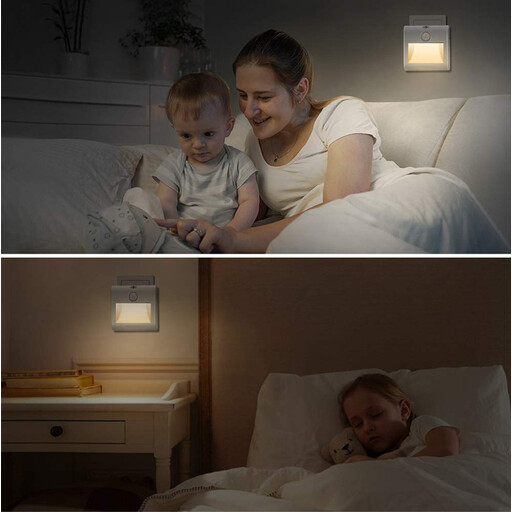
Why it suits this profile: This set is designed for households that want to illuminate several passageways, such as the hallway, bedroom or bathroom.
You can choose between constant illumination and an automatic mode. According to the product information, the sensor responds at up to 20 LUX within a range of 3 to 5 metres.
Two lamps, stepless touch dimming and a memory function. The lamps operate at 100–240V; do not place them in a damp environment and do not cover the sensor.
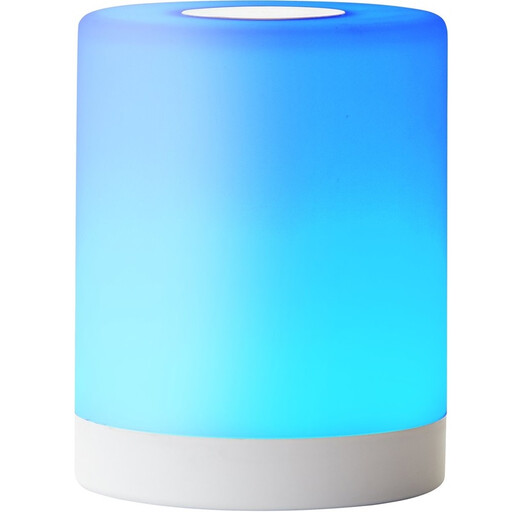
Why it suits this profile: This compact table lamp can be used as a bedside light, an LED table lamp or portable ambient lighting. The combination of RGB, 3000K warm white and cordless operation offers more variety than a standard night light.
The specifications list both a touch dimmer and a memory function. The IP44 rating means splash resistance is included in the product specification, but immersion is still not permitted.
1W integrated LED, 140 lumens, USB charging and an 18650-type battery according to the product information. Use the lamp on a stable surface and not in severe weather conditions.
A 1- or 2-watt LED lamp uses relatively little electricity when it is left on for longer periods. The actual cost depends on the wattage, the number of hours it is lit and your energy tariff. With a rechargeable battery, you should also account for charging losses and the lifespan of the built-in battery. A non-replaceable battery may be a practical disadvantage over time.
Clean a lamp with a soft, dry or slightly damp cloth if the product information permits this. Do not use abrasive cleaning products and do not open the casing. Before buying, check that the size will fit on your bedside table, windowsill or the surface next to the bed.
We have put together a complete, up-to-date list of products that fully meet these strict selection criteria and the applicable European safety regulations.
It can be, provided the product is intended for use in a nursery according to the usage information and you follow the safety instructions. Place the lamp out of the child’s reach, keep charging cables away during unsupervised periods and do not use a lamp near water or heat sources.
This varies by model and brightness setting. A stated maximum operating time often applies to the lowest brightness level. So check the operating time at maximum brightness as well as the charging time. With daily use, the capacity of a built-in battery may decrease over time.
A motion-sensor night light may remain on for less time than a lamp that is continuously lit, but its energy consumption depends on how often it is activated and the light intensity. The feature can be practical in a hallway or toilet. In a bedroom, it is worth checking how sensitive the sensor is and whether a constant-light mode is available.
