
Vandaag of morgen in huis

Kwaliteit gegarandeerd

Welkomstaanbiedingen ontgrendelen: GRATIS bezorging | Tot 80% korting | Gratis 30 dagen JoyPlus-proefperiode
Download de app
An LED night light might seem like a simple purchase, but there are big differences in ease of use, light control and power supply. A light may appear to offer plenty of features on paper, but its controls could be awkward or it might be too bright at night. Parents also consider materials, heat output and cables near a bed. For adults, ambience, energy use and compatibility with smart lighting often matter more.
An RGB night light with seven colours sounds appealing, but check how you adjust the colour and brightness. A light that can only be controlled with a complicated remote may be less convenient than a simpler dimmable night light with a button or touch control.
Also look at the difference between colour selection and dimmability. Some models offer several colours, but only let you dim the warm white setting continuously. This matters if you want to keep the light soft in a bedroom or nursery.
An LED night light with a sensor is useful in a hallway, landing or toilet. In a bedroom, however, an overly sensitive sensor may be triggered by every movement. Check whether the product description gives information about the sensor, light threshold or intended setting.
A sensor light isn’t necessarily the same as a light with a timer, either. A timer switches the light off at a chosen time; a motion sensor responds to movement. Choose the feature that suits your routine.
A rechargeable night light saves you having to replace batteries, but it has a built-in battery that needs charging. Check how it charges, for example via USB, and whether you can use it while it’s charging if that’s important to you. If the light has a cable, keep it out of reach of young children.
For products intended for a child’s room, you should also read the safety warnings. A product description may mention materials such as ABS, PP or silicone, but this doesn’t replace supervision or correct use.
For a night light in a bedroom or nursery, a low light setting is often more important than a high maximum light output. Lumens indicate how much light a lamp produces. A compact 40 lm model is designed to provide soft lighting; a smart E27 bulb with 806 lm can illuminate a much larger area of a room.
Warm white light around 2600–3000 K generally looks softer than cool white light. Some smart bulbs offer a wider adjustable colour temperature range, for example from 2500 to 6500 K. Check that the stated values apply to the bulb itself and not just to a general product range.
A 230 V light, a USB light and a battery-powered model each need a different set-up. Check:
Before installing a ceiling light or fixed fitting, switch off the power. A light with IP20 protection is intended for dry indoor spaces and shouldn’t be used where it could be directly splashed with water.
A night light with a remote is handy if you want to switch it on or off from bed. App controls and voice commands offer more options, but often require a Wi-Fi or Bluetooth connection. Check whether you need a bridge.
For example, Philips Hue lighting can be controlled via an app and voice platforms. Some models offer extra features, such as automation and out-of-home control, when used with a Hue Bridge. According to the product information, the TP-Link Tapo L530E uses Wi-Fi and works without a separate hub. These differences affect the overall cost and set-up.
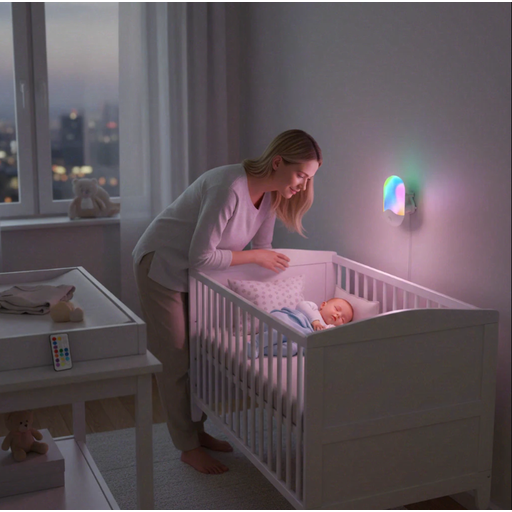
Why it suits this profile: This compact model offers seven colours, a remote control and a timer for the bedroom or child’s room, with no app to install.
The timer stops the light from staying on unnecessarily. Before buying, check that the remote’s range suits the layout of your room.
0.5 W SMD LED, seven colour settings and remote control; suitable for 110–220 V according to the product information.
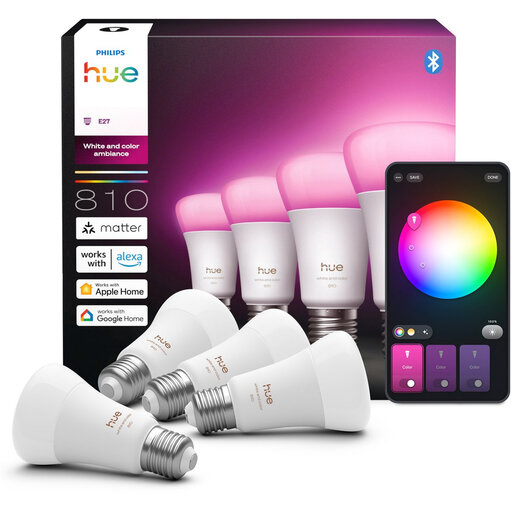
Why it suits this profile: Ideal if you want to combine a night light with smart lighting, app control and automation within an existing ecosystem.
Dimming and app or voice control give you more options than a simple on/off switch. A Hue Bridge may be needed for more advanced automation.
E27 fitting, RGBW light, dimmable from bright illumination to a subtle night setting, and 810 lm per light point according to the product details.
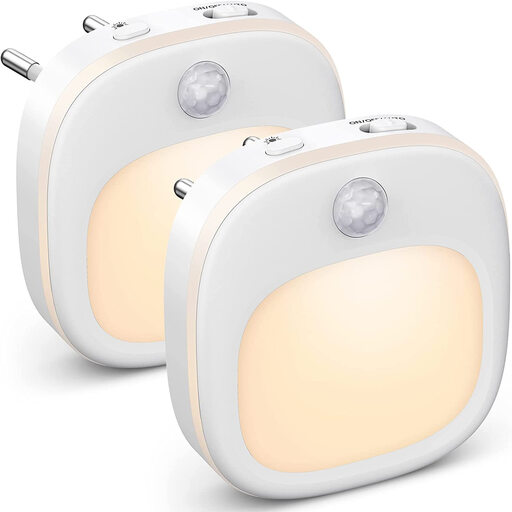
Why it suits this profile: A two-light set is ideal if you want to illuminate more than one route, such as the bedroom and hallway, or the nursery and landing.
The motion detector switches the light on only when it detects movement. Position it so pets or passing doors don’t trigger the sensor unnecessarily.
Two lights, three colour temperatures and five dimming settings according to the product name; suitable for bedrooms, nurseries and hallways.
We’ve put together a complete, up-to-date list of products that meet these strict selection criteria and the applicable European safety requirements.
LEDs generally use little power, but actual consumption depends on the wattage and how many hours the light is on. A 0.5 or 1 W model uses less energy over the same period than a ceiling light rated at tens of watts. A timer, sensor or automatic shut-off can stop the light from staying on unnecessarily.
Place the light securely on a cupboard or shelf, out of your child’s reach and away from curtains, blankets and water. Use a low light setting if you only need it for orientation. If the model has a cable, tuck it away so it can’t be pulled. Always follow the manufacturer’s specific safety instructions.
A rechargeable model means you won’t have to buy batteries regularly and can move it around easily. However, you’ll need to charge it in good time, and its built-in battery may hold less charge over time. If you have a fixed spot near a socket, a mains-powered LED night light may be more practical. Pay particular attention to the charging port, included accessories and how long you want the light to run.
