
Vandaag of morgen in huis

Kwaliteit gegarandeerd

Welkomstaanbiedingen ontgrendelen: GRATIS bezorging | Tot 80% korting | Gratis 30 dagen JoyPlus-proefperiode
Download de app
An LED night light may seem like a simple purchase, but small differences can have a big impact on how convenient it is to use. A lamp might look atmospheric, yet prove awkward because of a short battery life, an overly bright light or a sensor that switches on at the wrong time.
Whether you need one for a bedroom, nursery, hallway or living room, don’t just focus on appearance. Pay particular attention to brightness, power source, controls and whether the lamp is suitable for the place you want to use it.
A cute lamp or decorative RGB mood light might look right in your room, but that tells you little about how practical it is. Check whether the product is dimmable, how you control it and whether you can set it to warm white. In a bedroom, a bright, non-dimmable lamp is often less pleasant than you might expect.
A wireless lamp might run on loose batteries, a built-in rechargeable battery or a replaceable battery. These are different options:
A motion-sensor product can save energy by switching off when it’s not needed, but check the stated detection range and operating time in sensor mode.
A motion-sensor night light is handy in a hallway or beside your bed, but the sensor usually only works under certain lighting conditions. A model with a specified threshold of, for example, ≤20 lux might not switch on during the day. And while 30 lumens is suitable for night-time orientation lighting, it won’t light up an entire room.
Lumens (lm) indicate the total light output. A compact bedside lamp with 30 to 40 lumens is mainly designed to provide soft light at night. An LED table lamp with 210 lumens is better suited to lighting a desk, cupboard or table more clearly.
Also consider what you’ll use the lamp for. A nursery lamp doesn’t need the same light output as a video light or floor lamp.
Colour temperature is measured in Kelvin (K):
An RGB lamp offers extra ambience, but check whether you can set warm white separately. On some models, the RGB colours are mainly decorative and less suitable for practical lighting.
Check the battery capacity in mAh, but don’t use this as your only point of comparison. Operating time also depends on brightness, sensor mode and light colour. For example, a 1200mAh battery might last longer on a low setting than at maximum brightness.
Also consider where you’ll use the lamp:
A product page may mention a minimum two-year legal guarantee under EU consumer law. Always check the latest information from the product and seller.
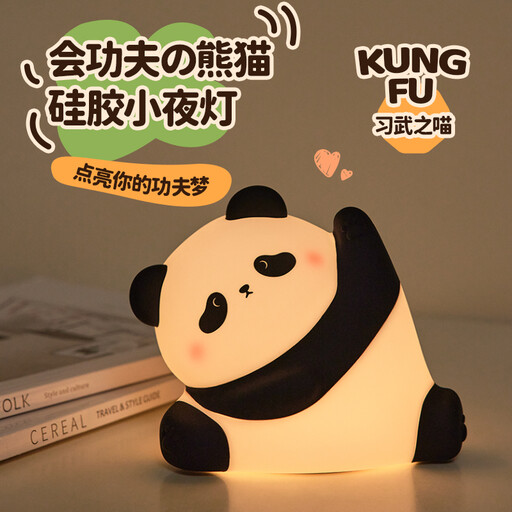
Why it suits this type of buyer: Touch controls and three light settings make this an easy-to-use choice for a child’s bedroom, nursery or bedside table.
The product description specifically lists three dimming settings and a rechargeable 1200mAh battery, so you won’t need to keep replacing loose batteries.
Rechargeable, with touch controls and a housing made from silicone, ABS and PP, according to the product specifications.
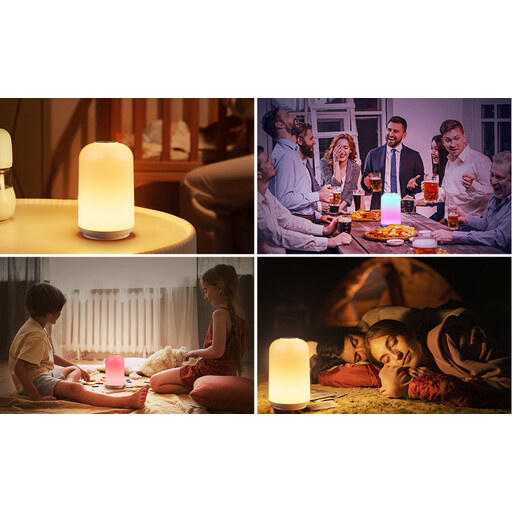
Why it suits this type of buyer: This model combines warm white light with seven RGB colours, making it a good choice if you want one compact lamp for both ambience and everyday use.
The specifications list separate warm white and RGB settings, as well as stepless dimming for warm white. That’s more helpful than a general claim about mood lighting.
12 SMD LEDs, 40 lumens, CRI >85 and USB charging via 5 V-1 A, according to the product information.
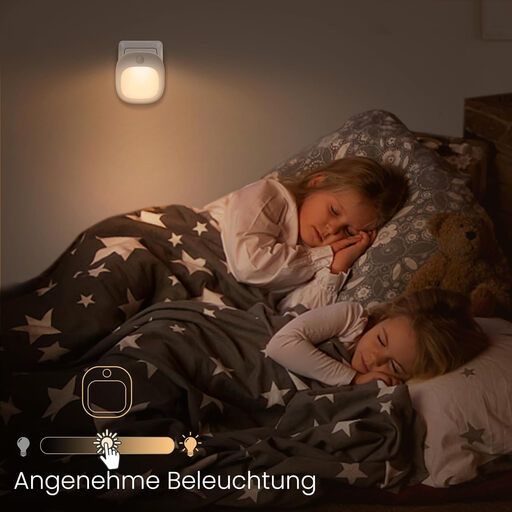
Why it suits this type of buyer: A set of two motion-sensor lights is a good fit for a hallway, staircase, toilet or route to a child’s bedroom where you’d like the light to come on automatically.
The product specifications list a PIR sensor, a range of 3–5 metres and activation at ≤20 lux. This makes it easier to judge where the sensor will work well.
Two colour temperatures plus a mixed setting, five brightness levels and a stated operating time of up to 10 hours in sensor mode.
We’ve put together a complete, up-to-date list of products that meet these strict selection criteria and current European safety requirements.
It depends on how often you use it, its battery capacity and the cost of replacement batteries. For everyday use, USB charging can be convenient because you won’t need to buy loose batteries. A battery-powered lamp is handy in places where charging is difficult. So compare more than just the purchase price: consider how often you expect to use it, too.
The operating time per charge isn’t always clearly stated. For sensor models, the stated operating time is usually based on the light switching on automatically rather than staying on continuously. The LED itself may have a long lifespan, but the battery is a separate component with a limited number of charging cycles. Use the lamp in line with the manufacturer’s charging and safety instructions.
Only if the product specifications say it is. A lamp with IP20 is designed for dry indoor spaces and shouldn’t be used in a bathroom or outdoors. A model with IP54, like some wireless outdoor lights, offers better protection against splashing water, but still isn’t designed for immersion or heavy rain. Always check the IP rating before using a lamp in a damp location.
