
Vandaag of morgen in huis

Kwaliteit gegarandeerd

Welkomstaanbiedingen ontgrendelen: GRATIS bezorging | Tot 80% korting | Gratis 30 dagen JoyPlus-proefperiode
Download de app
An LED night light may seem simple, but models differ in ease of use, brightness, power supply and sensors. A light that works well in a bedroom may not be right for a dark hallway or bathroom. Marketing terms such as “energy-saving”, “smart” or “long-lasting” don’t always tell you how a product will perform in your home.
So focus on specifications you can check. That way, you can avoid choosing a light that’s too bright for the nursery, runs out of charge too quickly or only works when you move in exactly the right place.
A warm white night light of around 2600 to 3200 K usually gives off a softer glow than cool white light of 5000 K or more. But colour temperature isn’t the only thing to consider. Check the brightness in lumens too. A 20-lumen model is suited to different uses than a 40-lumen light.
For a bedroom or nursery, an adjustable brightness setting is useful. In a hallway, toilet or bathroom, slightly cooler light can help you see details more clearly.
When choosing a night light with a motion sensor, check the detection range and the light conditions that activate the sensor. Some models only switch on in the dark, for example when light levels are no higher than 20 or 40 lux. This prevents the light from switching on unnecessarily during the day, but it also means it may not respond in a bright room.
Also check whether the light switches off automatically, can stay on continuously, or supports both modes.
A rechargeable night light is handy on a bedside table or somewhere without a plug socket. Actual battery life depends on the battery capacity, brightness and sensor setting. A model rated for up to 10 hours in sensor mode may need recharging sooner when used continuously.
Check the charging method too. USB charging via 5 V and 1 A is convenient with a suitable adapter, laptop or power bank. Only use a compatible charger, and don’t charge the product in a damp environment.
An RGB night light gives you a choice of colours, but RGB lighting is mainly decorative. For lighting your way in a nursery or bedroom, warm white is usually easier to use.
A mains-powered light is ready to use and doesn’t need recharging. It’s a good choice for a fixed spot in the hallway, toilet or beside a bed. Check whether the device is suitable for 100-240 V or 110-220 V, depending on the product specifications.
A rechargeable night light gives you more flexibility. Check the battery capacity, charging voltage, included cable and whether you can use the light while it’s charging. If the product contains a lithium battery, handle it with care: don’t open it, expose it to extreme temperatures or let it come into contact with water.
Many LED night lights are designed for indoor use and need to be kept dry. So don’t place a bathroom light right next to a shower, bath or washbasin unless the product information specifically says it’s suitable. A product title that says “for hallway and bathroom” doesn’t automatically mean the light fitting is waterproof.
Also check the dimensions, heat dissipation and sensor position. A sensor covered by a shelf, curtain or decoration may not respond as well.
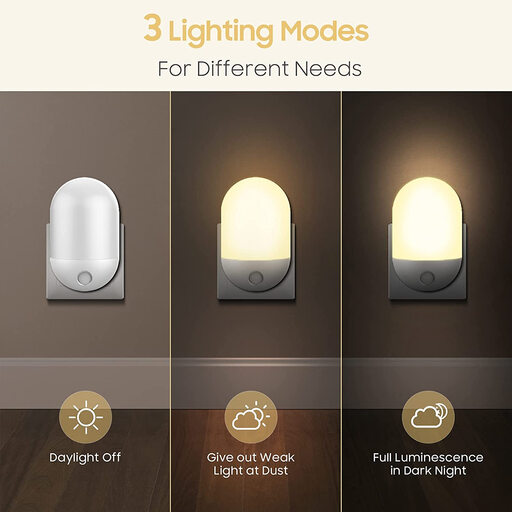
Why it suits this profile: A simple choice if you want a fixed source of warm white light to help you find your way in a bedroom, nursery or hallway.
The specifications list 20 lumens, 0,5 W and a light sensor. This makes it clear that it provides modest lighting to help you find your way, rather than lighting a whole room.
Warm white light at 2800-3200 K; suitable for 110-220 V; compact ABS and metal casing.
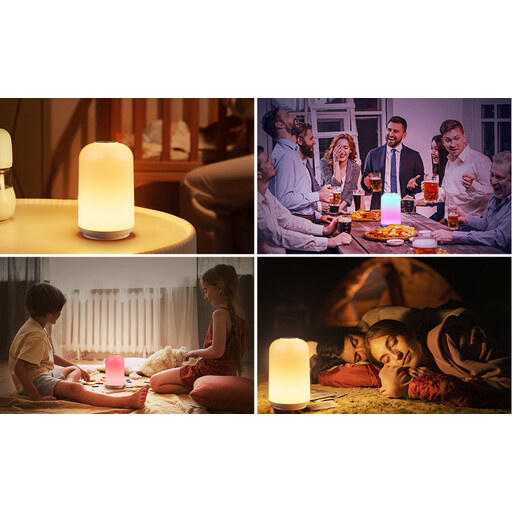
Why it suits this profile: A good fit if you want a cordless light with both warm white and RGB lighting for a bedroom or child’s room.
The product information lists a built-in battery, USB charging, a light sensor and separate warm white and RGB modes. This makes its features easy to check.
40 lumens; warm white at 2600-2800 K; seven RGB colours; stepless dimming; USB charging via 5 V-1 A.
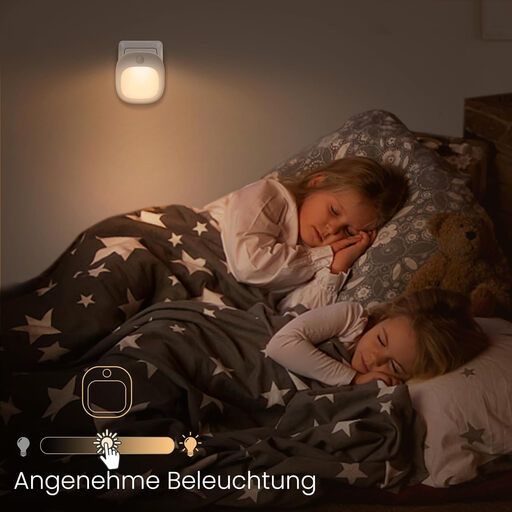
Why it suits this profile: Handy if you want to light several rooms, such as a nursery and a dark landing.
According to the product specifications, sensor mode has a range of 3-5 metres and activates at light levels of up to 20 lux. This makes its performance more predictable than an unspecified motion feature.
Two lights; 500 mAh battery per light; up to 10 hours in sensor mode; five dimming levels and three colour temperatures.
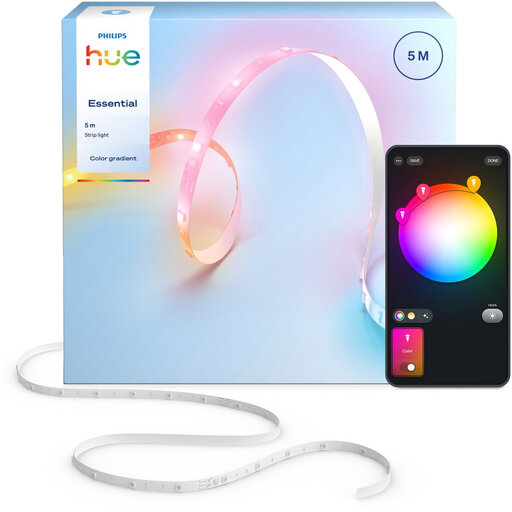
Why it suits this profile: A good choice if you want to add indirect coloured lighting to a bedroom or child’s room, for example behind furniture.
The strip is dimmable and can be cut to size. Make sure you check where it will go, how it will be powered and whether you want to control it via an app or remote control.
5-metre length; dimming function; colour-changing light; control via the Philips Hue app or voice assistants; designed for indoor use.
We’ve put together a complete, up-to-date list of products that meet these strict selection criteria and the applicable European safety regulations.
That depends on its brightness, colour temperature and placement. Ideally, choose a model with a low brightness setting or dimming function, and place it out of your child’s reach. Check the manufacturer’s safety instructions, and keep charging cables and loose parts away from the cot.
LED models with a power rating of around 0,5 to 1 watt use relatively little electricity when left on continuously. A motion sensor can reduce the number of hours the light is on. With a rechargeable model, the energy is used to recharge the battery instead. Actual running costs depend on how long you use it, the brightness setting and your local electricity tariff.
Position the light so the sensor has a clear view of the route you’ll be walking, for example beside a bed, on a landing or next to a door. Avoid pointing it directly at strong light sources, and don’t cover the sensor. If you’re using it in a bathroom, keep it away from water and moisture unless the product specifications state that it has a suitable protection rating.
