
Vandaag of morgen in huis

Kwaliteit gegarandeerd

Welkomstaanbiedingen ontgrendelen: GRATIS bezorging | Tot 80% korting | Gratis 30 dagen JoyPlus-proefperiode
Download de app
An LED night light can provide a soft guiding light, illuminate a wardrobe, add a decorative touch or give you extra light for photography. But not every light performs in real life as it appears in the product photos. A sensor may respond too slowly, the battery may run out sooner than expected, or the light may be bright and cool when you’re looking for a warm, cosy glow.
Use these points to compare your options and avoid buying a light that doesn’t suit the space or how you plan to use it.
A light with lots of LEDs isn’t automatically a good choice for use as a night light. High brightness can be uncomfortable in a bedroom or nursery, while a kitchen cupboard may need enough light for practical tasks. So, don’t just look at the number of LEDs. Also check:
A warm colour temperature of around 2700–3200 K is usually better suited to relaxing and creating a cosy atmosphere. Cool white light of around 5000 K or above is more practical for a wardrobe, hallway or workspace.
When choosing a rechargeable night light, check the battery capacity, the type of connection and whether the stated run time applies to a particular mode. A sensor mode usually uses less energy than continuous light at maximum brightness.
A built-in 500 mAh battery is compact, but you shouldn’t expect it to last as long as a model with a 1100 or 2000 mAh battery. Also check whether a USB cable is included and whether the light charges through a standard 5V connection.
A motion sensor light can be useful in a hallway, wardrobe or beside the bed. Check the detection range, light sensitivity and mounting direction. The product specifications provided include detection ranges of 3 to 5 metres. Don’t place the light behind a door, curtain or high shelf if you want it to detect movement quickly.
If you’re using the light in a nursery or child’s room, it’s best to mount or place it out of your child’s reach. Also bear in mind any warnings about water, heat, batteries and supervision.
A dimmable LED light is more versatile than one with just a single brightness level. Three settings are often enough for everyday use. Five settings or stepless dimming give you more control if you’ll use the light for both reading and creating a cosy atmosphere.
RGB lighting is mainly decorative. An RGB night light with seven colours can work well in a child’s room, living room or gaming setup, but it isn’t always suitable for practical lighting. Check whether you can adjust the white light setting separately.
Look out for these points:
For a light that’s on every night, a model with a timer or sensor may be more practical than one that stays on continuously. For a decorative light in a fixed spot, mains power or USB may be enough.
Measure the space first. A slim 30 or 40 cm light can fit under a kitchen cupboard or inside a wardrobe, while a wall light or gaming light may need more room. Also check whether it’s installed with adhesive strips, screws or an integrated wall mount.
Adhesive strips are handy because you don’t need to drill, but the surface must be clean, dry and flat. For a heavier light, or one that’s likely to be touched often, a more secure mounting system is a better choice.
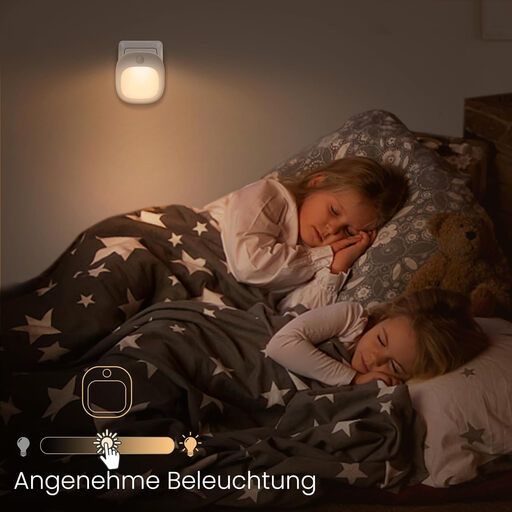
Why it suits this profile: A set of two lights is a practical starting point for spaces such as the bedroom and hallway. The lights feature motion detection, three colour temperatures and five brightness settings.
You’re not limited to one fixed brightness level or colour. According to the product description, the sensor switches the light on when it detects movement in low ambient light.
500 mAh rechargeable battery, USB charging, 30 lm, three colour temperatures and five dimming settings.

Why it suits this profile: This set is designed for practical lighting in kitchens, bedrooms or wardrobes. Its 10 mm profile makes it suitable for narrow spaces.
The product specifications include the dimensions, charging method, detection range and three colour temperatures. This lets you check in advance whether the light will fit your wardrobe.
Two 40 cm lights, 61 LEDs per light, a PIR sensor with a 3–5 m range and a 1100 mAh rechargeable battery.
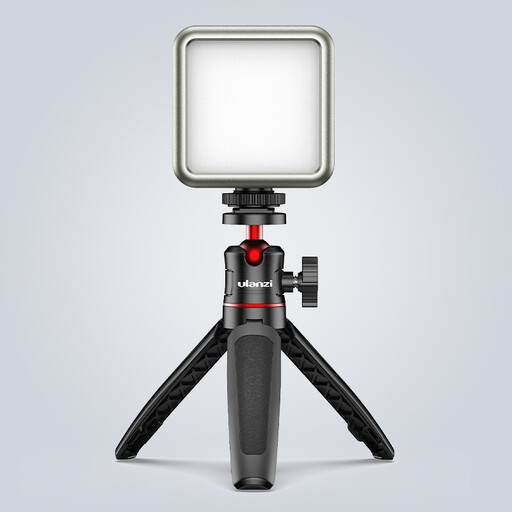
Why it suits this profile: This compact light is a good fit for photographers, vloggers and anyone looking to add RGB ambient lighting to a studio, gaming setup or creative space.
The RGB function is clearly designed for decorative and creative lighting. So don’t use this type of light as a replacement for fixed general lighting.
Portable design, built-in lithium battery and magnetic back, according to the product information.
We’ve put together a complete, up-to-date list of products that meet these strict selection criteria and current European safety regulations.
Place the light where your body or the wardrobe door will cross its detection area. Avoid obstacles and check whether the sensor only activates in the dark. After installation, test the light at different distances before pressing the adhesive strip firmly into place.
Run time depends on battery capacity, brightness, colour mode and how often the light is activated. Sensor mode may use less power than continuous lighting. Treat the stated run time as a product specification based on particular conditions, rather than a guarantee for every situation.
LED lighting generally uses very little power. With a rechargeable model, you’re mainly paying to charge the battery. A light with a timer or motion sensor can reduce unnecessary hours of use. For an accurate comparison, check the stated wattage and the selected operating mode.
