
Vandaag of morgen in huis

Kwaliteit gegarandeerd

Welkomstaanbiedingen ontgrendelen: GRATIS bezorging | Tot 80% korting | Gratis 30 dagen JoyPlus-proefperiode
Download de app
An LED night light might seem like a simple purchase, but there are big differences between models. Some lights only work when plugged into a socket, while others have a rechargeable battery, motion sensor or several colour settings. Where you place it matters too: a light that works well beside your bed may not be suitable for a dark wardrobe or passageway.
Look out for these three common pitfalls:
A night light with a motion sensor is handy in a hallway, toilet, nursery or bedroom. The light switches on when it detects movement. Check:
A model with motion detection only may switch on unnecessarily during the day. A built-in light sensor, for example one with a stated threshold of 20 or 40 lux, can help prevent this. How well it works in practice depends on where it’s placed and the amount of ambient light.
A rechargeable night light gives you more flexibility beside a bed, on a shelf or in a cupboard without a spare socket. Check whether the product charges via USB and whether a charging cable is included. A 500 mAh battery is compact, while a model with 1100 or 1200 mAh has a higher capacity. However, run time varies depending on the brightness setting and sensor configuration.
You can charge a USB night light using a suitable adapter, laptop or power bank, if the product description says so. Only use a compatible charger, and don’t charge the light somewhere damp.
A light that plugs straight into a socket is a good choice if you don’t want to maintain a battery. Check its dimensions to make sure it won’t block the second socket.
A warm white night light is often a good fit for a bedroom or nursery. A cooler colour temperature may be more useful for a worktop, wardrobe or kitchen cupboard. Models with several settings give you more control:
Pay attention to the dimensions too. A 40 cm light fits neatly under a kitchen cupboard, but is less suitable as a compact bedside light. In a nursery, low brightness, simple controls and a stable position are important. Keep electrical products out of reach of young children and always follow the manufacturer’s safety warnings.
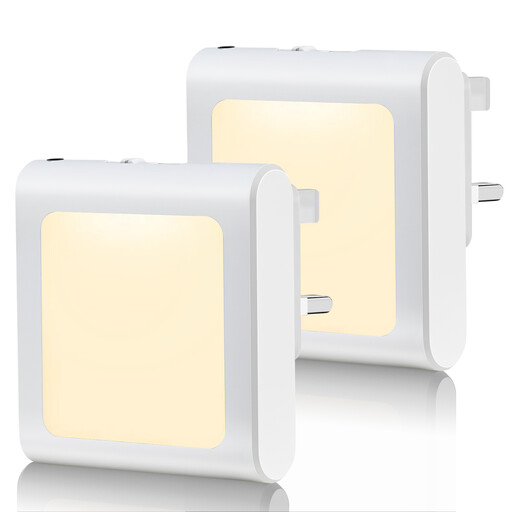
Why it suits this need: A simple set of two for anyone who wants to light up several spots, such as the bedroom and hallway. The lights plug into a socket, so there’s no battery to maintain or charging routine to keep track of.
The product description mentions a compact design and low energy consumption. There’s no uncertainty about battery life, as the model plugs directly into a socket.
Set of two; ABS+PC casing; suitable for bedrooms, hallways, nurseries and kitchens according to the product description.
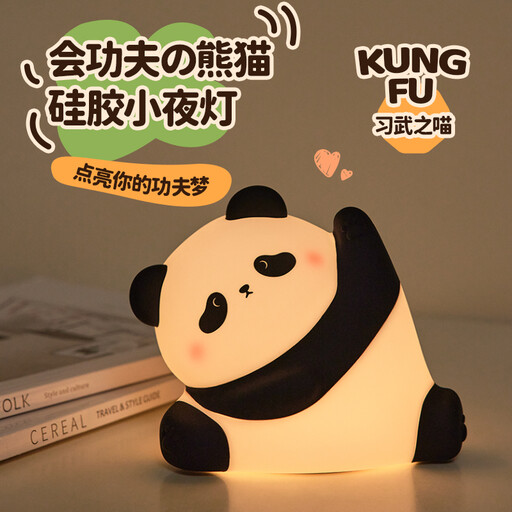
Why it suits this need: This model is designed for a nursery, child’s bedroom or bedside table where easy controls and a portable design are important.
The three brightness levels mean you’re not limited to one fixed setting that could be too bright. USB charging also means you won’t need to replace batteries regularly.
1200mAh rechargeable battery; three dimming levels; touch controls; casing made from ABS, PP and food-grade silicone according to the product specifications.

Why it suits this need: A practical choice for kitchen cupboards, wardrobes, shelves and dark passageways where wide coverage and automatic switching are useful.
The model combines PIR motion detection with three colour temperatures. That means you don’t have to choose between warm ambient light and cool task lighting.
Two 40 cm lights; 61 LEDs per light; PIR range of 3–5 metres; 1100mAh battery; USB charging; three colour temperatures.
Position a sensor light so that your movement crosses its detection path, rather than approaching it head-on. In a cupboard, mounting it inside or underneath a shelf is often practical. For adhesive mounting, use a clean, dry surface and check regularly that the light is still firmly attached.
An LED sensor light isn’t automatically suitable for a damp bathroom. Only use the product as specified. The models mentioned are described as being for indoor use; keep them away from water, don’t cover a light and don’t let children use an electrical product unsupervised.
We’ve put together a full, up-to-date list of products that meet these strict selection criteria and the applicable European safety regulations.
Its lifespan depends on the LED module, electronics, heat dissipation and how often it’s used. With rechargeable models, battery capacity also decreases over time. So check not only the number of LEDs, but also the charging method, battery capacity and operating mode.
A light with a stated power rating of 0.5 to 1 watt uses relatively little electricity while it’s on. A sensor setting can reduce usage by keeping the light from staying on continuously. Actual consumption depends on how long it’s on, its brightness and how many lights you have at home.
Warm white light around 2700–3200 K is often chosen to create a relaxing atmosphere. Neutral or cool white can provide more contrast in a cupboard, on a staircase or in a kitchen. A model with several colour temperatures is useful if you want to use the same light in different rooms.
