
Vandaag of morgen in huis

Kwaliteit gegarandeerd

Welkomstaanbiedingen ontgrendelen: GRATIS bezorging | Tot 80% korting | Gratis 30 dagen JoyPlus-proefperiode
Download de app
A dark hallway, a child who's afraid of the dark, or the fear of tripping at night. These are all situations where a little light makes a big difference. A good LED night light provides safety and convenience without disrupting your sleep. But with so many options—sensors, dimmers, various power sources—the choice can be overwhelming.
As a Joybuy Product Recommendation Officer, I'm here to help you make the right choice. In this article, we'll cover the most important features and provide specific recommendations based on product specifications, so you can find a light that truly fits your needs.
Before making a decision, it's helpful to understand the available features. Here are a few key considerations.
An automatic night light saves energy and is incredibly practical. Most models operate with a sensor, but there are two main types:
The way the light is powered determines where you can use it.
Not all light is created equal. For nighttime, you want soft, warm light that minimises disruption to the production of the sleep hormone melatonin.
Based on functionality and specifications, we've highlighted a few popular choices for you.
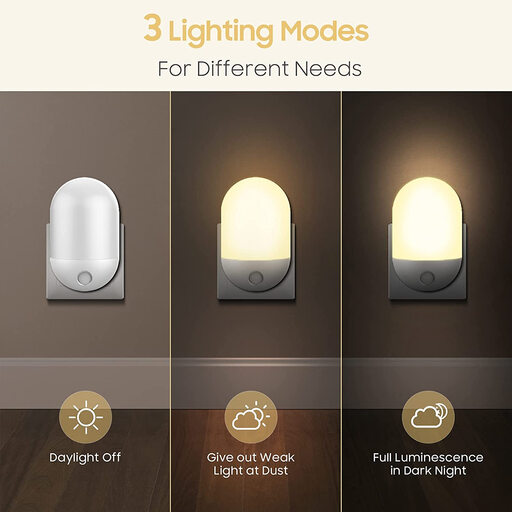
Why It Stands Out: This model is the definition of simplicity and efficiency. You plug it into the socket, and the built-in light sensor does the rest. It emits a soft, warm white light that's just bright enough to guide your way without being blinding.
Benefits:
Who Is It For? Ideal for anyone looking for a reliable, maintenance-free solution for the hallway, landing, or nursery.
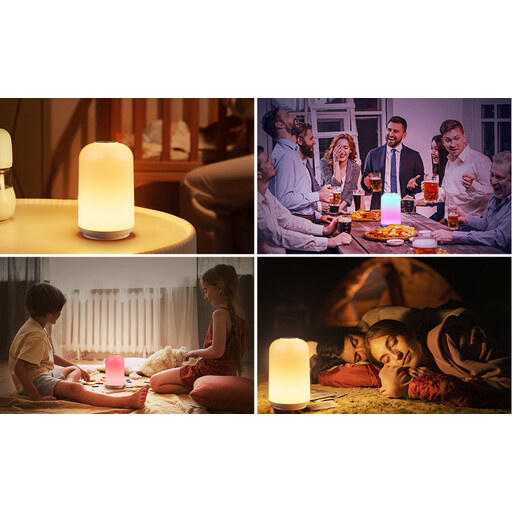
Why It Stands Out: This rechargeable night light combines functionality with ambiance. In addition to warm white light, it also offers seven RGB colours. Thanks to its built-in battery, you can place it anywhere, and the stepless dimming function allows you to adjust the brightness perfectly.
Benefits:
Who Is It For? A versatile choice for a child's room, where the colours can add a playful touch, or for anyone who wants an atmospheric and dimmable night light on their nightstand.
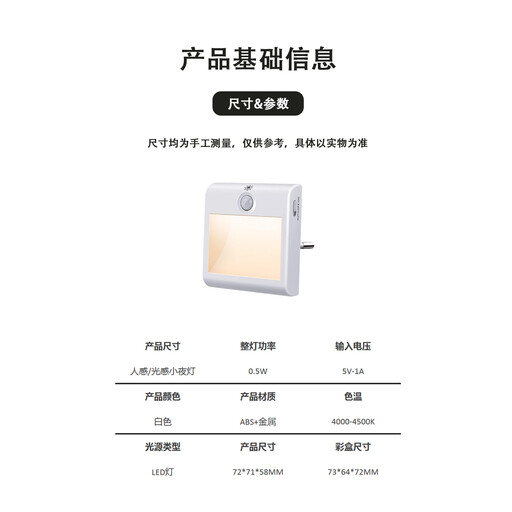
Why It Stands Out: This set of two provides a complete solution for multiple spaces. The lights are equipped with a motion sensor that responds within a 3 to 5-meter range. The touch-dimming function with memory remembers your last setting, which is especially convenient for nighttime use.
Benefits:
Who Is It For? Perfect for homeowners and seniors looking for a safe, hands-free lighting solution for high-traffic areas.
The world of LED lighting is vast. If these specific models don't quite meet your needs, there are many more options available. Explore our broader collection for more choices in ambient and functional lighting.
? Discover more options in our Warm LEDs category
Warm white light (with a colour temperature between 2200K and 3000K) is generally the recommended choice. Blue or cool white light can disrupt the production of the sleep hormone melatonin, whereas warmer light has a calming effect and is less likely to affect your sleep cycle.
A night light doesn't need to be bright. A light output between 5 and 40 lumens is typically sufficient. The goal is to see outlines and navigate safely, not to illuminate the entire room. A dimmable option gives you the flexibility to adjust the brightness to your needs.
Yes, a night light with a sensor (both light and motion) is typically more energy-efficient than a light that stays on continuously. Because it only activates when it's dark or when motion is detected, it only consumes power when it's actually needed. This significantly reduces energy consumption.
