
Vandaag of morgen in huis

Kwaliteit gegarandeerd

Welkomstaanbiedingen ontgrendelen: GRATIS bezorging | Tot 80% korting | Gratis 30 dagen JoyPlus-proefperiode
Download de app
Lighting that turns on automatically when you enter a room sounds ideal. No more fumbling for light switches in the dark. But the market for LED lighting with motion sensors is filled with products that overpromise and underdeliver. Many people buy a light that stops working correctly after a few months, is constantly dead, or has a disappointing sensor.
Before you invest in convenience, it's crucial to recognise the common pitfalls. This will prevent you from wasting money on a gadget that just ends up in a drawer.
To avoid these problems, it's wise to look at a few technical specifications. These details determine whether a light will be genuinely practical in your home.
Most lights for home use operate with a PIR sensor (Passive Infrared). This sensor responds to body heat combined with motion. For most applications, such as cabinet lighting or a night light with a sensor, this is an excellent and energy-efficient technology. Pay attention to two things:
The power source determines the flexibility and maintenance of your light.
The right lighting does more than just illuminate a space; it creates an atmosphere.
Based on these criteria, we have selected a few products that suit different needs and situations.

Why This Fits Their Persona: This set is a direct solution for dark spots like wardrobes, kitchen cabinets, or hallways. With no drilling or cables, you get functional light right where you need it. The set of two makes it a cost-effective choice.
The installation with adhesive strips is simple and reliable for smooth surfaces. The 1100mAh battery is more than sufficient for this type of use, and the PIR sensor has a clearly specified range of 3-5 metres.
Ultra-thin design (10 mm) that blends in seamlessly. Choice of three colour temperatures (warm, natural, and cool white) to set the right mood.
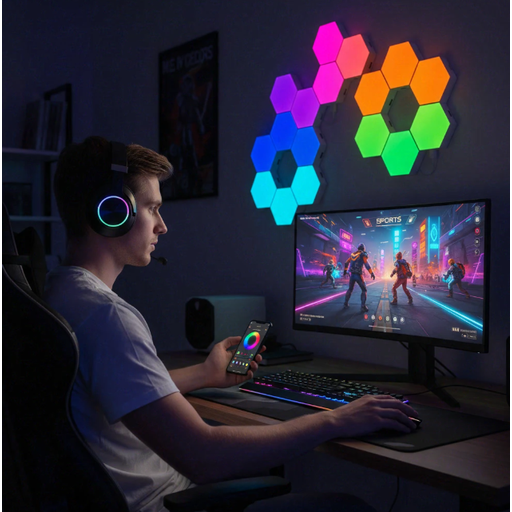
Why This Fits Their Persona: Perfect for personalising a game room, studio, or living room. With these modular panels, you can create your own unique shapes and light shows. The music synchronisation makes it a dynamic addition to any space.
These panels are powered via a USB connection to the mains, so you don't have to worry about dead batteries. The installation is flexible and requires no technical knowledge, just a smooth wall for the adhesive strips.
Fully modular design to create your own shapes. The lights react to music and sound, creating a vibrant atmosphere. Controllable via app and remote control.

Why This Fits Their Persona: Ideal for anyone who wants to move safely through the house at night without turning on the main lights. Useful for a child's room, the landing, or the toilet. Because it's rechargeable, you can place it anywhere you need it.
The sensor is specifically designed for use in the dark (≤20 LUX), and the 500mAh battery is optimised for sensor mode, ensuring it lasts a long time. The dimming function prevents the light from being too bright.
Adjustable colour temperature (warm, cool, mixed) and 5 dimming levels. Compact and portable design. The set of two is practical for outfitting multiple spots in the house.
We have compiled a complete, up-to-date list of products that fully meet these strict selection criteria and Dutch safety regulations.
The runtime per charge depends heavily on the battery capacity (mAh) and how often the light is activated. A good cabinet light with an 1100mAh battery can last for weeks or even months with average use. A night light in a busy hallway may need to be charged more frequently. The LEDs themselves have a very long lifespan, often exceeding 15,000 hours of use.
For optimal performance, do not place the sensor opposite a heat source (like a radiator or a window in direct sunlight) or a ventilation opening. This can cause unwanted activation. Hallways, stairwells, closets, toilets, and basements are ideal locations. Ensure the sensor has a clear "line of sight" in the direction from which motion will come.
Yes, very. Firstly, LEDs consume significantly less power than traditional incandescent bulbs. Secondly, the motion sensor ensures the light is only on when it's truly needed. This prevents the light from being left on unnecessarily, resulting in lower energy consumption.
