
Vandaag of morgen in huis

Kwaliteit gegarandeerd

Welkomstaanbiedingen ontgrendelen: GRATIS bezorging | Tot 80% korting | Gratis 30 dagen JoyPlus-proefperiode
Download de app
An LED light with a motion sensor can be useful in a dark hallway, wardrobe, bedroom, kitchen or by the front door. The light switches on automatically when movement is detected, so you do not have to search for a switch. However, not every model is suitable for every location.
Pay particular attention to three common pitfalls: a sensor that responds too slowly, a battery that needs frequent recharging and a housing that offers less protection outdoors than the product title suggests. Choosing the right specifications will help you avoid a disappointing purchase.
A motion sensor only works well when it has a clear view of the route people use. A stated range of, for example, 3 to 5 metres does not tell you everything about real-world performance. A cupboard door, wall, piece of furniture or unsuitable mounting angle can limit the range.
Therefore, check:
A night light with a motion sensor for a hallway has different requirements from wardrobe lighting with a sensor mounted directly underneath a kitchen cupboard.
A wireless LED light usually runs on batteries or a built-in rechargeable battery. A rechargeable LED light eliminates the need to replace disposable batteries, but it does need to be recharged regularly via USB. Runtime depends on the number of activations, the brightness and the temperature.
Pay attention to the type of connection, battery capacity and the cable supplied. A USB rechargeable light is practical if you already use a USB charger, laptop or power bank.
A solar outdoor light with a motion sensor or other outdoor lighting with a sensor is exposed to rain, dust and temperature fluctuations. Therefore, check the IP rating. IP44, according to the usual classification, means protection against solid objects from 1 millimetre in size and splashing water. It does not mean that the light is waterproof or can withstand a direct jet of water.
A model with IP65 offers, according to the product information, greater protection against dust and water jets. Even then, correct installation remains important: position the solar panel away from shade and prevent water from remaining on the connections for long periods.
Lumens indicate how much light a lamp emits according to the product specification. For a wardrobe or bedside table, a modest brightness is often sufficient. For a driveway or patio, you may want more light.
Colour temperature is expressed in kelvins:
An adjustable LED cupboard light with several colour temperatures can be useful if you want to use the same light in a bedroom, kitchen and wardrobe.
Measure the space before ordering. A 40-centimetre light will not automatically fit in every cupboard or above every shelf. Also consider the thickness when the light is installed underneath a cupboard.
Self-adhesive installation is useful in rented homes, as you usually do not need to drill. However, check that the surface is clean, dry and flat. For a heavier LED wall light, screw mounting may be safer than relying solely on tape or a magnet.
A built-in lithium battery offers flexibility, but it must not be opened or modified. Use the specified charging voltage and a suitable USB charger. Product information for some lights states that they have an 1100 mAh battery and a charging voltage of 5 V; these are verifiable details, but they do not guarantee a fixed runtime in every home.
For outdoor use, it is also important to check whether the battery and light are suitable for local conditions. Always follow the manufacturer's installation and safety instructions.

Why it suits this profile: This set is suitable for anyone who wants to add extra light to a cupboard, hallway or bedroom without wiring. The 30 cm length fits into narrower spaces.
The product specification states a PIR range of 3–5 metres, a USB-rechargeable 1100 mAh battery and drill-free tape mounting.
Two lights per set, 41 LEDs and three colour temperatures ranging from warm white to cool white.
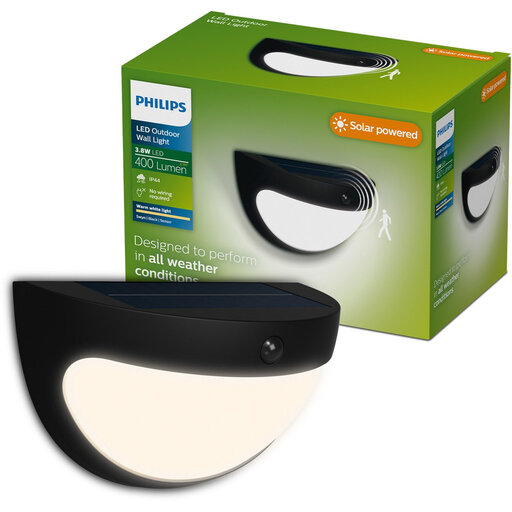
Why it suits this profile: This solar wall light is suitable for an entrance, patio or garden without a power socket, where a recognised brand and clear product specifications are important.
The stated IP44 rating makes it clear that this is protection against splashing water, not submersion. Direct sunlight remains essential for installation.
Solar power, two lighting modes, integrated LED and a stated luminous flux of 400 lumens per light point.
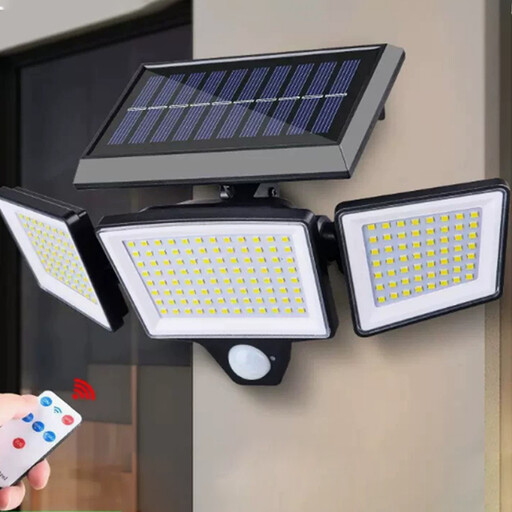
Why it suits this profile: This model is designed for larger outdoor areas such as a driveway, garden, garage or patio where broad light distribution is desirable.
The product information states IP65, three adjustable light heads and a sensor range of 60 feet with a 180-degree angle. Check the installation location and sunlight exposure beforehand.
302 LEDs, a stated luminous flux of 3000 lumens, three modes and an 1800 mAh lithium-ion battery.
We have compiled a complete, up-to-date list of products that fully meet these strict selection criteria and the applicable European safety regulations.
A sensor light can contribute to energy-efficient lighting, as it does not remain on unnecessarily. The actual saving depends on the wattage, usage time and number of activations. A small LED night light for a hallway will generally use less power than a powerful outdoor light with several light heads.
Clean and dry the surface, attach the light according to the instructions and then test the detection range. With self-adhesive installation, it is a good idea to hold the light temporarily at the desired height first. For outdoor models, the fixing must be able to withstand wind and rain.
Runtime per charge varies from model to model. Battery capacity, brightness, temperature and the number of movements all play a part. Therefore, do not look only at the capacity in mAh; also consider the charging method and operating mode.
An LED light usually uses little power, but consumption varies considerably between models. A light that switches on briefly only when movement is detected uses less than a model that stays on continuously. With solar lighting, the battery is charged via the solar panel during the day, although operation still depends on the available sunlight.
