
Vandaag of morgen in huis

Kwaliteit gegarandeerd

Welkomstaanbiedingen ontgrendelen: GRATIS bezorging | Tot 80% korting | Gratis 30 dagen JoyPlus-proefperiode
Download de app
Choosing a new light often seems straightforward. Yet many LED lights prove less suitable once they are used outdoors, charged every day or controlled via an app. A high light output, for example, says little about how the light is operated, while a product described as “weather-resistant” is not automatically able to withstand heavy rain.
Pay particular attention to these common pitfalls:
Light output is expressed in lumens (lm). A light producing between 140 and 170 lumens is mainly suitable as mood lighting on a table or balcony. For a garden path, accent lighting or a larger room, a higher light output is more practical.
Colour temperature is measured in kelvin (K):
An RGB LED light is therefore not automatically suitable as functional main lighting. Check whether it also offers a useful white-light setting.
A dimmable LED light gives you greater control over energy consumption and ambience. Pay attention to the type of dimming:
For a Philips Hue LED light, features such as voice control, automation and control when you are away from home are linked to the available Hue infrastructure according to the product description. So check whether a Hue Bridge is required for the features you want to use.
A cordless table lamp can be positioned flexibly, but has a limited battery life. Look at:
A USB-C rechargeable light is practical if you already use USB-C chargers. A solar table lamp can reduce the need for cables, but requires direct sunlight. In the Netherlands, it can therefore be useful if the light can also be charged via USB.
For outdoor use, check not only the IP44 outdoor light rating but also where it is positioned. Do not place splash-resistant lighting in a puddle, under an open sky where it is constantly exposed to falling water, or somewhere subject to direct water jets.
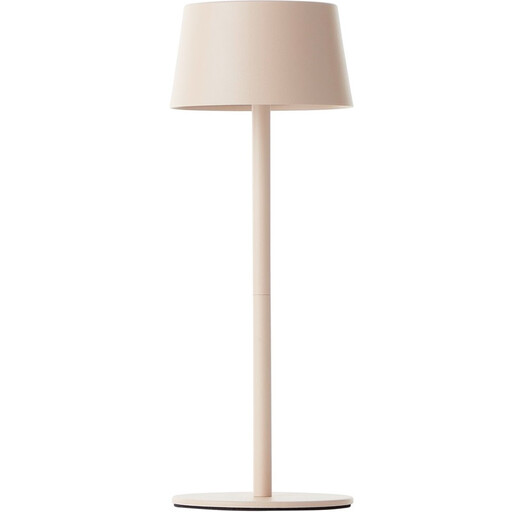
Why it suits this profile: This compact solar table lamp combines USB charging with solar power, making it suitable for a balcony, patio or garden table without a fixed connection.
The dual charging option means you are not solely dependent on sunlight. IP44 is clearly specified as splash protection, not waterproofing.
170 lumens, warm white light at 3000 K, three dimming settings, an integrated battery and two mounting options.
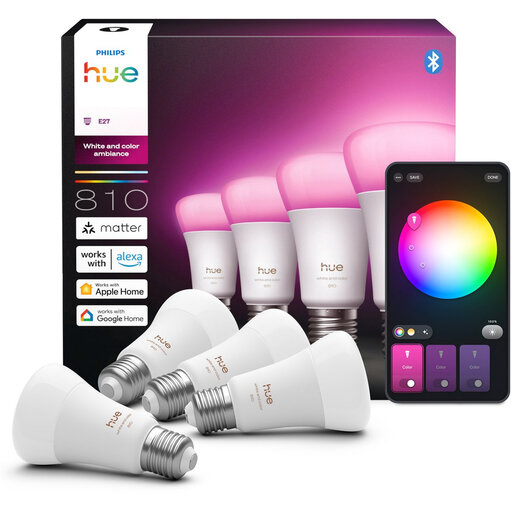
Why it suits this profile: This set is ideal for households with multiple E27 fittings that want to combine smart LED lighting, colour selection and app or voice control.
The fitting is E27 and the product specification states 6 W and 810 lumens per light point. However, check the required smart-home connection beforehand and whether a Hue Bridge is needed.
Four lights per pack, RGBW light, dimmability, Matter support and a stated lifespan of 25,000 hours.

Why it suits this profile: This set is designed for garden paths, borders and flowerbeds where multiple light points and control via Tuya Smart, Bluetooth or a voice assistant are desired.
The specifications state 660 lumens, adjustable CCT and RGB. The cable is 8 metres long. IP44 means splash-resistant; do not position the lights under direct water jets.
Three ground spotlights, dimmability, RGB and CCT settings, Tuya app control and a supplied plug with a 220–240 V connection.
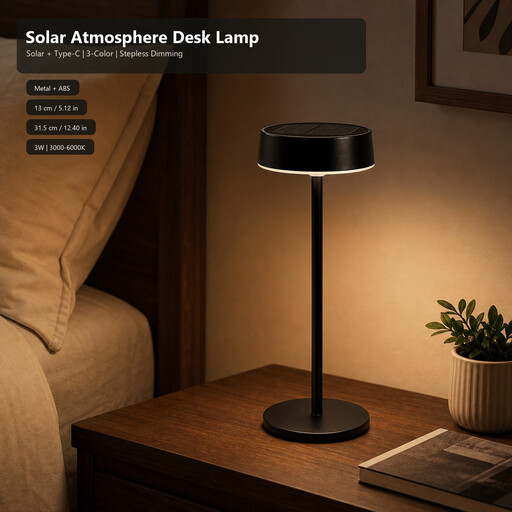
Why it suits this profile: This rechargeable table lamp is suitable for a bedside table, dining table, camping or a patio when you want a portable light with several shades of white.
The product specification mentions both solar and USB-C charging. The stated operating time of 10 to 60 hours depends on brightness, so you should not treat this figure as a fixed standard.
1800 mAh battery, 3000/4000/6000 K, continuous dimming from 10% to 100%, touch control and a memory function.
We have compiled a complete, up-to-date list of products that fully meet these strict selection criteria and the applicable European safety regulations.
Before installation or positioning, check the instructions, CE marking and details provided by the manufacturer or responsible person within the EU. For fixed electrical connections, using a qualified installer is advisable. Indoor LED light strips, such as the Philips Hue Flux, have an IP20 rating and are not intended for outdoor use.
For LED garden lighting, also pay attention to cables and walkways. Loose cords can create a tripping hazard. Clean lights with a soft, dry cloth and do not cover power supplies or drivers when ventilation is required.
Consumption depends on wattage and operating time. A 6 W light that is switched on for five hours every day uses approximately 0.03 kWh per day. Check the packaging or product page for wattage, lumens and energy class. A lower wattage is not automatically sufficient if you need more light.
Expected lifespan varies by model and operating conditions. Some products, for example, state 25,000 or 30,000 hours. This is a product specification, not a guarantee that every individual unit will last exactly that long. With integrated LED lights, the light source is often not replaceable by the user.
That depends on the IP rating and the manufacturer’s instructions. IP44 is suitable for splashing water, but not for immersion or direct water jets. Solar and USB lights are best placed somewhere sheltered during prolonged periods of bad weather and stored somewhere dry when not in use.
