
Vandaag of morgen in huis

Kwaliteit gegarandeerd

Welkomstaanbiedingen ontgrendelen: GRATIS bezorging | Tot 80% korting | Gratis 30 dagen JoyPlus-proefperiode
Download de app
LED lights are useful for bedrooms, children’s rooms, hallways, kitchen cupboards and desks. They generally use little electricity and are available as wireless LED lights, rechargeable table lamps, LED wall lights or night lights with motion sensors. However, an attractive design or low price does not tell you everything about everyday use.
Pay particular attention to how the light is powered, how you adjust the brightness and where you can safely place it. Below, you’ll find the main pitfalls and the objective points to check.
A battery-powered light can be placed flexibly, but check in advance which batteries it requires and how often they may need replacing. With a USB-rechargeable light, it is important to know whether a charging cable is included and which USB power source is suitable.
With a built-in battery, the LED light is usually not easy to replace. So check the maintenance instructions and use only the recommended charging source. A light placed within children’s reach must also stand securely and be kept away from water.
Dimmable does not always mean that you can adjust the brightness continuously. Some models have three or five fixed settings. This may be sufficient for a night light, but less suitable if you want to switch precisely between reading, ambient lighting and orientation lighting.
Also pay attention to the colour temperature, measured in kelvin. Warm light of around 3000 K feels visually softer. Cooler white light of around 6500 K to 7000 K provides clearer illumination for a cupboard, workspace or storage area.
A night light with a motion sensor can be useful in a hallway or toilet, but the detection distance and activation direction determine how practical it is. For cupboard lighting with a motion sensor, check whether the sensor can properly detect movement through the cupboard opening.
A PIR sensor responds to movement and differences in ambient heat. Its performance can therefore vary depending on the mounting height, direction of movement and positioning. Look at the stated range rather than relying solely on the marketing name.
Lumens indicate how much light a lamp produces. A compact rechargeable table lamp with 210 lumens is suitable as accent lighting or for a desk, but not automatically as the main light source for an entire room. For a hallway or wardrobe, a lower lumen output may actually be more comfortable.
First consider what you will use the light for:
A built-in battery makes a light portable, but the run time per charge is not listed for every product. So don’t buy based solely on the phrase “long battery life”. Check whether the battery capacity, charging voltage and charging method are specified.
A model with 1100 mAh or 1200 mAh provides information about battery capacity, but this alone does not predict exactly how long the light will remain on. The selected brightness and sensor setting also affect this.
ABS, metal, plastic and silicone are commonly used for LED lights. Also check the dimensions. For example, a light that is 10 mm thick will fit more easily beneath a kitchen cupboard than a larger model.
Pay attention to the protection rating. A product with IP20 is intended for dry indoor areas and not for bathrooms, outdoor use or direct contact with water. For wall mounting, use the included fixings or a suitable adhesive strip, and check after installation that the light cannot fall.
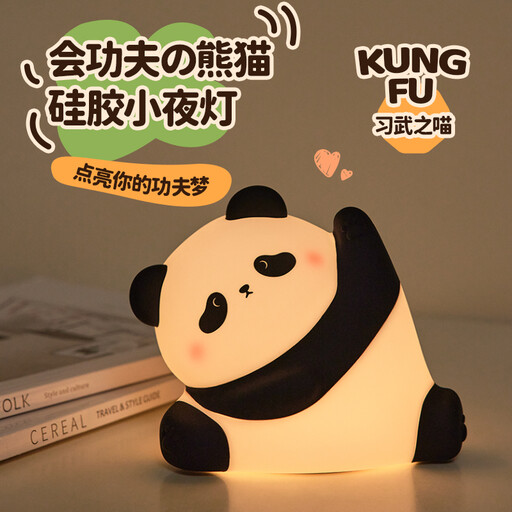
Why it suits this profile: This compact light is designed for a children’s room or bedside table and does not require wall mounting. The soft silicone housing and touch controls are well suited to everyday family use.
The product description lists three dimming settings, touch controls and a rechargeable 1200 mAh battery. This makes the lighting options and power supply clearer than with a light described simply as “dimmable”.
USB rechargeable, with three light settings and a food-grade silicone housing according to the product information. Use indoors only and keep away from water and heat.

Why it suits this profile: The table-lamp design works well on a desk, sideboard or bedside table. Its black metal and plastic construction is suitable for anyone looking for a fixed, freestanding light with an understated appearance.
The specifications list 210 lumens, 3000 K and a three-stage touch dimmer. IP20 is also stated, making it clear that this light is intended for dry indoor areas.
Integrated 2 W LED, three dimming settings, a height of 21,2 cm and a USB-A connection according to the product details. The light has a non-replaceable light source.

Why it suits this profile: This duo is designed for kitchen cupboards, shelves and wardrobes where automatic lighting is desirable. Its slim design takes up very little space.
The product information states a PIR range of 3 to 5 metres and three colour temperatures. This describes how it works more precisely than a general sensor claim.
41 LEDs per light, 1100 mAh battery, USB charging and drill-free installation with an adhesive strip. The three settings range from warm light to cooler white light.
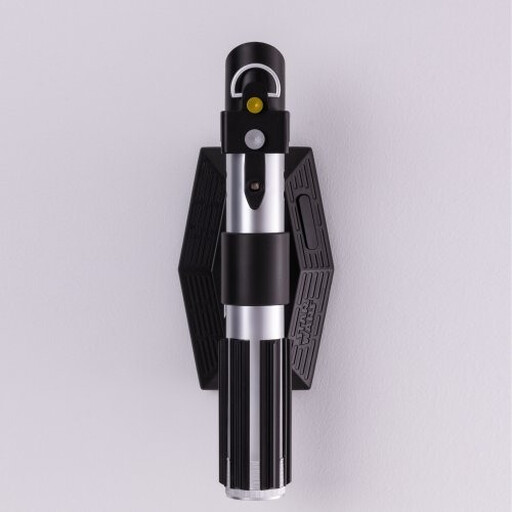
Why it suits this profile: This LED wall light combines decoration with a soft accent light and is designed for a bedroom, games room or entertainment area with a Star Wars theme.
The dimensions of 28 × 9,1 cm and the included mounting materials make the size and installation easy to check beforehand. The light runs on batteries, so you do not need a socket next to the wall.
Iconic lightsaber design, battery power and LED lighting according to the product description. Check the wall before installation and bear in mind that the batteries will need replacing.
We’ve put together a complete, up-to-date list of products that fully meet these strict selection criteria and the applicable European safety regulations.
Place a table lamp on a flat, stable surface rather than directly on the edge of a desk or bedside table. For a children’s night light, adult supervision is advisable, particularly with young children. Follow the manufacturer’s warnings and keep charging ports, cables and batteries out of reach where necessary.
For cupboard lighting, first test whether the sensor responds correctly before permanently attaching the adhesive strip. Clean LED lights with a soft, dry cloth. Avoid abrasive products and excessive moisture, especially with models intended for dry indoor areas.
The lifespan depends on the LED module, usage and heat dissipation. With integrated LED lights, the light source is often not replaceable. So check the warranty information, maintenance instructions and product details. The statutory guarantee in the EU is at least two years for consumer products; additional rights may apply nationally.
A low-wattage LED light uses relatively little electricity while switched on. The exact cost depends on the power rating, usage time and electricity tariff. A 2 W light used for a few hours a day requires less energy than a comparable light with a higher power rating. Also check the energy label and the stated consumption per 1,000 hours.
A sensor light usually works well in a hallway, by the stairs, in a toilet or beneath a cupboard. Install the light so that the sensor can detect the direction of movement and is not blocked by doors or furniture. For bedrooms, a dimmable LED light with a low setting is often more suitable if you do not want bright light.
