
Vandaag of morgen in huis

Kwaliteit gegarandeerd

Welkomstaanbiedingen ontgrendelen: GRATIS bezorging | Tot 80% korting | Gratis 30 dagen JoyPlus-proefperiode
Download de app
LED lighting is suitable for almost any space in your home: from a children’s night light and nursery to cupboard lighting, a kitchen shelf, balcony or patio. However, an attractive product photo says little about everyday use. A lamp may be too bright next to a bed, a motion sensor may respond awkwardly, or an outdoor light may offer less protection than its name suggests.
Joybuy Product Recommendation Officer therefore helps you focus on features you can verify. This allows you to compare not just the design, but also brightness, power supply, controls, installation and safety.
A wireless lamp often runs on a built-in rechargeable battery or disposable batteries. This avoids loose cables during use, but the lamp still needs to be charged regularly. So check the following:
A rechargeable LED lamp with, for example, a 1100mAh or 1200mAh battery is practical for bedrooms, cupboards and hallways. However, actual running time depends on brightness, sensor settings and frequency of use. You should therefore not treat a brand’s claim about long battery life as guaranteed operating time.
You generally need less light for mood lighting than for a worktop or dark wardrobe. Look at lumens, not just wattage. Lumens indicate how much light a lamp emits according to the product specification; wattage mainly tells you about its electrical power consumption.
A lamp producing 140 to 170 lumens may be suitable as an accent or table lamp. A cupboard light with 400 lumens makes more sense when you need to see clothing, supplies or tools. Too much light beside a bed can actually feel unsettling.
For outdoor lighting, the IP rating is important. IP44 means that, according to the stated specification, the product is protected against splashing water, but it is not intended to be submerged or exposed to direct jets of water. So place an IP44 solar table lamp in a stable, sheltered spot on your balcony, patio or in the garden.
Colour temperature is measured in kelvin:
A dimmable table lamp or lamp with several light settings gives you greater flexibility. Also consider the controls. A touch button is convenient on a bedside table, while a motion-sensor lamp works well in a cupboard or hallway where you do not want to search for a switch first.
Measure the available space before ordering. A 30 cm lamp may fit beneath a kitchen cupboard, while a 40 cm model spreads more light across a wide shelf. Also check whether installation uses:
No-drill installation is convenient in a rented property, but the surface must be clean, dry and flat. For a heavy or frequently touched lamp, secure mounting is important to prevent it from falling.
A USB lamp can be charged using a suitable USB power supply, laptop or power bank, depending on the product information. A solar table lamp is less dependent on a power socket, but it needs sufficient daylight. In changeable weather, USB charging remains a useful back-up.
When using lamps around children, also follow the instructions for use. A lamp described as suitable for a nursery or children’s bedroom must still be kept away from high temperatures, fire and water. Do not use a rechargeable lamp unsupervised if the manufacturer requires adult supervision.
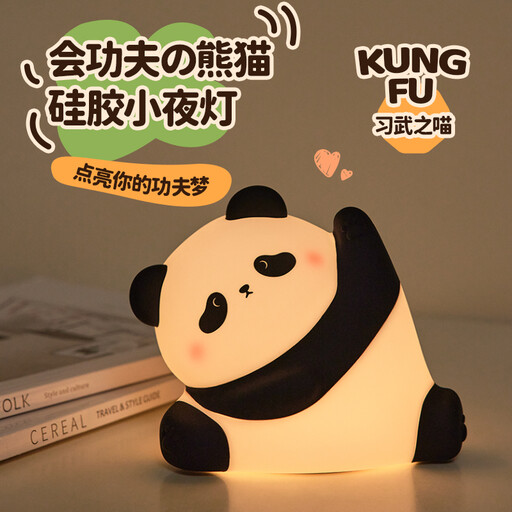
Why it suits this profile: This compact lamp is designed for use beside the bed, in a nursery or children’s bedroom. The simple controls and lack of installation make it easy to use.
The three light settings mean you do not have to accept the same brightness for every use. The built-in 1200mAh battery eliminates the need for disposable batteries; according to the product information, the lamp is charged via USB.
Touch controls, three dimming settings and a rechargeable 1200mAh battery. The product description lists silicone, ABS and PP; use indoors and keep the lamp away from water.
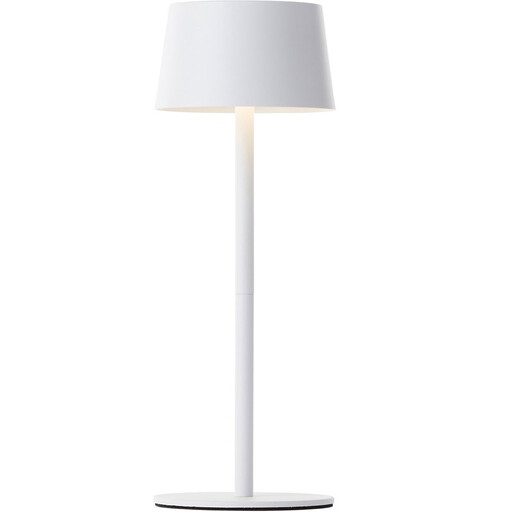
Why it suits this profile: This freestanding table lamp is ideal for consumers who want to combine design, flexible positioning and indoor or outdoor use.
The specification mentions both solar and USB charging. This means you are not entirely dependent on sunlight. The IP44 rating makes the lamp suitable for splashing water, but not for submersion.
170 lumens, warm white light at 3000K, three brightness settings and two charging methods. The lamp has an integrated LED light source and a metal/plastic housing.
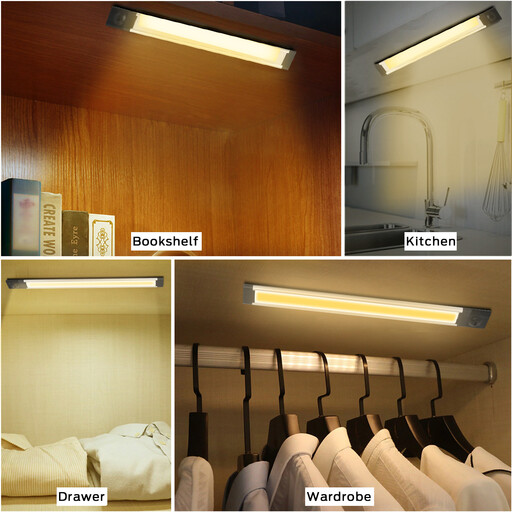
Why it suits this profile: With its sensor, dimming function and magnetic mounting, this lamp is practical for cupboards, hallways, stairs, garages and work areas.
The product specification states a light output of 400 lumens, a colour temperature range of 2800K to 6500K and no-drill installation. However, check whether the motion or gesture controls suit your space.
36 SMD LEDs, dimmable gesture controls, magnetic mounting and dimensions of 26 × 4 × 1 cm. According to the product information, the lamp is not intended for use by children without supervision.
We have put together a complete, up-to-date list of products that fully meet these strict selection criteria and the applicable European safety regulations.
LED lamps generally use less power than traditional light sources while providing a comparable light output. To calculate the cost per hour of use, look at the wattage, operating time and local electricity price. With battery-powered and solar lamps, charging frequency also plays a part.
Lifespan varies by model and operating conditions. Check whether the manufacturer specifies a lifespan and whether the light source can be replaced. Several Viani models in this selection list an integrated, non-replaceable LED light source. As a result, the lamp itself cannot easily be renewed with a separate LED.
No. Check the IP rating and the safety instructions. A product with an IP44 rating is suitable for splashing water, but not for submersion or direct jets of water. Do not use an indoor lamp on a balcony or in the garden simply because it is wireless or rechargeable.
