
Vandaag of morgen in huis

Kwaliteit gegarandeerd

Welkomstaanbiedingen ontgrendelen: GRATIS bezorging | Tot 80% korting | Gratis 30 dagen JoyPlus-proefperiode
Download de app
LED lighting is energy-efficient, flexible and available in a wide range of styles. However, an appealing product photo tells you little about whether a light is suitable for your home, balcony or garden. A lamp may create a lovely atmosphere, for example, but not be adequately protected against rain. Or a smart lamp may only work with a particular fitting, app or hub.
Use this guide to compare the key specifications and avoid making the wrong purchase.
The number of lumens indicates how much light a lamp emits according to its product specifications. You will generally need more light for a workspace or kitchen than for decorative lighting behind a television. An LED string light or LED strip is usually intended to create ambience and indirect light, rather than provide the main source of lighting.
Also pay attention to the colour temperature:
With RGB LED lighting, you can set different colours, but check whether the lamp can also produce white light separately. This is useful if you want both atmospheric and standard lighting.
Not all outdoor lighting can withstand the same conditions. The IP rating consists of two digits. The first digit refers to protection against solid particles, while the second indicates protection against water.
An IP rating does not automatically make a product suitable for immersion or prolonged exposure to heavy rain. A lamp with IP44, for example, should not be placed in a pond or somewhere water collects.
Smart LED lighting can be controlled via Wi-Fi, Bluetooth, an app or a voice assistant. Before buying, check the following:
With Philips Hue lighting, Bluetooth offers an easy way to get started. For advanced automation and remote control, a Hue Bridge may be required. This difference affects the overall cost.
LED bulbs generally use very little power, but do not compare wattage alone. Look at lumens per watt when this information is available. A 6W lamp producing 800 lumens provides a different amount of light from a 1W decorative lamp producing 140 lumens.
For lamps with a battery or solar panel, charging time, battery capacity and usage conditions also matter. According to the product descriptions of certain solar models, cloud cover, shade and the position of the panel can affect how long the lights stay on. Position a solar panel away from trees, walls and roofed areas.
Dimmable lighting is useful in living rooms, bedrooms and hospitality settings. Check whether dimming is controlled via:
A smart lamp controlled via an app is not always suitable for an existing wall dimmer. Combining incompatible dimmers can cause flickering or limited control.
For an LED strip, the length, cut points, power adapter and mounting method are important. Only cut at the indicated points. With an LED string light, check whether the bulbs can be replaced and whether extending the string is permitted.
For outdoor lighting, pay attention to:
Always check the instructions and safety warnings. Switch off the power before replacing a lamp, and have fixed electrical connections installed by a qualified electrician.
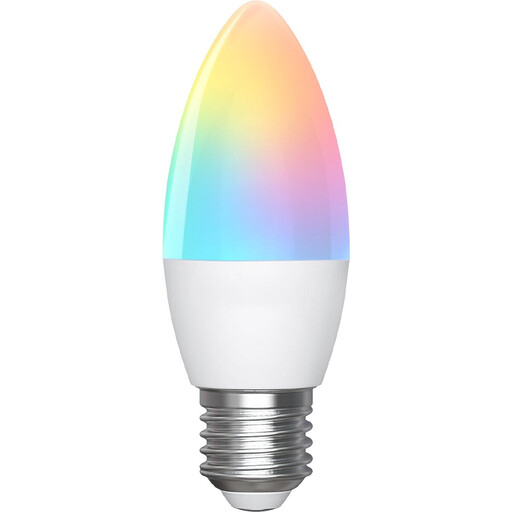
Why it suits this profile: This E14 lamp is a practical introduction to smart LED lighting. You can control it via Wi-Fi, Bluetooth, the mobile app or compatible voice assistants.
The fitting, 6.5W power rating and 555-lumen light output are clearly specified. This lets you check in advance whether E14 and the desired brightness are suitable.
RGB plus adjustable white light, scheduling via the app, and control with Amazon Alexa or Google Assistant.

Why it suits this profile: For anyone who wants an integrated smart home system, this dimmable LED strip offers control via the Hue app and support for multiple platforms.
The strip is designed for indoor use and is 5 metres long. This prevents you from using a non-waterproof product outdoors.
Dimmable, cut to size and suitable for app or voice control. The specified light output is 1200 lumens.
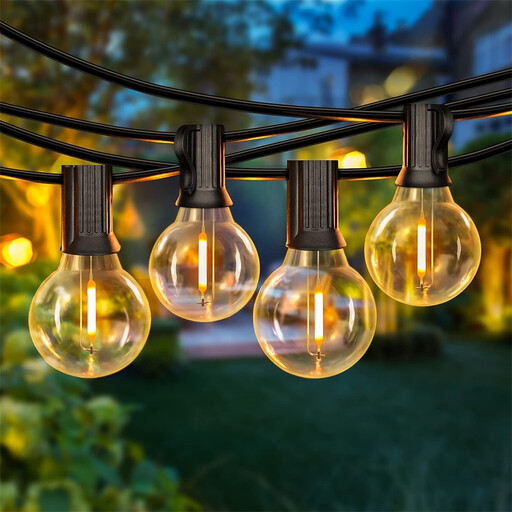
Why it suits this profile: This plug-in LED string light is designed for larger gardens, patios, balconies and event venues where a long line of light is needed.
The 30-metre length, 50+2 LED bulbs and replaceable bulbs are specified. The product is not intended for immersion; connections must be kept away from standing water.
Dimmable, with several lighting modes, a timer function and replaceable G40 bulbs. The manufacturer specifies a maximum of 500 connectable bulbs.
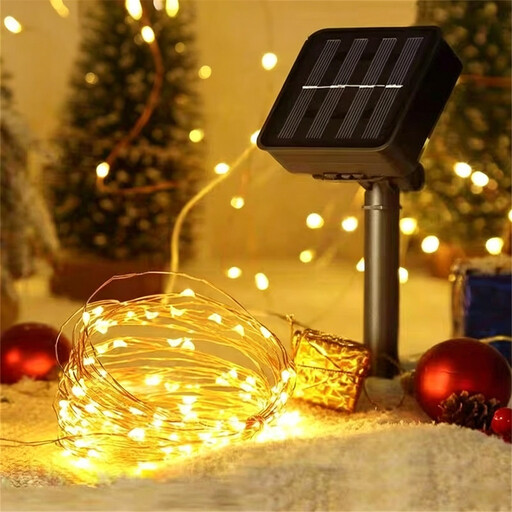
Why it suits this profile: Ideal for a garden, balcony or patio without a nearby socket. The panels charge during the day and the string lights offer eight modes.
The solar panels need direct sunlight. The specified charging and operating times depend on the weather, so you should not treat them as a fixed duration for overnight use.
Two 49-foot strings, each with 75 warm-white LEDs, eight lighting modes and a memory function.
We have put together a complete, up-to-date list of products that fully meet these strict selection criteria and the applicable European safety regulations.
Want to combine several lamps? Check that they work within the same ecosystem. Philips Hue lighting, for example, is particularly useful when you want to use scenes, automation and control from a single app.
The cost depends on the power rating, number of hours in use and your electricity tariff. Multiply the wattage by the number of operating hours and divide by 1000 to calculate the consumption in kilowatt-hours. A 6W lamp that is on for five hours a day uses approximately 0.03 kWh per day. Check your current tariff for an accurate calculation.
The expected lifespan varies by product. The product specifications for the Aigostar and Philips Hue lamps mentioned, for example, state 25,000 hours; other models specify 30,000 hours. This is a stated technical value, not a guarantee for every usage situation. Heat, moisture, voltage fluctuations and frequent switching can affect the lifespan.
No. Check the IP rating and the manufacturer’s instructions. A lamp with IP20 is intended for dry indoor spaces. IP44 may be suitable for sheltered outdoor areas, while a higher rating offers greater protection. Even with water-resistant outdoor lighting, plugs and connections must not be left in standing water.
