
Photographing glossy cards
If you photograph cards with foil or in a glossy sleeve, pay attention to where you position the light source: reflections can obscure details. Nikon discusses diffused light as a useful way to photograph shiny objects.


If you photograph one card at a time and have little table space, a compact light is a practical choice. A larger panel with a diffuser or two independently adjustable lights offer other options if you have more room. Adobe explains that direct light can create harsh shadows and bright highlights, but a diffuser won’t automatically prevent reflections on glossy cards. The angle and brightness of the light still matter.
If you photograph cards with foil or in a glossy sleeve, pay attention to where you position the light source: reflections can obscure details. Nikon discusses diffused light as a useful way to photograph shiny objects.
If you want to capture the images, colours and condition of several cards clearly, look for adjustable lighting and a setup you can repeat. Canon Europe recommends using a tripod to keep product photos consistently framed.
On a small table, it’s not just the panel’s dimensions that matter: you also need room for the stand, camera and cables. Check how you can store and attach the light when you’re not using it.
Best if: you mainly photograph one card and have little room for the light.
Bear in mind: a single light source may leave reflections or uneven lighting.
Best if: a larger light source matters more than keeping your setup to a minimum.
Bear in mind: the panel and its mounting take up more room; diffused light doesn’t rule out reflections.
Best if: you have room for lights on both sides of the card.
Bear in mind: two lights and their stands take up extra room, and both can cause reflections.
| Buying concern | What to look for | Who is this important to? |
|---|---|---|
| Reflections and card details | Check whether you can angle the light and adjust its brightness. | When I photograph foil cards, I don’t want a bright spot to obscure the text or image. Around 33% of consumers prioritise managing reflections. |
| Colour and consistency | Check the colour temperature range for the exact model and keep your setup consistent. | When photographing several cards, I want their colours and framing to remain consistent. Around 27% of consumers prioritise colour reproduction. |
| Table space | Measure the panel and the footprint of its mount. | If my table also needs to accommodate my camera and hands, I want to know where the light and stand will fit. Around 20% of consumers choose mainly based on the space needed for setup and storage. |
| Power and mounting | Check the connection, the included accessories and whether the mounting is suitable for your chosen position. | I want to use the light where I need it without having to look for a missing adapter or stand afterwards. Around 20% of consumers focus mainly on power and a usable mounting kit. |
Diffused light can be softer, but even soft light can reflect visibly off a glossy card.
Change the angle and intensity of the light, then check a glossy card before using the same settings for a whole series.
Ulanzi lists a fixed daylight setting of 5500 K for the VL49, and adjustable white light for the VL49 RGB. A Joybuy listing for the VL49 RGB also gives a different maximum colour temperature from Ulanzi’s product page.
Compare the full model name, settings and package contents; don’t assume you’re looking at the same version.
A different version may also have different colour controls from the ones you expect.
A panel also needs a suitable mount. The stands in a two-light kit take up space beyond the lit area.
Plan where the card, camera, light stands and cables will go in advance. Check that the included or chosen stand will fit.
Some setups may need a different type of mount.
Compact lights worth comparing if you have limited setup space. Bear in mind that VL49 versions differ from one another.
The Vibe P96L is a compact option to consider if table space and adjustable colour temperature matter to you.
The two-piece NL-192AI kit is worth considering if you want to place lights on both sides of a card.
The P260C Pro is a larger panel to consider if you have enough room alongside your table.
The Ace 25c is a compact light worth comparing if you’re looking for a separately positioned light with a diffuser.
These Joybuy products are portable lights for a compact photography setup. Check that the lighting, mounting and power supply for each model suit your card table.
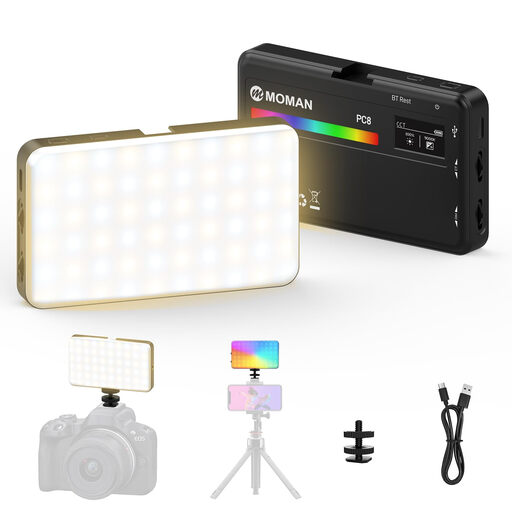 Image unavailable
Adjustable colour temperature and brightness give you options for tailoring the light to your setup.
The product description lists CRI 95+/TLCI 96+, 1/4-inch mounts and a cold-shoe adapter.
The stated weight is 125 g.
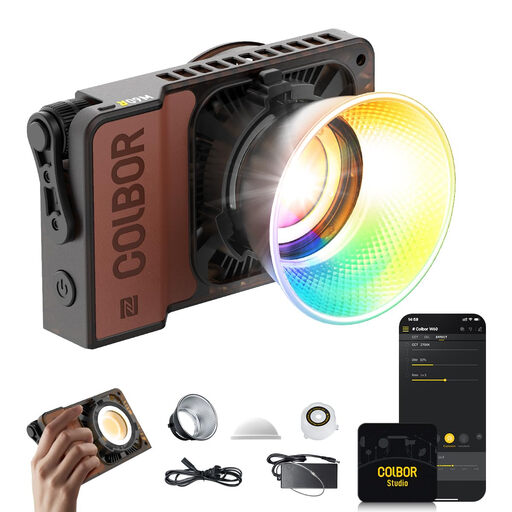 Image unavailable
The flat-panel design and portable format are worth considering for a photography setup on a small table.
The product description lists CRI 97+, an adjustable range of 2700–6500 K and a weight of 345 g.
The product name specifies 60W.
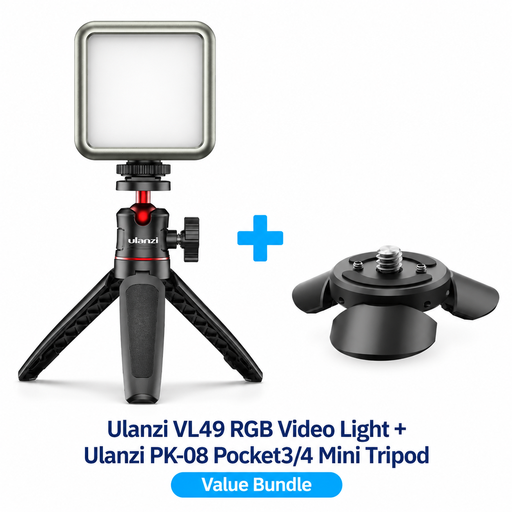 Image unavailable
The compact RGB light comes with a mini tripod; check that the mount suits your camera and card setup.
The product description mentions product photography and tabletop shoots.
The tripod is described as suitable for compatible DJI Osmo Pocket setups; don’t assume it will fit every camera.
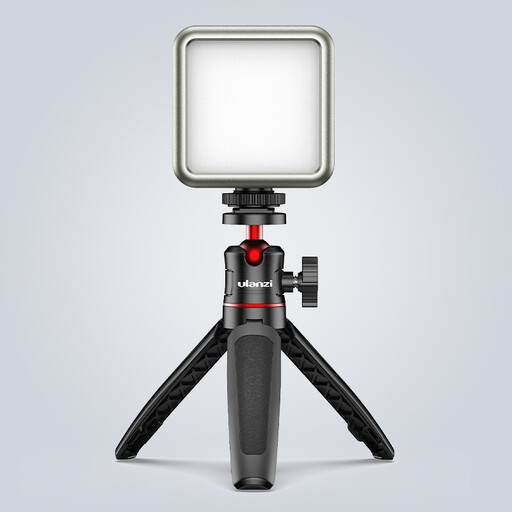 Image unavailable
This dimmable light with adjustable colour temperature and a magnet on the back is a compact option to compare.
The title specifies 2500–9500 K and a built-in 2000 mAh battery.
The description says a standard 5 V adapter is required. Keep the light away from moisture.
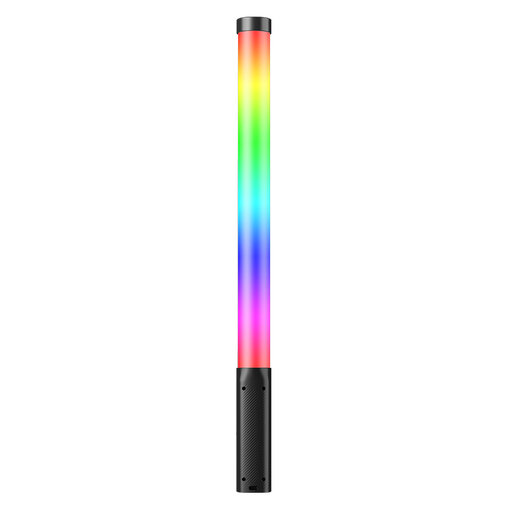 Image unavailable
This light wand has a different shape from a panel, so consider how much room it will take up alongside your camera and card.
The product description lists 2500–9000 K, CRI 95, a length of 500 mm, a weight of 202 g and a 1/4-inch screw mount.
The description warns against looking directly into the light and exposing it to moisture.
A diffuser softens direct light, but it doesn’t make a glossy card matt. Move the light or camera and check whether the reflection obscures important details. Nikon says a polarising filter can reduce some unwanted reflections, but it isn’t a guaranteed solution for every card.
Keep the positions of the camera and card, and the lighting settings, as consistent as possible. Canon Europe recommends using a tripod to maintain the same framing. Check the colours in your photos; a CRI rating alone doesn’t guarantee a particular colour reproduction in your setup.
Check the connection for the exact version, what’s included in the package and whether there’s room for the stand, cables and camera. Ulanzi lists a 1/4"-20 thread and an accessory shoe for the VL49 with fixed daylight; NEEWER lists two stands and adapters with the NL-192AI kit.
According to ACM ConsuWijzer, if a product is faulty, you have a statutory warranty in addition to any manufacturer’s warranty; the seller is responsible. For a standard online purchase, there is generally a statutory cooling-off period of up to 14 days after delivery. Check which exceptions apply to your purchase.
CE marking is required when the specific version falls under EU rules that require it. The applicable rules depend on the product and, where relevant, its power supply; the marking doesn’t tell you whether a light is suitable for trading card photography.