
Vandaag of morgen in huis

Kwaliteit gegarandeerd

Welkomstaanbiedingen ontgrendelen: GRATIS bezorging | Tot 80% korting | Gratis 30 dagen JoyPlus-proefperiode
Download de app
LED lighting may seem straightforward to choose, but the differences between models can be significant. An LED strip for the living room needs different features from an outdoor wall light or an LED string light for the patio. If you only look at the price or the number of colours, you could end up with too little light, a difficult installation or a lamp that is unsuitable for the place where you want to use it.
Lumens indicate how much light a lamp produces. This does not automatically tell you anything about the atmosphere it creates or how the light is distributed. An 800-lumen lamp may be suitable as functional outdoor lighting, but too bright behind the television. For ambient lighting, you should also consider:
Not every LED lamp can withstand moisture. Always check the IP rating. IP44 means protection against splashing water, but not against immersion or powerful jets of water. A product with IP20, such as some indoor models, should not be installed on an open balcony or outside wall.
A solar wall light or other outdoor lighting should also be installed where the solar panel receives sufficient daylight. Shade from a balcony canopy or tall fence can affect how long the light operates.
Smart LED lighting may work via Wi-Fi, Bluetooth, a remote control or a separate system. Before buying, check:
With RGB lighting and music synchronisation, the difference between a basic remote control and advanced app control can be considerable.
For living rooms, bedrooms and hallways, warm white light of around 2700K to 3000K is often suitable. A higher Kelvin value produces whiter or cooler light and is better suited to workspaces or modern, functional applications.
Compare energy consumption in watts and, where available, consumption per 1,000 hours. For example, an integrated 4W LED lamp may use less electricity than a fitting containing a more powerful light source. Actual consumption depends on how long the light is used, the settings and any standby mode.
Also pay attention to the lumen value. A compact outdoor lamp with a motion sensor may provide enough light for an entrance with 180 to 300 lumens, while indirect lighting behind a TV does not need to be extremely bright.
For garden lighting, an outdoor wall light or a lamp by the front door, the IP rating is a practical selection criterion. IP44 is suitable for splashing water and sheltered outdoor locations, but it does not make a product waterproof. Do not place these lamps somewhere where water runs over them continuously.
A lamp with a plug or USB connection is usually easier to install than a permanently wired fitting. Models connected to 230V must be installed by a qualified electrician in accordance with the product specifications. Also check whether a light source is included. Some E27 or GU10 wall lights are supplied without a bulb.
An LED strip or LED light panel is often attached using adhesive material. The surface must be flat, clean and free from grease. With panels that use double-sided tape, gently warming the tape in accordance with the product instructions may help it adhere. Bear in mind that you may need to remove it later, particularly in a rented property.
For outdoor use, aluminium, plastic and protected connections are common materials and features. Make sure that lamps, cable connections and plugs are kept away from standing water. Clean LED lighting with a soft, dry cloth and disconnect the power before cleaning.
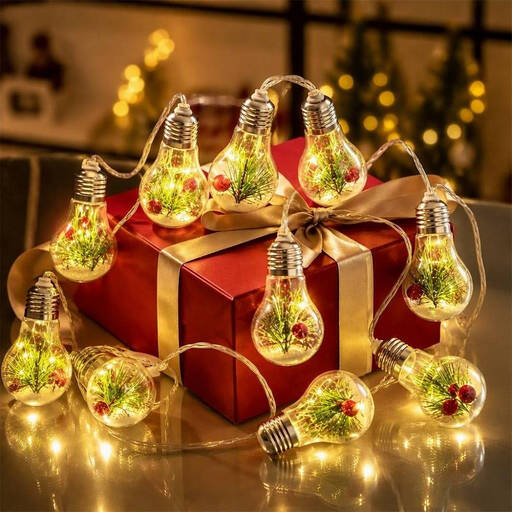
Why it suits this profile: A compact choice for anyone wanting to add a decorative touch with a short length to a cupboard, windowsill, balcony or small seating area.
The 2-metre length keeps things simple. You do not have to buy a long string that needs to be coiled up or tucked away unused.
10 light points and a simple decorative design for small-scale ambient lighting.

Why it suits this profile: Ideal for anyone looking for smart LED lighting for the living room, bedroom, TV unit or desk, with app or voice control high on their list of priorities.
The strip is designed for indoor use. This makes installation more straightforward than with a product whose weather resistance is not specified.
5-metre length, dimming function, colour changes, cut-to-length design and Matter support.
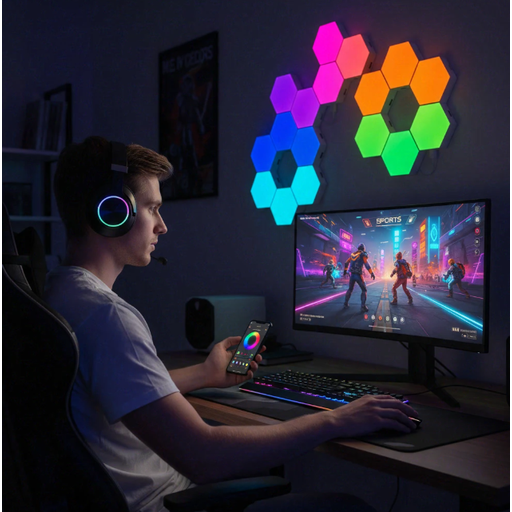
Why it suits this profile: A targeted choice for a gaming room, desk, TV feature wall or creative wall décor with RGB lighting and music synchronisation.
The intended use and power supply are clearly specified: eight panels, a USB connection and use in a dry indoor location.
8 individual RGB panels, remote control, app control and music synchronisation.
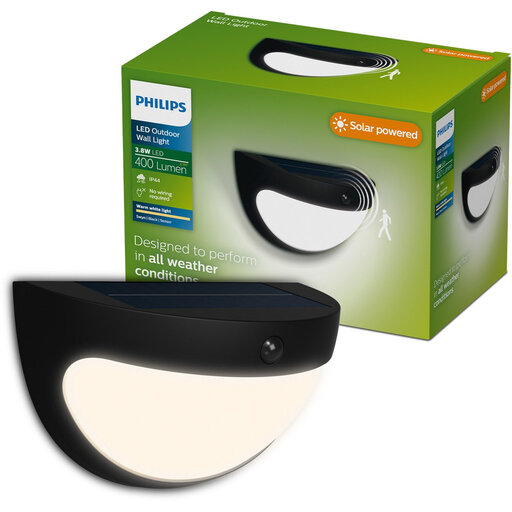
Why it suits this profile: A practical choice for a wall, garden path or patio where no power point is available and automatic lighting is preferred.
The product specifications mention solar power, IP44 protection and a motion sensor. This tells you in advance that direct wiring is not required.
Two lighting modes, an integrated motion sensor, 400 lumens per light point and no mains connection required.
We have put together a complete, up-to-date list of products that fully meet these strict selection criteria and the applicable European safety regulations.
Consumption depends on the wattage and the number of hours the light is on. A 4W lamp that is on for 1,000 hours uses approximately 4 kWh. For smart lighting, also check standby consumption, and for string lights, look at the total power of the set.
Only if the manufacturer permits outdoor use and the IP rating is suitable. IP44 provides protection against splashing water, but is not suitable for immersion or direct water jets. Also check the connections and keep any plug connection in a sheltered location.
Lifespan varies according to the product and conditions of use. Manufacturers sometimes state a number of operating hours, but this is not a guarantee for every situation. With integrated LED lighting, the light source is often not replaceable; with an LED string light featuring replaceable bulbs, you can replace individual components. This difference is important when comparing overall service life.
