
Photographers of highly polished stones
You want to control highlights without losing all the lustre. The Gemological Institute of America discusses diffusion as a way to control light on shiny surfaces.


For polished stones, an adjustable LED panel with suitable diffusion is a practical starting point. You can position the light source and reflections as you like, but your setup will determine what you see in the photo. Choose a larger panel or softbox if you have room to direct the light; on a small table, a compact light may be more convenient, although it won’t automatically provide the same area of light.
You want to control highlights without losing all the lustre. The Gemological Institute of America discusses diffusion as a way to control light on shiny surfaces.
You photograph stones in similar conditions and want to be able to repeat your lighting, camera white balance and setup. The Gemological Institute of America and NEEWER outline considerations for controlling light and keeping settings consistent.
You’re weighing up the space needed for a larger panel or light modifier against a more compact light. Product information from amaran, SmallRig and Ulanzi shows that size, mounting and power options vary by model.
Choose this if: you have room to position the light around several stones and want to control reflections.
Bear in mind: a panel or softbox takes up space; take test shots to assess the reflections.
Choose this if: you want to repeat the light position and white-light setting across a series of photos.
Bear in mind: manufacturer specifications such as CRI won’t, on their own, predict how a stone will look in your photo.
Choose this if: you have limited workspace or want to move the light regularly.
Bear in mind: a compact light source won’t automatically provide the same reflective surface as a larger panel.
| Consideration | What should you check? | Who is this important for? |
|---|---|---|
| Reflections and softness | Check whether a diffuser or softbox is available and whether you can move or tilt the light. Assess the result with a test shot. | If you photograph shiny stones, you’ll want to move the highlight without losing all the lustre. Around 36% of consumers give reflection control top priority. |
| Colour and consistency | Compare the adjustable white-light range of the exact version. Keep the camera white balance and setup consistent when taking test shots. | For a series of comparable stone photos, I want to be able to repeat the same light setting and assess the colour in each shot. Around 29% of consumers prioritise colour consistency. |
| Size and positioning | Measure the available space around the table and check the dimensions, mounting options and room needed for a light modifier. | On a small table, I want to position the light without it getting in the way of the setup. Around 21% of consumers prioritise size and positioning. |
| Power and portability | For the exact version, check which adapter, battery or charging cable is included and which power options are available during use. | If I move the light often, I want to know whether I can use it without a mains cable. Around 14% of consumers prioritise power and portability. |
A CRI rating is a manufacturer specification, not a measure of colour in your finished photo. Reflections, camera white balance and your setup all play a part too.
Compare the specifications for the exact model and take test shots of your own stones using a fixed white-light setting.
A panel, stand or softbox may take up more space than your shooting table allows; a more compact light gives you a different setup option.
Measure the space beside and above the stone, and check which accessories are included with that exact version.
The model name alone may not be enough to establish which version and accessories you’ll get for your setup.
Check the full model name and the specifications of the version on offer before choosing accessories or mounts.
The P260C Pro is a larger panel with adjustable white light and a built-in diffuser, designed for a setup where you can direct the light.
The P60x is a panel with adjustable white light and included light modifiers, designed for a setup where you want to adjust reflections.
The NL660 is an adjustable panel for a tabletop setup, with a diffuser and a choice of mains power or a separate NP-F battery.
The P200 Beauty Panel Video Light (Universal) is a compact panel for a smaller workspace.
The VL81 is a small rechargeable light for close-up work or a setup you move frequently.
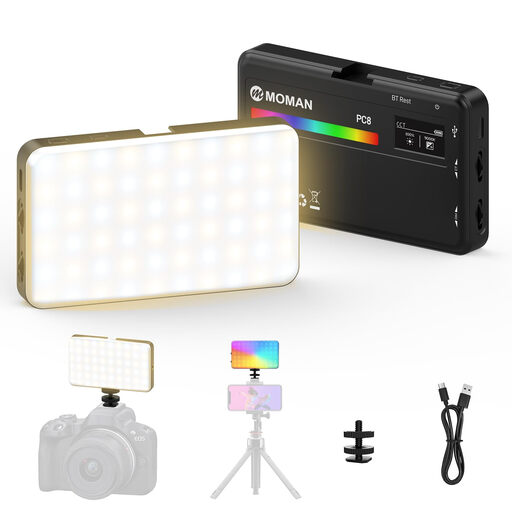
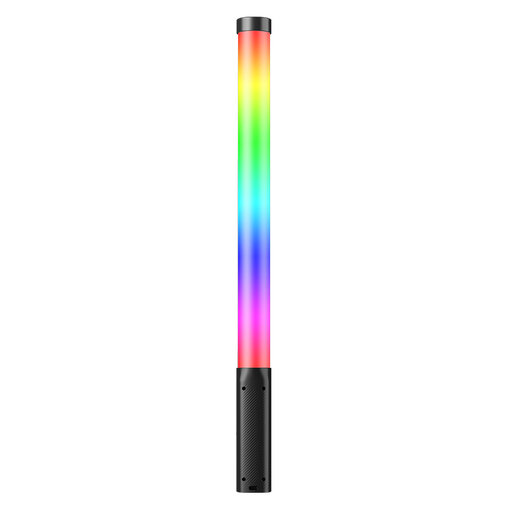
These Joybuy product picks focus on compact, portable lighting for a small home studio. The Ulanzi VL119 is a light wand rather than a panel, so also consider whether its shape will suit your setup.
 No image available
This portable light may suit product photography when you’re looking for a compact, movable light source.
The product name describes an RGB LED video light for cameras.
 No image available
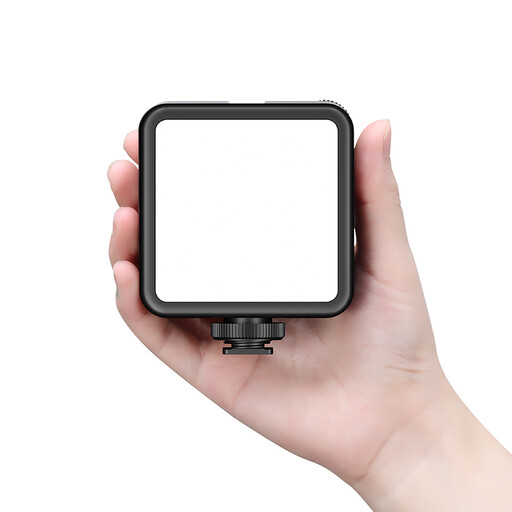
A rechargeable video light may suit a compact setup that you want to move regularly.
The product name identifies this as a rechargeable LED video light.
 No image available
This light wand may suit you if you’re looking for compact, portable lighting; its shape differs from a panel.
The product name describes a 10 W RGB light wand.
No. Diffusion can soften the light, but the position of the light and the stone determines which bright areas are visible. Move the light and assess a test shot; use a reflector card if needed.
Keep the setup, light setting and camera white balance the same, and stabilise the camera. Clean the stone before taking close-up shots so dust and fingerprints don’t affect the comparison.
It depends on the exact version. NEEWER lists an adapter and diffuser with the NL660; a stand is included only with the ‘with Stand’ version. Check the contents and the power supply you’ll need for each model.
No. A CE mark says nothing about photographic colour reproduction. Business.gov.nl explains that the manufacturer applies the mark when the product meets the relevant technical and administrative requirements; the rules that apply depend on the product and its features.
For an online consumer purchase, you generally have a 14-day cooling-off period starting the day after delivery, with some exceptions. You’re also entitled to a product that is fit for purpose; different rules apply to business purchases. Business.gov.nl explains these Dutch consumer rules.