
Vandaag of morgen in huis

Kwaliteit gegarandeerd

Welkomstaanbiedingen ontgrendelen: GRATIS bezorging | Tot 80% korting | Gratis 30 dagen JoyPlus-proefperiode
Download de app
LED lighting is available as individual bulbs, spotlights, ceiling lights, floor lamps, strips and smart light sources. This wide range does not always make comparing products easy. A lamp may look appealing, yet still be unsuitable for your fitting, lighting needs or bathroom.
The most common purchasing mistakes are caused by three simple oversights:
By carrying out the right checks beforehand, you can choose energy-efficient lighting that suits the room and your existing fitting.
First, check the fitting of your current lamp. Common types include:
Also check the diameter and height. A lamp may have the correct fitting technically, but still be too large for an enclosed light fitting. Philips GU10 spotlights in the range, for example, have a diameter of approximately 50 mm and a height of 54 to 57 mm. Compare these dimensions with your existing spotlight before ordering.
With an integrated LED ceiling light or LED floor lamp, the light source is usually built in. This creates a sleek design, but when it reaches the end of its service life, you will generally need to replace the complete light module or lamp.
Lumens indicate how much light a lamp produces. A Philips E27 LED bulb in the range, for example, specifies 850 lumens at 7 watts. A GU10 model specifies 255 or 390 lumens per light point, depending on the version.
Colour temperature is measured in kelvin:
Also look at the CRI value, also known as the colour rendering index. A CRI of 80 is specified for several of the models mentioned and is a useful indication for general indoor lighting. In a bathroom, workspace or around a mirror, even light distribution may be more important than a high lumen value alone.
Not every LED bulb works with an existing dimmer. According to the product specifications, the Philips GU10 spotlights with warm white or cool white light are not dimmable. Do not use them with a conventional dimmer unless the manufacturer explicitly permits it.
Dimmable LED lighting can be controlled with:
With RGB+CCT lighting, you can often adjust the colour temperature as well as change the colour, for example from warm white to cool white. However, check which control options are included. With Philips Hue lighting, Bluetooth may be sufficient for basic control, while a Hue Bridge may be required for more advanced automation and control when you are away from home.
For damp areas, the IP rating is important. IP20 is intended for dry indoor areas. A product with IP44 offers greater protection against splashing water and may be suitable for damp environments, depending on where it is installed. The LED bathroom mirror mentioned has IP44, but according to the product information it must not be exposed to a direct jet of water. If necessary, have electrical installation carried out in accordance with the applicable Dutch regulations.
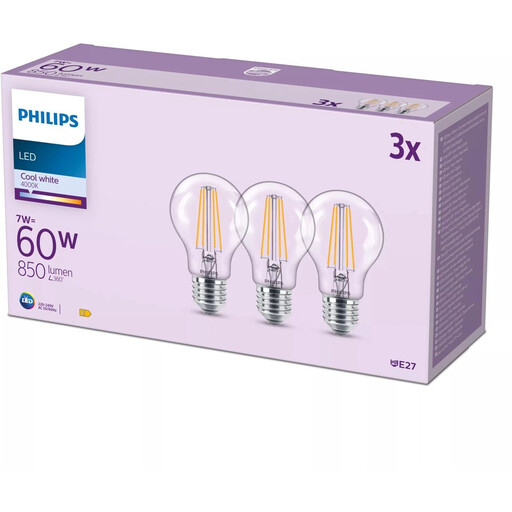
Why it suits this profile: This set of three E27 bulbs is practical for several standard fittings around the home, such as in the hallway, kitchen or home office.
The E27 fitting and dimensions are clearly stated. The bulb is not dimmable, so you do not have to worry about pairing it with an unsuitable dimmer.
850 lumens per light point, 4000 K, a stated service life of 15,000 hours and three bulbs per pack.
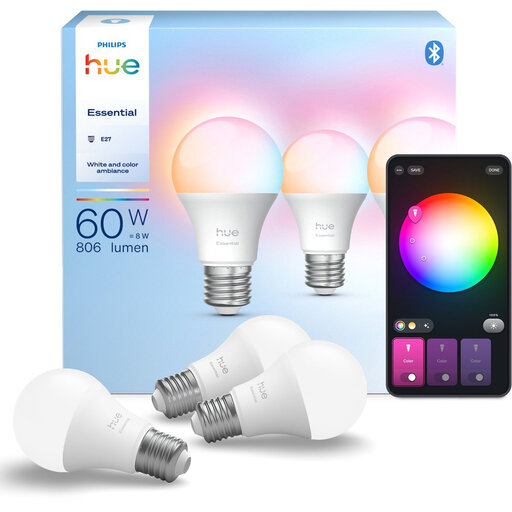
Why it suits this profile: Ideal for households that want to combine Philips Hue lighting with app control, dimming and colour-changing light.
Control is not limited to a wall switch. The product information lists control via Bluetooth, the app and compatible voice assistants; a Hue Bridge is available separately.
E27 fitting, dimmable, RGBW colour control, 806 lumens and a stated service life of 25,000 hours.
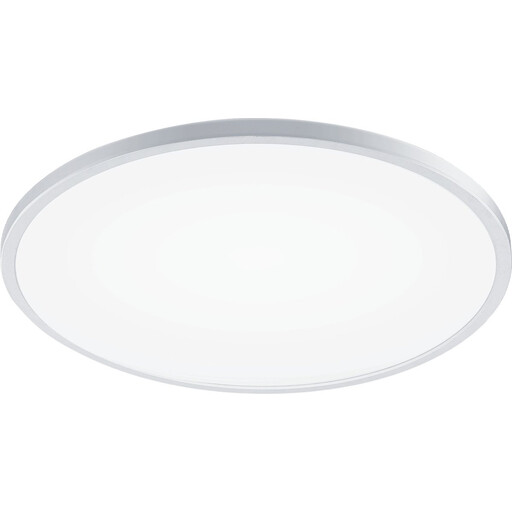
Why it suits this profile: A practical choice if you are looking for a single flat LED ceiling light for a bedroom, hallway, kitchen or other indoor space.
The stated IP44 rating, dimensions of 420 × 26 mm and light output of 2700 lumens make it easier to check the space and intended use in advance.
RGB+CCT from 3000 to 6500 K, 2700 lumens and a stated service life of 25,000 hours.

Why it suits this profile: Ideal if you want to add indirect light behind a television, beneath a shelf or behind bedroom furniture without installing a new ceiling light.
The strip is 5 metres long, dimmable and, according to the product information, can be cut to size. Check the installation location and required power supply beforehand.
Control via remote control and app, support for Matter and compatibility with several smart-home platforms.
We have put together a complete, up-to-date list of products that fully meet these strict selection criteria and the applicable European safety regulations.
For the living room, warm white light often works well as general or ambient lighting. A dimmable LED floor lamp with a CCT function can switch between 3000 and 6500 K. Check whether it is controlled by touch, remote control or a wall switch.
In the kitchen and home office, neutral or cool white light may be more practical. Look for a sufficiently high lumen value and even light distribution. A 390-lumen GU10 LED spotlight is a targeted solution, but you may need several spotlights to illuminate a larger area.
For the bathroom, you should check the IP rating above all else, as well as the design. According to the product information, an LED bathroom mirror with IP44 is suitable for damp conditions, but it must still be installed away from direct splashes. Also check the supplied adapter, fixing materials and the wall’s load-bearing capacity.
Consumption depends on the wattage and the number of hours the light is switched on. A 7-watt bulb that is on for four hours a day uses less energy than a traditional bulb with a higher wattage used for the same amount of time. According to Philips’ own product information, some of the LED bulbs mentioned use around 80% less energy than traditional bulbs. Always check the latest energy label information and the stated consumption per 1000 hours.
The stated service life varies from product to product. The range includes models rated for 15,000 or 25,000 hours. This is a product specification, not a guarantee for every usage scenario. Heat, ventilation, switching cycles and use in an unsuitable fitting can affect the practical service life.
No. Check the dimmable specification. Some Philips GU10 LED spotlights are not dimmable, while Philips Hue bulbs, the Hue Essential LED strip and certain LED ceiling lights do offer dimming functions. Connecting a non-dimmable bulb to an unsuitable dimmer can cause flickering or faults.
