
Vandaag of morgen in huis

Kwaliteit gegarandeerd

Welkomstaanbiedingen ontgrendelen: GRATIS bezorging | Tot 80% korting | Gratis 30 dagen JoyPlus-proefperiode
Download de app
LED lighting with a motion sensor can automatically illuminate an entrance, hallway, driveway, cupboard or bedroom as soon as movement is detected. This is convenient for everyday comfort, as well as for anyone who does not want to install wiring. However, not every model is suitable for every location. A light that works perfectly well in a cupboard, for example, will not necessarily provide enough light for a driveway.
A high number of LEDs may sound appealing, but it does not tell you everything about how practical the light will be. Lumens indicate the total luminous flux. For sensor cupboard lighting, a modest light output is often sufficient. For a garage, garden or driveway, a higher light output is more practical.
Also consider the colour temperature. Around 2700K to 3000K generally produces warm white light, making it suitable for an entrance or patio. Around 4000K to 6500K looks more neutral or whiter and may be better suited to a kitchen, storage room or workspace. Always check the product description, as terms such as “warm white” do not always correspond to the stated Kelvin value.
The IP rating is important for solar outdoor lighting and outdoor lights with motion sensors. IP44 means protection against splashing water, but not against immersion or powerful water jets. According to the product specification, IP65 provides a higher level of protection against dust and water jets.
For example, a solar wall light with IP44 is suitable beneath a sheltered canopy or on a wall where it receives little direct rain. For an exposed location, a model with IP65 is a more logical choice according to the stated specifications. Also check that the installation location is secure and that the light will not be constantly exposed to standing water or splashing dirt.
A PIR motion sensor responds to changes in infrared radiation, such as the movement of a person. Its practical performance depends on the installation height, direction, temperature and obstacles.
When comparing products, look at:
A range of 3 to 5 metres is often suitable for a cupboard, hallway or bedroom. For a driveway or large garden, a greater range and wider angle may be useful.
Solar outdoor lighting uses an integrated panel and rechargeable battery. Performance depends on sufficient daylight, the direction in which it is installed and the season. A solar panel behind a fence or on a north-facing wall may receive less charging power.
A USB rechargeable LED light is more flexible to position, but needs to be charged regularly. Battery-powered models are useful in locations without a socket, while a 230-volt light may be suitable for a permanent installation. For electrical installation, such as when a sensor is used to switch an existing light, follow the instructions and applicable safety regulations.
Do not compare wattage alone. A 4 W LED outdoor light may produce a different light output from another model with a similar power rating. So look at lumens, light colour and how the light is distributed.
Sensor lighting usually only switches on when needed. This can help limit unnecessary operating time, but actual consumption depends on how often it is activated and how long it stays on. With solar lighting, the energy comes from the battery; with mains power, consumption continues to depend on usage and wattage.
Before buying, check:
A compact indoor light can be installed without drilling, but adhesive tape only holds securely on a clean, flat surface. With magnetic mounting, the mounting plate must be firmly secured, particularly outdoors.
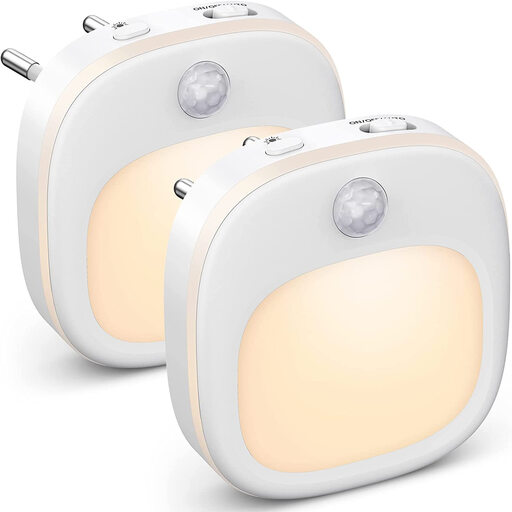
Why it suits this profile: A set of two lights is practical for a hallway, bedroom or toilet where localised lighting is needed without complicated installation.
The choice of three colour temperatures and five dimming levels means you do not have to use one fixed brightness in every room.
2-pack, SMD LEDs, motion detection, and adjustable light colour and brightness according to the product listing.
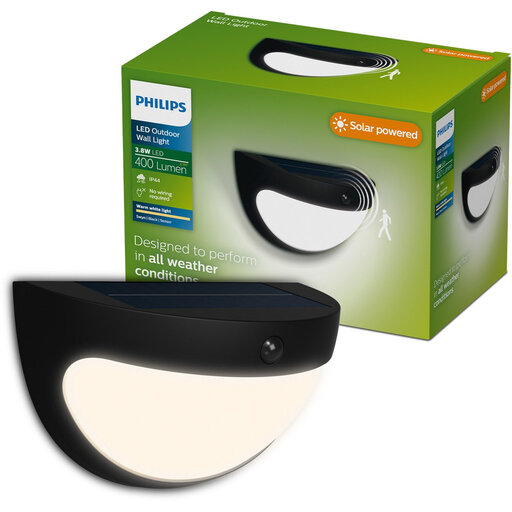
Why it suits this profile: This solar wall light is designed for a wall, balcony or garden, combining warm white light with motion and daylight sensors.
The IP44 rating makes it clear that this model is splash-resistant, but is not designed for immersion or powerful water jets.
400 lm per light, 2700K, two lighting modes and no mains connection required according to the product details.
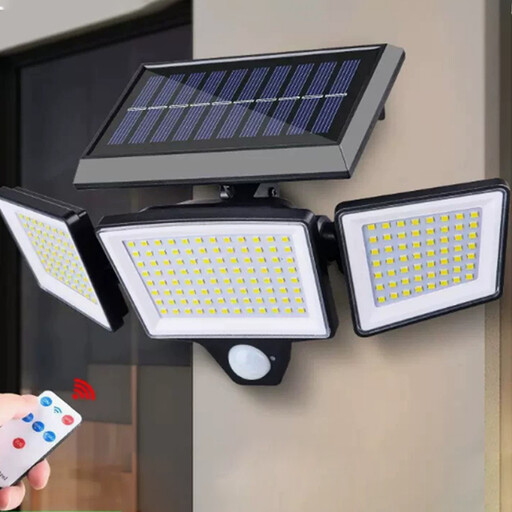
Why it suits this profile: This model is designed for larger outdoor areas such as a driveway, garage, garden or patio where broad light coverage is desirable.
The product specifications state an IP65 rating, but optimum performance still depends on a sunny installation location and a clean panel.
302 LEDs, 3000 lm, three adjustable heads, a stated detection distance of 60 feet and a 180-degree angle.

Why it suits this profile: A practical choice for kitchen cupboards, wardrobes, shelves or dark passageways where no permanent wiring is available.
The slim 400 × 38 × 10 mm format and adhesive mounting save space and eliminate the need for drilling.
61 LEDs, PIR detection at 3–5 metres, three colour temperatures and a built-in 1100 mAh rechargeable battery.
We have put together a complete, up-to-date list of products that fully meet these strict selection criteria and the applicable European safety regulations.
Many models use a PIR motion sensor that detects changes in infrared radiation. When movement is detected, the light switches on and then switches off again after a set period. Some lights combine motion detection with a daylight sensor, so they only respond in the dark.
The operating time depends on the light source, battery, temperature, activation frequency and installation location. With solar lighting, cloudy days and shade affect the available charging energy. A built-in LED is not always replaceable, so check this before buying.
LED lighting generally has a low power consumption, and a sensor can limit how long the light stays on. Actual consumption depends on the wattage and how often the light is activated. Solar lighting does not use mains electricity, but it remains dependent on the battery and the amount of sunlight.
