
Vandaag of morgen in huis

Kwaliteit gegarandeerd

Welkomstaanbiedingen ontgrendelen: GRATIS bezorging | Tot 80% korting | Gratis 30 dagen JoyPlus-proefperiode
Download de app
Good LED lighting for your home should be more than just attractive. The light needs to suit the room, how you use it and the available power connection. For example, a children's night light needs different features from a ceiling light for the living room or cabinet lighting in the kitchen.
When comparing products, focus on measurable details such as lumens, colour temperature, dimmability, IP rating, battery capacity and dimensions. This helps you avoid paying mainly for an attractive product photo or a vague marketing promise.
Wattage indicates how much electrical power a light uses. It does not directly tell you how much light you get. For that, look at lumens. A 3.4-watt light with 340 lumens is suitable for accent or ambient lighting, but it will not automatically be enough to light an entire living room.
Colour temperature is measured in kelvin (K):
A cool light can feel unsettling in a bedroom. Conversely, warm light may provide too little contrast in a kitchen when cooking or cleaning.
An LED strip with IP20 is designed for dry indoor areas. It should not be installed on an open balcony or in a garden. Outdoor use requires a suitable IP rating. For example, the Brilliant floor lamp below has IP54, but the product information still warns against heavy rain and immersion.
Outdoor festoon lights should also have their plug connections kept away from standing water. Always check the full safety information rather than relying only on the words “for indoor and outdoor use”.
Look at the number of lumens as well as the intended use. A ceiling light with 2000 or 3960 lumens distributes light throughout a room. An LED strip is more suited to providing indirect light along a wall, cabinet or desk. A sensor light with 41 or 61 LEDs can be useful in a cupboard, but it will not usually replace general ceiling lighting.
Dimmable lighting is useful when one light needs to suit different situations. However, check how the dimming function works:
A ceiling light with a remote control works differently from smart lighting. With smart products, you also need to check whether Wi-Fi, Bluetooth, a bridge or a specific app is required. According to the product information, the Philips Hue Flux LED strip supports control via the Hue app and voice commands. Philips also states that it supports systems including Matter and SmartThings; before buying, check that it is compatible with your existing system.
A rechargeable light offers flexibility, but its running time depends on brightness and frequency of use. So check:
For cabinet lighting without drilling, magnetic or self-adhesive strips are practical. With 230-volt ceiling lights, the power must be switched off and the installation must be secure. If in doubt, it is advisable to seek help from a qualified installer.
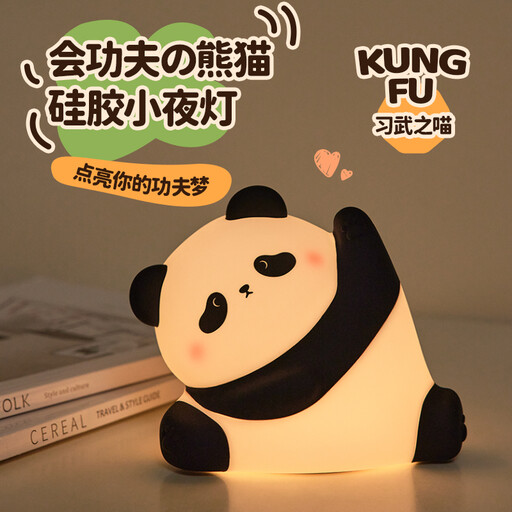
Why it suits this profile: This compact light is designed for a child's bedroom, bedside table or gentle lighting during the bedtime routine. It is operated by touch.
The product information lists three dimming levels and a 1200 mAh rechargeable battery. This means there is no need for separate disposable batteries.
USB charging, touch control and a silicone housing according to the product description. Suitable for indoor use only.

Why it suits this profile: Ideal for anyone looking for smart lighting for a TV unit, bookcase, bed frame or indirect wall lighting.
The 3-metre length, IP20 rating and indoor use are clearly stated. This makes it clear in advance where the strip is and is not suitable.
According to Philips, the strip provides up to 1200 lumens, app control, and extension and cutting options at designated points.

Why it suits this profile: For kitchen cabinets, wardrobes, shelves and dark passageways where automatic lighting is useful.
The PIR sensor, detection range of 3–5 metres and dimensions of 400 × 38 × 10 mm are specified. The light does not rely on being switched on manually.
61 LEDs, three colour temperatures and a 1100 mAh rechargeable battery. According to the description, it can be installed without drilling.
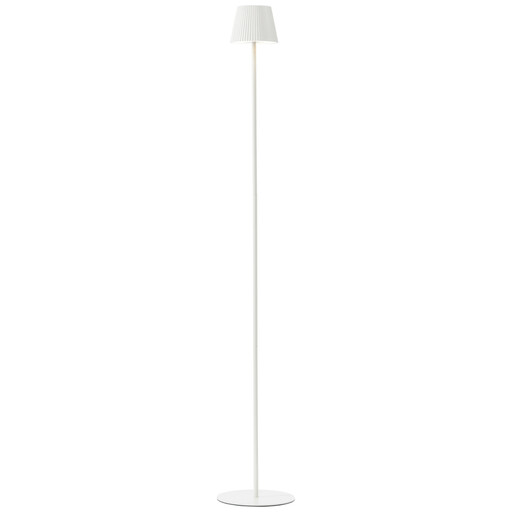
Why it suits this profile: For a patio, balcony or garden where a cordless light with a warm glow is desired.
The IP54 rating and warning about heavy rain make it clear that this light is not suitable for immersion or extreme weather conditions.
340 lumens, 3000 K, USB charging and a three-level dimmer. The light is cordless and stands 125 cm tall.
We have put together a complete, up-to-date list of products that fully meet these strict selection criteria and the applicable European safety regulations.
This depends on the wattage, the number of hours the light is on and your electricity tariff. Use this simple calculation:
power in watts ÷ 1000 × number of hours switched on × electricity price per kWh
A 10-watt light that is on for 1000 hours uses 10 kWh. So look at the actual wattage rather than relying only on the term “energy-efficient”.
Lifespan varies by product and usage conditions. The Philips Hue Flux LED strip’s product information states a quoted lifespan of 25,000 hours. This is a Philips product specification, not a guarantee that every light will work for exactly that long in all conditions. Heat, moisture, frequent switching and an unsuitable power supply can affect performance.
No. An LED light must be explicitly described as dimmable. With a standalone LED bulb, the dimmer must also be suitable for the low power consumption of an LED. With integrated lights, such as some ceiling lights, the dimming function is often built in through touch control or a remote control. Always check the product description before using an existing dimmer.
