
Vandaag of morgen in huis

Kwaliteit gegarandeerd

Welkomstaanbiedingen ontgrendelen: GRATIS bezorging | Tot 80% korting | Gratis 30 dagen JoyPlus-proefperiode
Download de app
Good lighting should suit the room, how you use it and your daily routine. But if you’re looking for LED lighting for your home, you’ll soon come across lots of products with similar claims: smart, energy-efficient, atmospheric, wireless or sensor-activated. The differences often come down to details you only notice after buying.
This guide helps you compare lighting based on practical features. That way, you can choose the right night light, rechargeable LED lamp, smart light strip, cabinet lighting or decorative ceiling light.
More LEDs don’t automatically mean a lamp gives more comfortable or brighter light. Also check the light output in lumens, the colour temperature and where you plan to use it. A compact night light with 40 lumens could work well on a bedside table, but not as general lighting for a living room.
RGB LED lighting can display different colours, but that doesn’t tell you anything about the quality of its warm white light. Check whether the lamp has a separate warm white setting, what colour temperature is specified and whether you can adjust the brightness.
A rechargeable LED lamp is handy in a hallway, cupboard or child’s bedroom. However, the charging voltage, battery capacity and position of the USB port are all important. Check whether you can use the lamp while it’s charging, and only use a compatible charger. The product information should make this clear.
For bedroom mood lighting or a child’s bedroom, warm white light usually feels more relaxing than bright cool white light. Check the specified colour temperature:
A higher Kelvin value doesn’t automatically mean more light. For that, check the lumens. When choosing a lamp for reading, cooking or a worktop, its position and how it spreads light are important too.
For a wireless lamp, the battery capacity in mAh and charging details are useful things to check. A built-in battery means you won’t need separate batteries, but it will need regular charging. Check the following:
A rechargeable lamp is especially useful when you don’t want to run a cable to a socket. For fixed kitchen or living room lighting, a ceiling or wall light may be more practical.
Cabinet lighting with a motion sensor should respond reliably to movement and be fitted in the right place. Check the stated range of the PIR sensor, the installation method and the dimensions. A 40-centimetre lamp, for example, may fit beneath a kitchen cupboard, but not on every narrow shelf.
Also check whether you can install it without drilling. Self-adhesive fittings are handy, but the surface needs to be clean, dry and flat. For a heavier ceiling light or crystal chandelier, consider the load-bearing capacity, wiring and whether professional installation is needed.
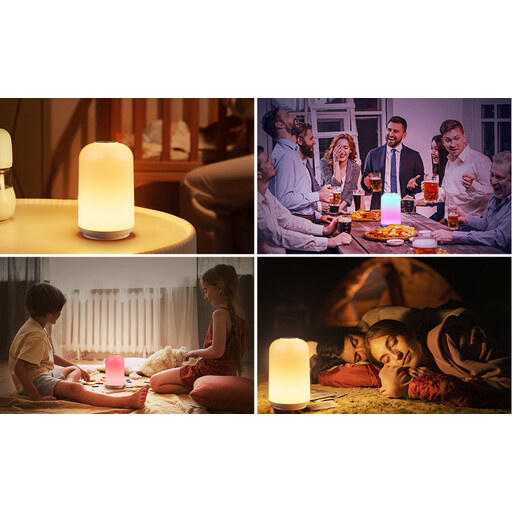
Why it suits this profile: This compact night light is designed for a bedside table, shelf or child’s bedroom and doesn’t need to be permanently installed.
The specifications list both warm white light and seven RGB colours, so the colour function isn’t the only lighting option. You can adjust the warm white brightness smoothly.
40 lumens, 2600–2800K warm white, built-in battery and USB charging at 5V-1A. Measures 13 x 8 x 8 cm.
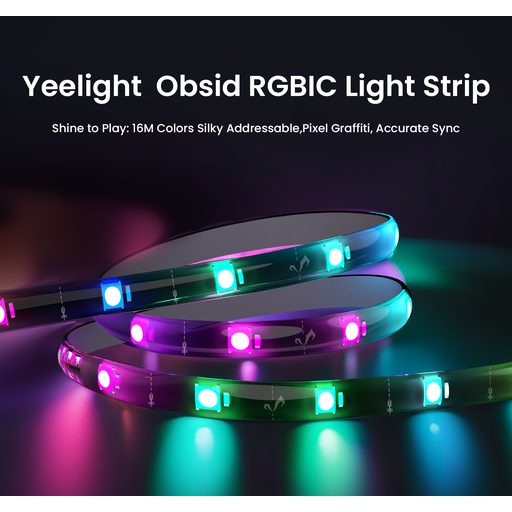
Why it suits this profile: This extension is designed for people who want to incorporate RGBIC LED lighting into a TV unit, desk or gaming area.
Before buying, check that you already have a compatible Yeelight system. According to the product name, this is a one-metre extension, not a complete starter kit.
1-metre length and RGBIC functionality according to the product listing, making it suitable for extending existing mood lighting.

Why it suits this profile: This set is designed for practical use in kitchen cupboards, wardrobes, on shelves or in dark passageways where you often have your hands full.
The PIR sensor, stated range of 3–5 metres and two lights make it clear where this product can be used. You don’t have to rely solely on general claims about motion detection.
61 LEDs per lamp, three colour temperatures, 1100mAh battery and a slim 400 x 38 x 10 mm design.
For kitchen lighting, bright, focused light is important. A sensor light beneath a cupboard can be a useful addition, but it won’t always replace the main lighting. In the living room, you can combine a ceiling light with a light strip or freestanding lamps to create different layers of light.
Warm white light often works better with a relaxed bedroom décor. In a child’s bedroom, a dimmable children’s lamp and a night light are practical choices. However, bear safety warnings in mind and don’t let young children use an electrical product unsupervised.
If you’re mainly looking for decoration, you could consider a crystal chandelier for the dining room, living room or hallway. Before buying, check the dimensions, fitting, light source and installation requirements for these models. Product information for decorative lights can vary between versions.
We’ve put together a complete, up-to-date list of products that meet these strict selection criteria and the applicable European safety regulations.
That depends on the room, its size and what you’ll use the light for. A small night light needs far fewer lumens than general living room lighting. For task lighting in a kitchen or workspace, you’ll usually need more focused light than for mood lighting. So don’t just look at the wattage; pay particular attention to lumens and how the light is distributed.
LED lamps generally use little power; check the wattage listed for each product. A 1W lamp uses a different amount of electricity from a ceiling light with several light sources. For rechargeable models, charging frequency also makes a difference. And a lower wattage doesn’t automatically mean enough light for every use.
Lifespan varies by model and how it’s used. Check the lifespan stated by the manufacturer, and also consider the battery in wireless lights. A built-in battery may lose capacity over time. Install lights according to the instructions, keep ventilation openings clear and protect the product from moisture if it isn’t suitable for wet areas.
