
Vandaag of morgen in huis

Kwaliteit gegarandeerd

Welkomstaanbiedingen ontgrendelen: GRATIS bezorging | Tot 80% korting | Gratis 30 dagen JoyPlus-proefperiode
Download de app
LED lighting is available as standalone lamps, smart LED lighting, LED strips, solar lamps and cordless table lamps. This extensive range does not always make comparison easy. A low price or a long list of features also does not automatically mean that a lamp is right for your home.
By considering light output, power supply, controls and protection against moisture in advance, you can avoid a disappointing purchase. Below, you will find practical considerations and popular choices for 2026, using product specifications as the starting point.
Lumens indicate how much light a lamp emits according to its product specification. A lamp with a high lumen output may be suitable for functional lighting, but can feel too bright on a balcony or beside a lounge set. For a cosy table setting, dimming capability is often more important than maximum brightness.
Also consider the colour temperature:
A dimmable LED lamp offers greater flexibility, but check whether dimming is stepless or limited to preset levels.
For outdoor lighting, the IP code is an important point of reference. IP44 generally means protection against solid objects measuring 1 millimetre or more and against splashing water. This is not the same as being fully waterproof. An IP44 outdoor lamp must therefore not be submerged or exposed to direct jets of water for prolonged periods.
IP44 may be suitable for a covered balcony or patio. For a lamp placed fully exposed in the garden, check the installation location, cable and product manual particularly carefully.
A solar lamp depends on sufficient daylight. In the Netherlands, short winter days, cloudy weather and an unfavourable position can affect charging time. A lamp with an additional USB port offers greater reliability.
With a USB-C rechargeable lamp, it is advisable to check whether the cable is included and which charger is suitable. Also look at the stated operating time. This often depends on the selected brightness: a battery may last considerably longer at low brightness than at maximum output.
For everyday use, three factors are particularly relevant:
A touch-control lamp is convenient on a bedside table or dining table, while a smart lamp is a better choice when you want to use scenes, timers or voice control. According to the product description, certain Philips Hue products support control via an app, voice commands and compatible smart-home platforms. Check in advance whether a bridge or additional account is required.
Do not compare capacity in mAh alone. Consider the combination of battery life, brightness and charging time. The Cordless Solar Table Lamp, for example, has an integrated 1800 mAh battery and a stated operating time of 10 to 60 hours, depending on the brightness setting. It can be charged via solar energy or USB-C.
A rechargeable table lamp is practical when you want to move it around, but do not place a lamp with an integrated battery where it will be continually exposed to extreme heat, moisture or open flames. Stop using the lamp immediately if the battery swells or shows visible damage.
When checking LED garden lighting, consider:
With a set of ground spotlights, route the cable so that it does not create a tripping hazard. An integrated LED module may offer a compact design, but it is usually not replaceable by the user. This is an important difference from a standalone E27 LED lamp, where the light source can generally be replaced more easily.
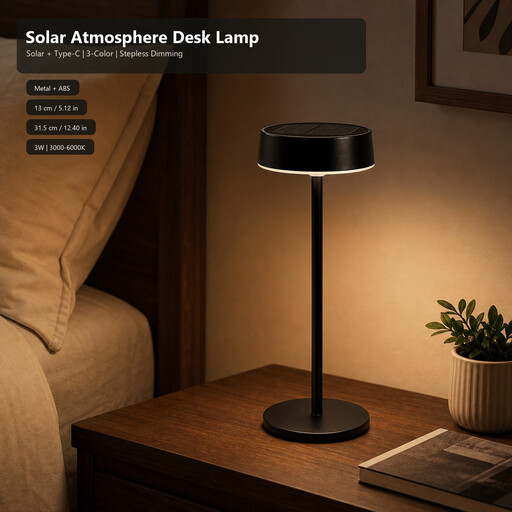
Why This Fits Their Persona: A cordless lamp for anyone who wants to get started without permanent installation on the dining table, balcony or while camping.
The lamp works with both solar power and USB-C, so you are not dependent on sunlight alone. Brightness can be adjusted steplessly from 10 to 100 per cent.
1800 mAh battery, three colour temperatures from 3000 to 6000 K and a memory function according to the product information.

Why This Fits Their Persona: Ideal for a garden path, border or patio where you want to control multiple light points via an app.
The IP44 rating makes the set suitable for splashing water, but according to the warning, the lamps are not waterproof. Keep the cables away from walkways.
Three-piece set, dimmable, with RGB and CCT from 3000 to 6500 K; controlled via the Tuya app and, according to the description, also via Alexa or Google Assistant.

Why This Fits Their Persona: An excellent option for anyone looking to add indirect lighting behind a TV unit, bookshelf or bed.
The product specification states IP20 and indoor use only. This makes it clear that this LED strip is not intended for balconies, gardens or damp areas.
Three-metre length, up to 1200 lumens according to the product specification, and control via the Hue app and voice functions.
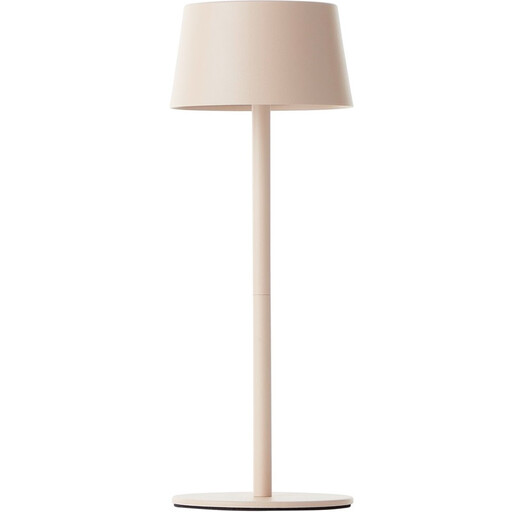
Why This Fits Their Persona: A compact table lamp for a patio, balcony or covered outdoor area without a permanent power connection.
The lamp supports both solar and USB charging. Its IP44 rating protects against splashing water, but not submersion or direct jets of water.
170 lumens, warm white light at 3000 K, three dimming levels and two mounting heights according to the product data.
Browse a current selection of products for dimmable LED garden lighting and compare features, controls and protection ratings for your outdoor space.
LED lighting generally uses less power than a comparable traditional lamp, but actual consumption depends on wattage, operating time and brightness setting. Multiply the power consumption in kW by the number of operating hours and your electricity tariff to get an estimate. A dimmable lamp can also reduce consumption when maximum brightness is not required.
No. Always check the IP rating and the manufacturer’s instructions. A product with an IP44 rating is splash-resistant according to its stated classification, but it is not fully waterproof. An LED strip with IP20, such as the Philips Hue Flux mentioned above, is intended for indoor use.
Lifespan varies by product and operating conditions. Some integrated LED products, for example, state 25,000 operating hours in their specifications. This is a stated technical value, not a guarantee that every component will last equally long. For rechargeable lamps, the battery, charging cycles, heat and storage conditions also play a role. Alongside the LED lifespan, check the warranty, charging method and whether components can be replaced.
