
Vandaag of morgen in huis

Kwaliteit gegarandeerd

Welkomstaanbiedingen ontgrendelen: GRATIS bezorging | Tot 80% korting | Gratis 30 dagen JoyPlus-proefperiode
Download de app
LED lighting comes in many forms: from a simple E27 bulb to smart lighting, an LED strip, a dimmable ceiling light or solar-powered garden lighting. That freedom of choice is handy, but it makes comparing products more difficult. Low energy consumption or millions of colours don’t automatically mean a lamp is suitable for your living room, workspace or balcony.
Pay particular attention to three common pitfalls:
When choosing lighting for your living room, bedroom or workspace, first look at the light output in lumens (lm). A lamp with 800 lumens, for example, gives significantly more light than one with 400 lumens, regardless of how the wattage values compare.
Colour temperature is expressed in Kelvin (K):
According to the product information, the Philips UltraEfficient LED Bulb offers warm white light at 2700K, with a light output of 485 lumens per bulb. These E27 LED bulbs are operated via a standard wall switch and, according to the product specifications, do not have a dimming function.
Not every LED bulb is dimmable. Check whether the product page explicitly mentions dimmable, touch dimmer, remote control or app control. An integrated LED ceiling light may have its own dimming function, but it won’t always work with an external dimmer.
A smart lamp often works via Wi-Fi, Bluetooth or its own hub. The TP-Link Tapo L530E uses 2.4GHz Wi-Fi according to the product information, has a dimming range of 1% to 100%, and can be controlled via the Tapo app. The lamp also supports voice control via Amazon Alexa and Google Assistant, according to TP-Link. Before purchasing, check that your network and smart home platform are compatible.
Measure the space where the lamp will go before you order. For a ceiling light, check the diameter and height; for an LED strip, the length; and for a floor lamp, the overall height and cable length.
The IP rating indicates how well a product is protected against dust and moisture:
An IP rating does not automatically make a product suitable for every outdoor location. Always follow the usage instructions and do not place an indoor product outdoors. For fixed electrical installation, it is advisable to switch off the power and, if in doubt, call in a qualified electrician.
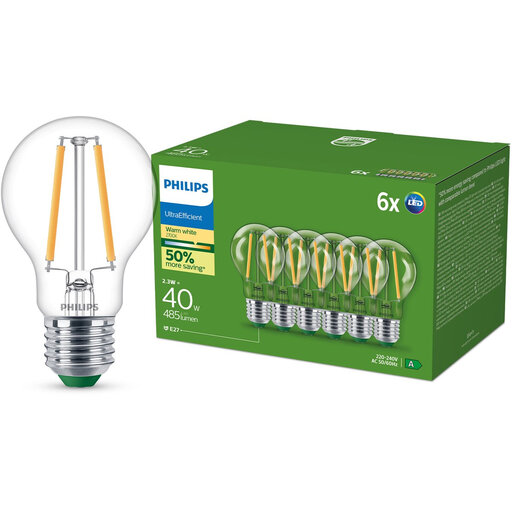
Why it fits this profile: A practical choice for anyone wanting to replace existing E27 fittings without an app or extra hub. The pack contains six bulbs for multiple light fittings.
The fitting, colour temperature and light output are clearly stated. Please note that this bulb is not dimmable according to the specifications.
E27 fitting; 2700K warm white light; 485 lumens; six bulbs per pack.

Why it fits this profile: Ideal for anyone wanting to combine accent lighting behind a TV unit, bookcase or bed with control via the Hue app and voice commands.
The product information states a length of 3 metres, IP20 and indoor use only. This makes it clear in advance where the strip can and cannot be used.
1200 lumens according to the product specification; can be cut, reused and extended according to Philips; compatibility with SmartThings and Matter, among others.
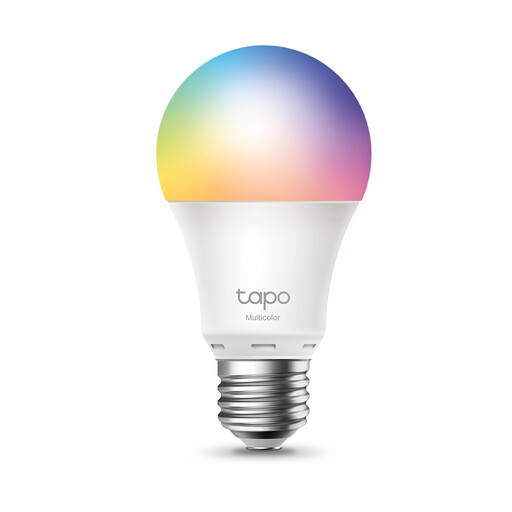
Why it fits this profile: For users who want to combine RGB LED lighting, schedules, remote control and a smart lamp without a separate hub.
The fitting, Wi-Fi band, light output and colour temperature are all specified. According to the product information, the bulb is intended for indoor use.
806 lumens; colour temperature from 2500K to 6500K; 1%–100% dimmable; 16 million colour options according to TP-Link.
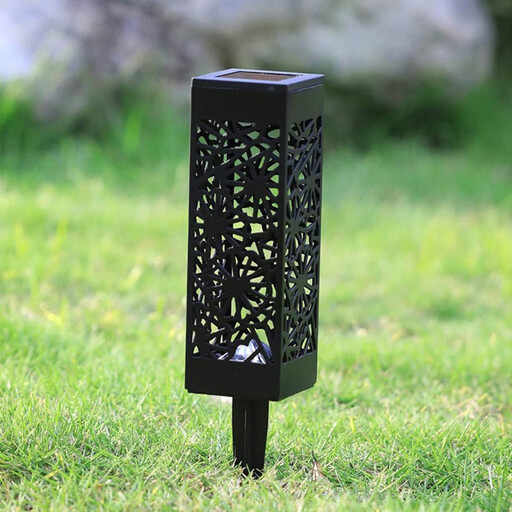
Why it fits this profile: Handy for paths, borders, balcony planters and patios without a power cable. The lights are placed in the ground.
The product specification states IP65, a charging time of 4–6 hours and a usage time of 5–8 hours after a full charge. Place the panels in a sunny spot.
Six lights per set; warm white LED light; automatic on/off switching; installation without wiring or tools.
We’ve put together a full, up-to-date list of products that fully meet these strict selection criteria and comply with current European safety regulations.
LED bulbs generally use less electricity than older incandescent and halogen bulbs, but the actual consumption depends on the wattage, the number of hours they’re on and how they’re used. Check the energy label and compare the number of lumens with the power consumption.
Also pay attention to the following points:
That depends on the size of the room, the ceiling height and how you want to use it. For general lighting, a ceiling light with a higher light output may be suitable. For accent lighting, multiple lower-output light points, an LED strip or a floor lamp are often more practical. Consider combining functional lighting with mood lighting so you don’t have to rely on one lamp for every situation.
The lifespan varies by model and usage conditions. In the product specifications provided, for example, 15,000 hours is stated for the TP-Link Tapo L530E, 20,000 hours for the Philips All-in-One ceiling light and 25,000 hours for the Philips Hue Flux LED strip. A manufacturer’s claim is not a guarantee for every usage scenario. Heat, switching frequency, moisture and an incorrect fitting can all affect the lifespan.
A smart lamp doesn’t only use energy when it’s on; some models also consume a small amount of power when they remain connected to Wi-Fi or Bluetooth. The total cost depends on the wattage, the number of hours they’re on and the electricity price. Features such as schedules, timers and automatic switch-off can help to limit unnecessary use, but always check whether you’ll actually use these features.
