
Vandaag of morgen in huis

Kwaliteit gegarandeerd

Welkomstaanbiedingen ontgrendelen: GRATIS bezorging | Tot 80% korting | Gratis 30 dagen JoyPlus-proefperiode
Download de app
LED lighting is energy-efficient, versatile and available for virtually every room. However, an attractive product photo does not guarantee that a lamp will suit your situation. The wrong fitting, light that is too cool or limited dimming functionality could leave your purchase unused.
With this practical checklist, you can compare LED lamps based on verifiable specifications. That way, you can find a suitable solution for the living room, bedroom, home office, balcony or garden.
First, check the fitting on your light fitting. An E27 LED lamp has a large screw fitting, while an E14 LED lamp uses a smaller fitting. GU10 LED spotlights are generally twisted into place in a spotlight fitting. A lamp with the wrong fitting cannot be installed safely or practically.
Also pay attention to the voltage. A standard lamp for a Dutch light fitting usually operates at 220-240 V, but some standalone LED lamps or lamps with an adapter operate at low voltage.
Wattage indicates how much power a lamp uses, not how much light you get. That is why you should look at lumens. Depending on its design, a 6 W lamp can have a very different light output from an 8 W lamp.
For a general comparison:
A higher light output is not automatically more pleasant. For a bedroom, soft, warm white light may be more suitable than a bright ceiling lamp.
A dimmable LED lamp must be suitable for the dimmer being used. Older dimmers designed for halogen or incandescent lamps can cause flickering, buzzing or a limited dimming range. Therefore, check the product information for both the lamp and the dimmer.
With smart lighting, dimming is often controlled via an app, remote control or smart home platform. This does not automatically mean that the lamp also works with a standard wall dimmer. For example, the Philips Hue Smart LED A67 states that it can be controlled via an app, remote control and wall switch, but also indicates that a standard non-dimmable dimmer is not suitable.
Colour temperature is expressed in Kelvin:
A lamp with several colour temperatures is useful when one room serves different purposes. According to the product information, the VIVREAL LED floor lamp has settings of 3000 K, 4000 K and 6000 K. It is operated using a remote control within a stated range of up to 10 metres.
The IP rating indicates the extent to which a product is protected against solid particles and moisture. IP20 is intended for dry indoor areas. IP44 provides protection against splashing water, but does not mean that a lamp can be submerged or exposed to heavy rain for long periods.
A rechargeable lamp with an IP44 rating can therefore be practical on a sheltered balcony or patio. Do not place this type of product in a pond, in an unprotected garden or somewhere that water can remain directly on the housing.
Pay attention to the stated lifespan in hours, but also check whether the light source is replaceable. With integrated LED lighting, the entire lamp usually needs to be replaced when the light source fails. With a light fitting featuring an E27, E14 or GU10 fitting, you can replace just the LED lamp.
A stated long lifespan is a manufacturer’s product specification, not a guarantee for every usage situation. Ventilation, switching behaviour, ambient temperature and the quality of the power supply can all affect service life.
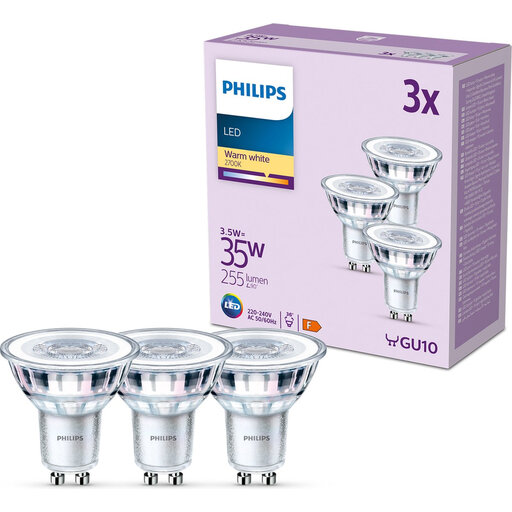
Why this suits the profile: A set of three GU10 spotlights is practical when you want to replace several existing spotlights with warm white LED lighting in one go.
The fitting, light colour, light output of 255 lumens per spotlight and the fact that the spotlights are not dimmable are all clearly stated.
GU10 fitting, 2700 K warm white light and three lamps per pack.
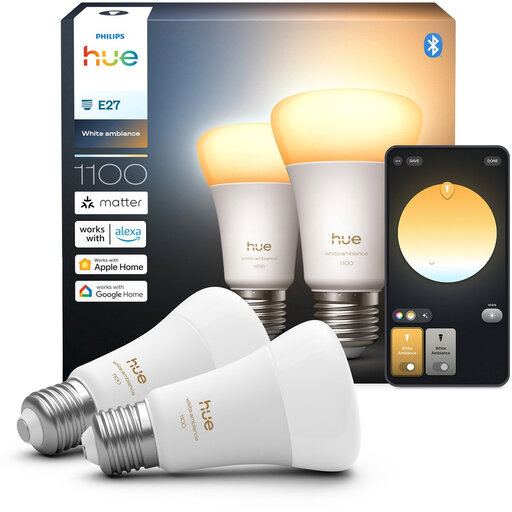
Why this suits the profile: Ideal for households that want to combine E27 lamps with app control, adjustable shades of white and integration with smart lighting.
The product information states the E27 fitting, dimmability and the required compatibility with the Hue system. This makes it clear in advance which extra functions may require a Bridge.
1100 lumens per lamp, 8,1 W power consumption and a stated lifespan of 25,000 hours.
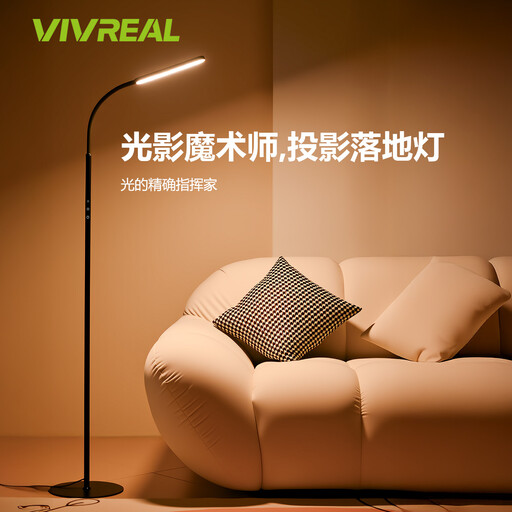
Why this suits the profile: A 180 cm floor lamp provides extra light without ceiling installation, making it suitable for a reading corner, living room or office where different lighting settings are useful.
The lamp works with the supplied adapter and remote control. According to the product information, the heavy iron base is designed for stability; however, place it on a level surface.
14 W power consumption, three colour temperatures and a stated efficiency of 100 lm/W.
We have put together a complete, up-to-date list of products that fully meet these strict selection criteria and the applicable European safety regulations.
LED lamps generally use less power than traditional light sources while providing a similar light output. To compare them, look at both wattage and lumen value. The actual saving depends on the number of hours the lamp is used, the electricity tariff and the type of lamp.
Lifespan varies from product to product. Some models, for example, state 15,000 or 25,000 hours. This is a manufacturer’s stated product specification. Good ventilation, a suitable power supply and correct use can help extend service life.
No. Check that the packaging or product page explicitly states that the lamp is dimmable. With smart lighting, dimming may work via an app or remote control, while a traditional dimmer is not supported. Always check compatibility before connecting the lamp.
